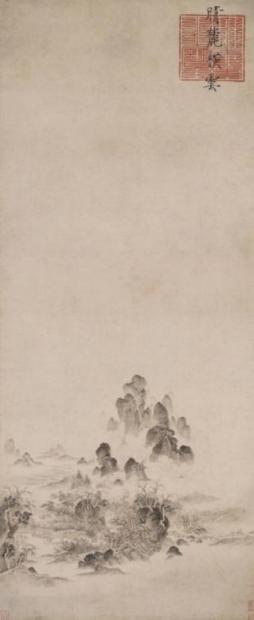
Abstract
In this research, I aim to use the narrative logic of Chinese shadow puppetry, a cultural language I am familiar with, and combine it with Plato’s ‘Allegory of the Cave’ to tell stories about architectural history and memory.
I choose the Zwolle Campus of ArtEZ as the main case for expoloring this approach. This building was originally a hospital. After several renovations, it was transformed into an art college. For me, it is not only a place where I study and live, is also like a “story stage” bearing the traces of time. I hope that through this research to explore whether architectural Spaces can tell their past and present with light and shadow.
In this process, I linked Plato’s “Perfect Archetype” with the “balance of Yin and Yang” in Taoist thought. Light and shadow in shadow puppetry are interdependent and constantly transforming, just as in the space of architecture, reality and memory, past and present also overlap with each other.
During my on-site visits and observations, I collected many “perfect moments” on campus, such as those with just the right light and atmosphere. For me, these moments are like the building itself speaking.
I want to transform these stories and feelings into a visual language: inspired by Plato’s idea of perfect forms, transform the building’s elements into shadow-play characters, letting the building itself take the lead and tell its own story again, through its shapes, its memories, and its archetypes.
This is an artistic experiment, but also like an exploration of “how to see”. Through this cross-cultural and cross-media approach, people can feel anew and memories wrapped in time and light and shadow within the buildings.
Introduction
The Zwolle campus of ArtEZ University of the Arts is part of my life in the Netherlands. It used to be a hospital, but after three expansions, these three buildings of different periods and styles were connected together and became the current art school. I’m very curious about the its history and the events that once happened here. Then I start wondering that how can I tell the stories that lies embedded in the architecture of the complex by integrating my own cultural background?
About my own background: I was born in Southwest China, a multi-ethnic region, and my life is filled with unique culture and historical humanistic elements. My mother always buys me clothes made of Dai brocade in the hot summer, takes me to visit the buildings of different ethnic groups, and there are many unique ethnic handicrafts in my house, such as the tie-dyed cloth bags of the Bai ethnic group and the silver ornaments of the Miao ethnic group. Growing up in such an environment, I can always feel the stories and culture behind this ethnic group through these artworks, such as the use of colors and the meanings of patterns. After coming to the Netherlands, I have been thinking about how to tell the stories of part of my life here and how to make some expressions in light of my own cultural background.
This research is important to me. It is not merely about a building or a story, but about myself and how to discovered the way of “connection” through art in a strange cultural environment. My school in Zwolle campus carries memories of different times and functions, from the hospital to the art college. It is like a living organism, documenting the changes of the city as well as people’s redefinition of space. I want to understand how architecture tells its own story by studying it.
In this process, I combined my cultural background from Southwest China. The ethnic art there taught me to understand the world through colors, patterns as well as light
and shadow. When I study at the campus and face these buildings that carried the scent of the past, I realized that I could “tell its story” in my own way, such as through the art form of Chinese shadow puppetry, which combines light and shadow, reality and illusion.
Studying “Plato’s allegory of the Cave” has enabled me to see the philosophical significance behind the light and shadow. People are always seeking the truth in the “shadow”, and art is precisely the way for us to see our inner world in the shadow. Through the art form of shadow puppetry, I am not only reconstructing the story of a building, but also exploring how humans understand space, history and self through perception and imagination.
I hope this research is also meaningful to others. It reminds us that architecture is not merely a functional space; it is also a carrier of culture and a container of memory. Through this cross-cultural and cross-media research approach, I hope to inspire others to rethink our relationships with space, history, and self-identity.
Main Research Question
How can the narrative logic of Chinese shadow puppetry be used to explore and express the story of a building?
Sub-research question
1. How does Plato’s cave relate to the principles and narrative methods of Chinese shadow puppetry?
By comparing the philosophy of imagery in Plato’s Cave with the shadow and narrative methods of Chinese shadow puppetry, I can understand the commonalities between the two in “how shadows constitute cognition, story, and reality,” thereby providing a theoretical foundation for subsequent architectural narrative methods.
2. What is storytelling?
The purpose is to connect the core methods of “caves allegory,” “shadow puppetry,” and “architectural history.” Through narrative, philosophical reflections, reality and representation are transformed into stories that can be seen and felt, thereby allowing the layered history of architecture to be “told” and understood.
3. How do different concepts of stories using shadow and light interrelate?
This study examines the connections between different concepts of “telling stories with light and shadow,” exploring their common mechanisms in terms of expression, narrative structure, and meaning generation, thereby providing theoretical support for constructing a new architectural narrative model.
4. What are the similarities between Plato’s allegory and Chinese shadow puppetry in “reality and representation”?
The purpose of this research topic is to explore how humans understand reality and representation through light and shadow by comparing Plato’s Allegory of the Cave and Chinese shadow puppetry, thereby finding a new way to interpret space and history that combines philosophical reflection and artistic expression.
5. How does Taoist philosophy, particularly the concept of “yin and yang,” resonate with the relationship between light and shadow in space and narrative? The reason for researching this question is to find parallels with the allegory of the cave in Chinese culture. The Taoist concept of “yin and yang” emphasizes the unity and balance of opposites. Applied to space and narrative, light and shadow, virtuality and reality are interdependent, just as the shadows in shadow puppetry express.
6. What are the moments or spaces of “perfect projection” in architecture? Those where past and present, reality and imagination intersect?
The purpose of this question is to discover the most symbolic and expressive
moments or spaces in architecture, those where light, shadow, proportion, materiality, or atmosphere are perfectly “perfectly projected.” These moments not only allow us to experience the intersection of architectural history and contemporary use, but also provide inspiration for narrative. By capturing these moments, I hope to blend reality, memory, and imagination, telling the stories behind the architecture through the art form of shadow puppetry.
In the end the study aims to explore how to combine the the narrative logic of Chinese shadow puppetry with philosophical ideas of “Plato’s Allegory of the Cave” as a tool for interpreting and presenting architectural history. Through theoretical analysis and practical creation, the study hopes to establish a cross-cultural and cross-media narrative method, so that the historical, spatial and cultural layers of architecture can be experienced and understood by the people through visual and perceptual means, I wish for personal expression and understanding from your own roots in a new cultural realm.
Part 1 Storytelling
What is Storytelling?
Why do I choose narrative inquiry or life history as a research method? Ultimately, it has a lot to do with how stories work. Stories allow us to see the world through different perspectives and to see connections between them. By listening to others’ stories, we can learn from their experiences and even change or challenge our own preconceived notions and values. When someone is willing to share their personal story, it’s like having a window into a world that’s different from, or even completely different from, our own. This isn’t just a “nice idea”; it’s the core value of this way of researching research methods.
As scholar Lewis said, “I am suggesting that we come to know, understand, and make sense of our social world through story; indeed, that story is the very basis of human consciousness.”And also “It is through narrative that we constitute our selves and provide our lives with meaning and coherence… Without story, there is no self, no identity, no other.”1 Specifically, the role of narrative can be divided into several aspects:
First, narrative is how we understand the world. Lewis believed that we are not exposed to “raw,” unprocessed reality. Instead, we perceive, organize, and interpret our experiences through the lens of stories. Stories help us connect the events of our lives, imbuing them with structure, causality, and emotional color, making everything meaningful.
Second, narrative shapes our identity. Our “self” isn’t a fixed, unchanging entity, but rather an ongoing story. We answer the question, “Who am I?” by telling our own life
stories that encompass our experiences, choices, and relationships with others. Without these stories, we struggle to form a coherent sense of self. Similarly, we understand others through their stories.
Third, narrative is essential to social life. Cultures, communities, and even entire societies rely on shared stories, such as history, mythology, law, and journalism. It builds consensus, convey values, and define what is real. Storytelling is a crucial mechanism for the functioning of society.2
So, what can story be “storytelling” in design or art? It’s about integrating narrative into design, evoking emotions and associations in the viewer through elements like scenes, symbols, and movement. It is actually a process: collecting touching objects, spaces or memorable scenes from our surroundings, reinterpreting them through creative techniques, and finally presenting them through some medium.
Now, I choose to tell the story of architecture, the story of the place where I studied and lived, essentially giving architecture a new “voice” . Architecture is not just a physical space, it is a vessel of time, memory, and emotion. The principle of narrative helps us reinterpret this relationship, allowing us to look beyond structure and function to focus on the experiences and symbolic meanings that architecture carries. First, for me, the history of architecture itself is a narrative. Every building has undergone the passage of time, bearing traces of its users, functions, and social context. Take the Artez Campus in Zwolle, for example. It was once a hospital and now houses an art academy. The transformation of space itself forms a storyline: from healing to creation, from physical recovery to spiritual expression. By studying these transformations, we can find narrative threads and reinterpret the history of architecture in the contemporary world.
Second, narrative unfolds not only through words but also through sensory experience.
Light, shadow, sound, materials, temperature, and movement in architecture can all become “storytelling languages.” For example, when I walked through the glass corridor of the school’s third expansion, and was then guided by a beam of light into the open public space of the restaurant, this process itself felt like an experience reminiscent of the “Allegory of the Cave,” moving from darkness to light, from the unknown to understanding. Through spatial rhythm and shifting perceptions, architecture silently constructs an emotional narrative.
Third, the narrative logic of shadow puppetry offers another possibility for architectural storytelling. The core of shadow puppetry is the interplay of light and shadow, virtuality and reality, a principle that resonates closely with the experience of architectural space.
1) Light and Shadow Shape Spatial Experience: Just as shadow puppetry creates virtual space through the interplay of light and shadow, architecture also influences human perception and emotions through the projection of light and the changing nature of shadows.
2) Interaction Between Reality and Illusion: The two-dimensional images of shadow puppetry create a sense of realism in the viewer’s mind, which highly corresponds to the experience of real and virtual spaces in architecture.
3) Multi-Layered Narrative: Just as shadow puppetry tells stories through the layered movement of foreground, background, and characters, the layering of architectural space and the changes in light and shadow can similarly construct a rich narrative experience.
4)Resonance of Narrative Potential: The handling of light and shadow, reality and illusion, and layering allows the narrative logic of shadow puppetry to offer new possibilities for architectural narrative.
Through projections and silhouettes, we can bring the past and present of a building together on the same plane, making “shadow” a symbol of memory. This not only echoes the relationship between “image and truth” in Plato’s allegory of the cave, but also embodies the Taoist concept of the symbiotic coexistence of “yin and yang.”
Finally, the value of narrative lies in its ability to draw the audience into the experience. The story of architecture is not told in a one-way manner; it is reconstructed through human movement, perspective, and perception. As people move through the space, they effectively become part of the story, their experiences, emotions, and imaginations continuously enriching the meaning of the building.
Part 2 Another Storyteller from China
From what I know about Chinese narrative arts, I have been particularly drawn to their visual expressions. Within this realm, there are many captivating forms of creation: for example, Peking opera, which lean toward performative, stage-based storytelling. while Landscape painting convey stories through static images, requiring the viewer to interpret meaning from composition and symbolism. Both modes of narration deeply fascinate me.
About the Peking Opera
My earliest memory of Peking Opera comes from watching a group of people in costumes performing on television during my childhood. My first impression of it, from a superficial perspective, is its beauty: the costumes, the movements, the makeup, all these external aspects are beautiful. Take, for example, the facial makeup in Peking Opera, which is each spotted character has a unique facial makeup pattern, often using certain colors to represent a certain personality or a particular type of character. For example, red represents loyalty, bravery, and righteousness, while black
represents integrity, bravery, or even recklessness3. When watching Peking Opera, we can often judge a character’s personality by their appearance, similar to the character creation techniques used in shadow puppetry.
Secondly, I’m moved by the “yiyiyaya” (babbling) sounds of Peking Opera, which are essentially the singing style. Peking Opera singing is remarkably high-pitched, and every rise and fall reflects the character’s inner cry. The expressive vocals and the flowing movements intertwine on the stage, as if telling the joys and sorrows of life. As I immersed myself in the experience, listening to the emotion, following the rhythmic pulse, and observing the rhythmic movements, I was somehow touched by the previously unfamiliar singing style. Peking Opera singing can still be found in Chinese pop music today, and as I see it blending with modern culture, I feel its constant presence in my life.

This reminds me that this logic can be applied to architectural narrative: the materials, colors, light and shadow, and even the form of a space can convey “personality” like Peking Opera facial makeup, allowing users to perceive the space’s characteristics and function without written explanation. Simultaneously, changes in the flow of movement, stairs, openings, or light and shadow within a building can symbolically guide people’s behavior and emotions, creating a narrative effect similar to the performance’s actions.
About the Landscape Painting
I systematically studied landscape painting for a period of time in elementary school. I remember simply using blocks of color and lines to outline the general shapes of the mountains and water, without adding any other details, to create a “good” landscape painting. Later, I realized this was xieyi (Freehand expression), using negative space to evoke the vastness of nature.
In my research, I learned that “Chinese landscape painting does not aim for naturalness in visual expression, but rather to evoke the emotional imagination of viewers with its inherent narrative structure. This kind of “narrative” is quite different from the traditional textual storytelling analysis.” “ The traditional landscape painting is characterized by “imagination” and “accessibility” on the aesthetic level. The use of dot elements in landscape painting as a medium for triggering communication among viewers can demonstrate its important narrative function.4”
In this light, I found that Chinese shadow puppetry uniquely integrates the two. It combines drama, music, visual art, and folk craftsmanship, earning the title of “the earliest form of animation.” In my childhood memories, many animated films were inspired by shadow puppetry. Their characters often appeared with exaggerated forms and fantastical costumes, vividly rendered in bright colors such as red, green, gold, and black, these visual impressions that have stayed with me since childhood.
This led me to wonder that could such a distinctive narrative logic be applied in my own research? Could this Chinese mode of storytelling help me express the stories I wish to embed within Dutch architecture?
Principles ofthe Chinese Shadow Puppetry
Chinese Shadow Puppetry, also known as “LanternShadows”, first appeared during the Western Han Dynasty. It is a form of folk drama in which silhouettes of people and objects, made from animal hide or cardboard, are illuminated by lamplight and reflected onto a white screen to tell stories.5
When performing shadow puppetry, artists stand behind the screen, skillfully manipulating the puppet figures while vividly narrating the story in local tunes, accompanied by instrumental music. The entire performance relies on light, traditionally fueled by essential oils.6
As early as the Spring and Autumn and Warring States periods(770–221 BC)7, the ancient Chinese had already discovered that light travels in straight lines. In the Mo Jing (Canon of Mozi), they even recorded the scientific phenomenon of the “pinhole image” . Because light travels in straight lines through a uniform medium, when it’s
blocked by an opaque object, it creates an area of relative darkness, what we call a shadow.8 A shadow isn’t a thing that exists on its own; it’s simply the projection of an object, and its shape changes depending on the object that casts it.
Shadow puppetry makes clever use of this very principle to bring different figures and scenes to life on screen. Besides relying on the science of light and shadow, shadow plays also depend heavily on the materials used to make the puppets. In the beginning, puppets were carved out of thick paper, but later artists switched to tougher materials like cowhide, donkey hide, and sheepskin. The process of making a shadow puppet is incredibly intricate. It involves eight major steps: choosing the right hide, carving, coloring, stitching, lacquering, and more. Once finished, the puppet’s joints are tied together with string so that it can move smoothly and naturally.9
A single puppet is usually controlled by five bamboo sticks. Only when a skilled puppeteer brings together precise hand movements with the traditional arts of speaking, chanting, fighting, and singing—while using the principles of light and shadow—can a truly captivating shadow play come to life on the screen.
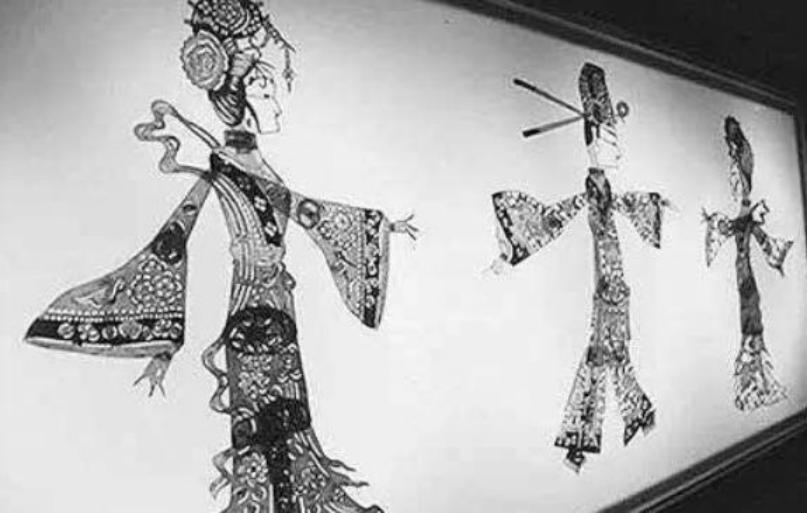
Figure 3. Shadow puppetry performance. Source: China Intangible Cultural Heritage Network
The Narrative Aesthetics ofShadow Puppetry
The narrative aesthetics of Chinese shadow puppetry are at the very heart of its artistic charm. It goes far beyond simply “telling a story”, it’s really a unique aesthetic system built through light, shadow, sound, and visuals on a two-dimensional screen. What first grabs my attention are the visual symbols: the puppeteers simplify and abstract the figures, yet audiences can immediately read their personalities from the colors of their costumes and the expressions on their faces. The logic and beauty of shadow-puppet storytelling really come from a stable, shared process of encoding and decoding symbols. By looking at how these symbols convey information and meaning, we can move past the surface of the art and understand the deeper cultural ideas and theories it carries.
The American philosopher Charles Sanders Peirce divided symbols into three types: icons, indexes, and symbols. His classification is based on the different relationships between a sign and what it represents:
Icon: points to its object through resemblance or imitation.
Index: points to its object through a factual connection, such as cause-and-effect or spatial closeness.
Symbol: points to its object through cultural convention or social agreement.10
If we follow this framework, we can explore how shadow puppetry operates as a sophisticated semiotic system. Peirce defined a sign as “something which stands to somebody for something in some respect or capacity,” and that definition fits shadow puppetry almost perfectly.
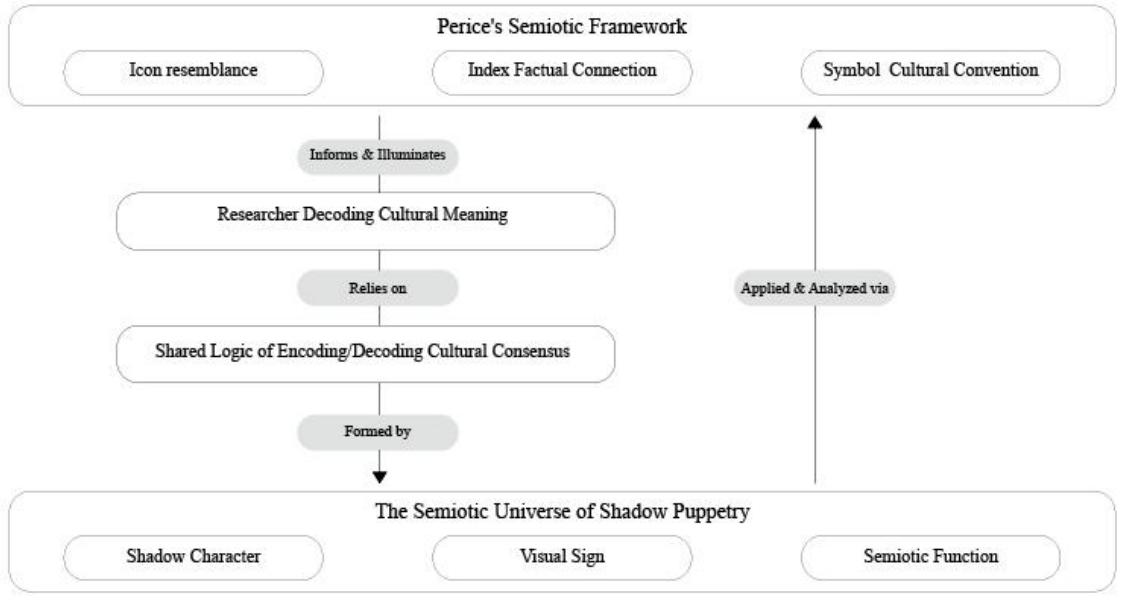
1. Icons: the foundation of imitation and resemblance
Icons work through similarity in appearance. They are the base that allows shadow plays to build believable narrative worlds and connect with the audience’s real-life experience.
In Chinese shadow puppetry, icons are everywhere. The figures of people and animals are stylized versions of reality, simplified but still recognizable. A general might appear tall and serious, dressed in heavy armor, while a horse is often shown with strong legs and a lively running pose. Even though the shapes are exaggerated or abstracted, their connection to real life is still very clear. The same goes for props and backgrounds like tables, chairs, swords, and spears all echo their real-world counterparts.
What’s even more fascinating is that movement brings everything to life. The way the puppets move forms a complete visual language of its own. When the puppeteer makes the figures walk, bow, drink, or fight, each gesture imitates real human or animal behavior. For instance, when a character “rides a horse,” the body gently
bounces up and down; when “crying,” the puppet lifts its sleeve to cover its face. These small, carefully designed gestures turn static cutouts into living, breathing characters.
But these movements aren’t just about performance, they tell stories. The play between light and shadow, movement and stillness, creates layers of meaning that go beyond literal representation.
What kind of stories?
Because movement brings everything to life. In shadow puppetry, every puppet’s movement is a form of “visual language.” When the puppeteer makes the puppets walk, bow, drink water, or fight, these movements not only resemble those of real people or animals but also express the character’s personality and emotions. For example, when a character “rides a horse,” their body will gently bounce up and down; when a character “cries,” they will raise their sleeve to cover their face. These subtle movements bring the originally static cardboard puppets to life, allowing the audience to understand and feel the characters.
How does it become a story?
These movements are not merely performances; they tell a story. The interplay of movement and stillness, light and shadow, allows the audience to see the characters’ psychology, understand the development of events, and even perceive the cultural or symbolic meanings hidden behind the movements. Therefore, the movements in shadow puppetry can tell a story on their own, allowing the audience to fully experience and understand the story without language.
This approach is exactly what inspires me in my architectural storytelling to use light, space, and movement to let a building “perform” its own story, much like a shadow play unfolding across time and memory.
2. Indexes: the dynamic engine of the narrative
If icons form the static skeleton of the story, indexes inject it with life and energy. Indexes work through causal or situational links, guiding the flow of the plot and hinting at characters ’ states of mind.
In shadow puppetry, a lot of the drama comes from how meaning is “indexed” through movement, sound, and space. The audience picks up on cues from the puppets ’ motions: a slow, unsteady step can suggest weakness or emotional struggle, while a sudden pause might signal shock or a turning point in the story. Sound works the same way. Fast, intense drumbeats usually mark a fight or chase scene; the bright, sharp notes of the suona (a Chinese horn) indicate celebration or a solemn moment; a deep, resonant bell can signal the passage of time or an emotional shift. Even space plays a role: when a puppet moves from one side of the screen to the other, the audience immediately understands that the character is traveling from one place to another.
3. Symbols: the cultural codes at the core
It reveals how human culture carries the most complex and profound information in the simplest form.
For centuries, shadow puppetry has captivated generations of Chinese audiences. This is not only because it’s visually appealing and entertaining, but also because it conveys cultural knowledge and values. Shadow puppetry embodies a profound system of symbols, deeply rooted in cultural conventions and accessible only to those familiar with those cultures. It is these symbols that give shadow puppetry its soul.
In shadow puppetry, the most powerful symbolism resides in the puppets’ heads, particularly the colors of their facial makeup. As in Peking Opera, different colors represent distinct character traits and moral qualities: red faces represent loyalty and bravery, white faces represent betrayal and cunning, and black faces symbolize honesty, integrity, and sometimes rugged strength. These meanings aren’t simply
derived from a material need; they’re the product of long-standing cultural traditions and the influence of opera and folk performances.
Furthermore, the singing style in Peking Opera is also an integral part of the storytelling. It is not merely a musical expression, but also an outburst of the characters’ emotions, carrying the dramatic tension of joy, anger, sorrow, and happiness. For first-time audiences, the high notes and sustained notes of Peking Opera may seem strange and distant, but this “unfamiliarity” is precisely the source of its charm; it uses a unique vocal language to tell stories of the complexity and depth of human nature.
Take the “Xipi Liushui” aria from FarewellMy Concubineas an example. Yu Ji’s melody shifts from gentle and melodious to mournful and poignant, expressing her attachment to Xiang Yu and the sorrow of parting. In TheDrunken Beauty, Yang Guifei’s “Manban” aria, with its long, drawn-out notes, showcases her captivating charm and desolation in her drunken state. The beauty of Peking Opera singing lies in its direct impact on the heart, inviting the audience into the inner world of the characters.11
Thus, symbolism makes shadow puppetry more than just a storytelling technique; it embodies Chinese ethics, social hierarchy, and aesthetic tastes. From this perspective, watching shadow puppetry can be a way to reconnect with one’s own cultural DNA, allowing one to experience a deep sense of cultural identity.
Philosophical Core: A Living Philosophy in Light and Shadow
For most people, shadow puppetry is about the delicate figures dancing on the screen and the fascinating stories they tell. But if we look beyond the surface, we discover
that this tiny stage actually embodies a whole world of Chinese philosophy, a worldview about the universe and about life itself. As folk art scholar Sun Jianjun points out, the forms and performance system of shadow puppetry “reflect the Chinese philosophical mindset, centered on the concept of Taoand guided by the principle of yin-yang balance.”12 In other words, it’s not just folk entertainment but a grand performance of ancient Chinese philosophy, especially Taoist thought, brought to life in popular art.
Light and Shadow: A Concrete Expression of Yin-Yang
The very foundation of shadow puppetry lies in the interplay of light and shadow. And this is a perfect artistic expression of one of the most fundamental ideas in Chinese thought: yin and yang.
As Sun Jianjun explains that A shadow play is, in fact, the creation of a living world on a white screen through the shifting of light and shadow. Behind the screen, the lamp or candlelight represents “yang”, which is active, bright, and creative. The shadows cast on the screen are “yin” is passive, dark, and reflective. The puppeteer manipulating the figures is a real, living being, embodying “Yang”, while the manipulated puppet itself is a lifeless, driven image, embodying “Yin” .
“Here, light is Yang, shadow is Yin… Through their manipulation, the artists achieve a harmonious unity between these two elements of Yin and Yang in motion, thereby acting out the creation and transformation of all things in the universe.” 13 Therefore, the shadow puppet stage is a dynamic, miniature model of the cosmos, its operating principles pointing directly to the core of traditional Chinese philosophy.
In summary, shadow puppetry is far from a simple form of folk entertainment. Through the interpretations of scholars like Sun Jianjun, we see that it is a
performance about life, form, and spirit, guided by the macro philosophy of Taoist Yin-Yang. It uses the intuitive form of the light-shadow duality within an aesthetic space where void and solid interplay. Through its unique artistic language, it transforms abstract Chinese philosophical ideas into vivid imagery that can be felt, understood, and touched.
In the past, shadow puppetry was primarily a form of entertainment for the masses, and it inevitably had its limitations. With the rise of mobile phones, computers, and other entertainment devices, shadow puppetry gradually lost its appeal. Nowadays, it can mostly only be seen on special occasions, and many young people have never even seen it in person.
When it comes to shadow puppetry, many people still recall this image: performers standing behind a white screen, manipulating silhouettes made of animal hides or cardboard while narrating a story. However, the innovative multimedia shadow play Mulan completely overturned this traditional impression. It upgraded the screen to a setup resembling a movie screen, creating a completely different visual experience.
With the support of multimedia technology, the perfect interplay of light and shadow, music and narrative not only brought this intangible cultural heritage to life but also helped it reach a global audience.
At the screening held at Shanghai Siping Cinema on February 12, 2025, an audience shared with the reporter after the show: “The Mulan we watched today felt very different from the traditional shadow puppetry I remember from childhood, which usually involved setting up a stage with gongs and drums. Back then, it was often hard to see clearly from the back rows. But today’s performance was exceptionally brilliant that was truly a visual and artistic show.”
Behind such acclaim lies innovative design. The production not only featured lighting from both front and back but also drew inspiration from stage lighting techniques, creating a three-dimensional visual space for the audience. The character designs broke away from the traditionally vibrant colors, instead using the black-and-white tones of Chinese ink wash painting as a base, with subtle touches of color added to certain parts. The figures combined the exaggerated expressiveness of animation with the charm of traditional Chinese paper-cutting.14
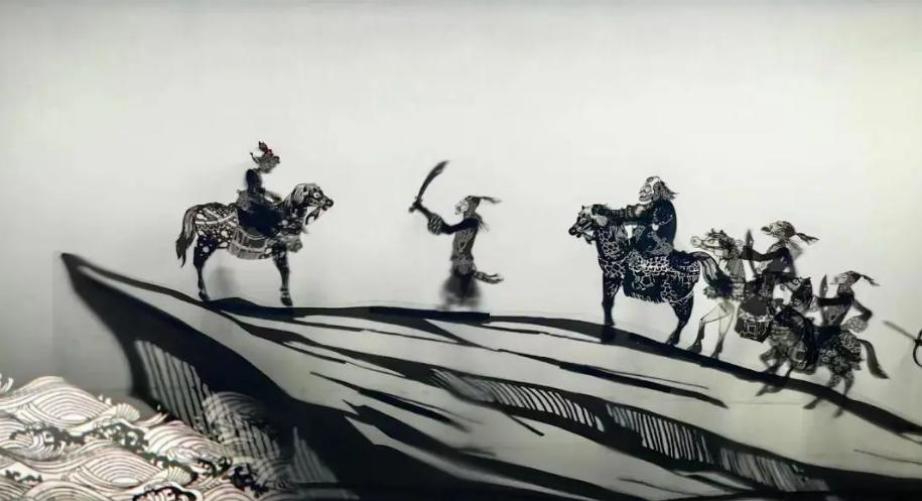
The storyline also introduced a fresh adaptation which specifically, adding a white tiger as Mulan’s guardian spirit on the battlefield. This addition infused the classic tale with a touch of legend and romance.
Part 3 Plato’s Allegory of the Cave
When I was looking for a theoretical framework to connect with the art of shadow puppetry, I started wondering what kind of ideas could match its visual and symbolic form. That’s when I thought of Plato’s Allegory of the Cave. The two actually share some striking formal similarities.
First, there’s the light source and projection. Both rely on a hidden light, maybe a fire, maybe a lamp. In the cave, it’s the fire burning behind the prisoners. In shadow puppetry, it’s the lamp behind the screen. The light creates the images but also defines the boundary between illusion and reality.
Second, there are the puppets or props. In both cases, something is being manipulated to create the images. In Plato’s cave, the shadows come from people holding up statues or wooden figures. In shadow puppetry, the images are made by skilled artists moving the leather puppets. These figures act as intermediaries between the real and the perceived.
Third, there’s the screen or wall. Both have a surface that receives the projection. In the cave, the prisoners face the cave wall. In shadow puppetry, the audience faces a white screen. This surface becomes the stage of appearances and at the same time, it hides the truth behind it.
Fourth, there are the viewers. In both situations, there’s a group watching the projections. The prisoners in the cave are chained, facing only the shadows, unable to see the real world. The audience in a shadow play, on the other hand, sits voluntarily in front of the screen, enjoying the illusion. One group is forced to watch, the other chooses to.
Finally, there’s the idea of the manipulator and the truth. Behind both scenes, there’s someone controlling the images. In the cave, the people holding the statues may never have seen the sunlight themselves. In shadow puppetry, the puppeteers are masters hidden behind the screen, bringing the shadows to life. Both reveal that behind every image, there’s someone shaping what we see and how we understand it.
Meaning ofPlato ‘s Allegory ofthe Cave
“Plato’s Allegory of the Cave is a philosophical metaphor he proposed in The Republic to illustrate the relationship between people’s perception of reality and truth.
In the allegory, Plato describes people who have spent their entire lives chained by their necks and ankles in front of an inner wall with a view of the empty outer wall of the cave. They observe the shadows projected onto the outer wall by objects carried behind the inner wall by people who are invisible to the chained “prisoners” and who walk along the inner wall with a fire behind them, creating the shadows on the inner wall in front of the prisoners. The “sign bearers” pronounce the names of the objects, the sounds of which are reflected near the shadows and are understood by the prisoners as if they were coming from the shadows themselves.
Only the shadows and sounds are the prisoners’ reality, which are not accurate representations of the real world. The shadows represent distorted and blurred copies of reality we can perceive through our senses, while the objects under the Sun represent the true forms of objects that we can only perceive through reason.”15
Perfect Form
In Plato’s Republic, he presents the Allegory of the Cave to explain his idea of the “perfect form” or Theory of Forms. He argues that the sensory world is only a shadow or imitation of the ideal world, which is eternal and unchanging.16 For example, every particular tree in the world is merely an image of the perfect form of “Tree,” which cannot be directly perceived by the senses.17
I am thinking about what happens if I apply this idea to architecture, like the ArtEZ campus. Light, shadows, proportions, spatial feel, even the paths people walk which can all be seen as ways to explore the “perfect archetype.” I want to capture moments that feel perfect to me, maybe a corner where the light hits just right, a material, a flow of movement, or a symbol, these moments that make the space feel ideal. Just like the prisoner in the cave who steps out of the shadows and sees the real world, people in the building can experience these near-perfect moments.
In other words, the perfect form doesn’t mean the building itself has to be flawless. It’s about the designer, users, or visitors chasing those ideal moments, a corner with overlapping light and shadow, a smooth transition along a pathway, or a space with just the right proportions and colors. Through design and perception, the imperfect reality can be experienced in a way that feels as close as possible to the ideal story of the space. Perhaps here the projection itself is the archetype, not the representation.
Butterfly Dream
When talking about reality and illusion, I think of a game character I often play in Honor of Kings, “Zhuang Zhou” . In the game, he appears as a sleepy man sitting cross-legged on a giant fish, surrounded by butterflies. He often says lines, “The butterfly is me, and I am the butterfly,” “Is it really fun to fight in my dream?” and “Death is a beautiful long sleep which deserves a beautiful song.”
This character is actually based on a real historical figure, “Zhuangzi (sometimes also referred to as Zhuang Zhou, 369?-286 BC) dreamed that he had become a butterfly. The story appears in “On Seeing Things as Equal” in the classic Zhuangzi. Zhuangzi dreamed that he had become a butterfly, but woke up to find he was still himself. In fact he was not sure whether he had dreamed of becoming a butterfly or a butterfly had dreamed of becoming him. Zhuangzi used this dream to remind people that there must be a relative difference between oneself and others, between dreaming and wakefulness, and between all other things. However, these boundaries were not
absolute and could be broken. Things were in constant transformation and circulation, which he called “the transformation of things.”18
This story explores the blurred line between dream and reality, and it questions how reliable our perception truly is. What we think of as “reality” might just be a dream created by our own consciousness. A similar idea appears in Plato’s Allegory of the Cave. In that story, prisoners are locked in a cave all their lives, seeing only the shadows cast on the wall by firelight, and they mistake those shadows for the real world. Only when one prisoner escapes and sees the world under the sunlight does he realize that everything he once believed in was just an illusion.
Both Zhuangzi and Plato, though separated by vast cultural and historical distances, engage in a shared pursuit: the exploration of what is truly real. Zhuang Zhou reveals the illusionary nature of consciousness through the metaphor of dreams, while Plato exposes the limitations of sensory experience through the imagery of shadows. Together, they remind us that the world we perceive may be but a fragment of a deeper reality, and that only through reflection and transcendence can we approach the essence of truth.
Significance for Storytelling andArchitecture
After studying Plato’s Allegory of the Cave, I can more understand that the world we usually perceive, like the shadows on the cave wall, is not the true “essence” of things. The real “perfect form” exists in the realm of ideas. This allegory offers valuable insights for both storytelling and architecture: space and narrative can guide people from appearances toward understanding, from shadow toward light.
Applied to the ArtEZ campus, this idea becomes particularly clear. The campus was originally a hospital and, after several expansions, now connects buildings from different periods and architectural styles. Former hospital wards and an underground mortuary have been transformed into classrooms and exhibition spaces. The architecture itself feels like a “shadow world” layered with history, full of stories. At first, people may only notice the external forms, but by paying attention to light, space, and materiality, they can perceive the hidden truths and history within the architecture, but in this case the prisoners become liberated and gradually see the light.
The concept of the perfect form is especially significant here. The interplay of light and shadow, spatial proportions, circulation paths, and materiality throughout the campus can be seen as an exploration of the ideal world:
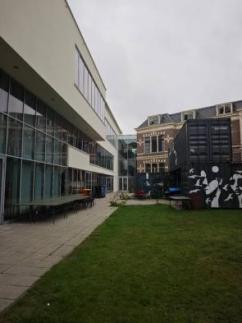
1) The combination of modern glass materials with historically rich brick colors connects the past with the present, reality with the ideal.
1) 2) 3)
Figure 5. Pictures of ArtEZ campus in Zwolle. Source: Photo by author.
These moments make the architecture more than functional; it becomes a storytelling medium. The perfect form does not mean the buildings themselves must be flawless. Rather, through design and perception, the imperfect reality can evoke a sense of the ideal. At Artez, every corner where light and shadow intersect, every flowing corridor,
represents a pursuit of the perfect form, and the architecture itself tells stories of history and experience through space.
Part 4 Case Study
Case study 1 Innovative Jewelry Design
“South Korean jewelry artist Namkyung Lee takes her inspiration from windows and the views through them. She writes: “The feelings and memories aroused by gazing through windows stay with us as images, distorted and layered.” Lee uses sills, walls, objects, spaces, and scenes drawn from her memory to create composite spaces, which she then embodies as jewelry. Her own photographs, transferred onto windows, express moments and memories; faded colors and patterns serve as symbols of memories dimmed through time. With her current collection, she hopes to inspire in wearers the same recall and composure brought about when viewing the space beyond the window.”19
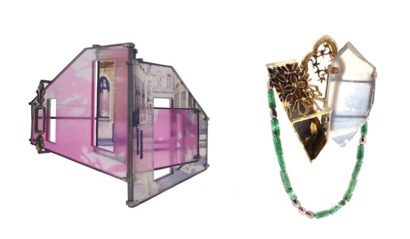
I’ve been thinking about whether this approach could inspire architectural storytelling. In architecture, a “window” isn’t just a way for light to come in, it’s also a kind of interface connecting inside and outside, reality and imagination, past and present. Just like Lee creates “composite spaces” in her work by layering memories and images, whether by using projections, video installations, or different material layers can create “windows of memory” .
Her design approach resonates with the logic of shadow puppetry. Shadow plays overlay multiple dimensions of reality on a single plane through light and shadow; similarly, architecture can create a narrative experience between reality and memory through the “reveal and conceal” of space and materials.
Just as Namkyung Lee hopes her work allows viewers to re-experience the emotions and serenity evoked by gazing through a window, the goal of architectural storytelling is also to awaken emotional resonance with the space. Through the layering of light, material, images, and memory and other elements, it is not only reconstructing the history of a building, but also inviting visitors into its spiritual dimension to feel the passage of time, traces of existence, and the subtle emotional connections between people and space.
Case study 2 Silhouette animation
Princes and Princesses (2000) is a work by French animation master Michel Ocelot, who employs silhouette animation to tell both ancient and newly imagined fables. It is a case study I find highly Inspired and worthy of reference.
While watching the animation, my first impression was that it is a “play within a play.” What deeply moved me is that the film does not begin by directly telling a prince and princess story. Instead, it opens with three creators, an old man, a boy, and a girl which gathering in an ancient theater. Using their rich imagination and a magical clothing-making machine, they design costumes, develop plots, create characters, and perform the stories themselves. Thus, a series of unique “prince and princess” fables are born. The film consists of six unconventional tales set across different times and spaces, from the Middle Ages to the year 3000, from ancient Egypt to feudal Japan that blending the essence of ancient fables while subverting traditional expectations.
The story that left the deepest impression on me is “The Fig Boy.”(Le Garçon des figues.) Set in a world rich with ancient Egyptian aesthetics, it adapts a fable about a kind-hearted boy who offers figs to the Queen and is rewarded. A jealous guard attempts to sabotage him through deceit but ultimately faces the consequences of his own greed. This reflects the moral that honesty is rewarded while greed leads to self-destruction.
The Deeper Significance of Cultural Representation
The film opens with the three creators discussing character designs. One suggests using Pharaoh Hatshepsut (BC1479–1458) as a prototype, and the scene transitions into showing their research process, such as how to style her hair. Once the story begins, viewers can clearly identify Hatshepsut’s influence in the costumes and hairstyles.
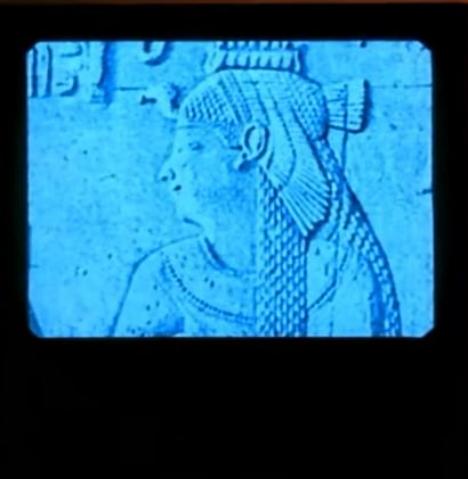
First, all character designs adhere to “Egyptian Frontalism”, an artistic convention the director intentionally incorporated.
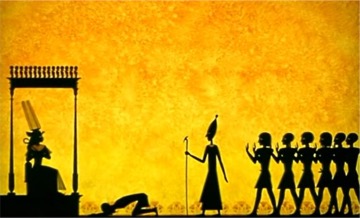
In ancient Egyptian art, the “law of frontality” was a fundamental stylistic rule: heads and feet were depicted in profile, while eyes and torsos faced the viewer frontally. This approach presented each body part from its most characteristic angle. Figures appeared symmetrical, poised, as if frozen in eternal time. Artists aimed not for realism but for completeness and order, expressing the eternal cycle of life and the
cosmos.20 In tomb and temple paintings, both pharaohs and deities followed this visual order, symbolizing divinity, balance, and immortality.21
Second, when considering how to represent the passage of time, one creator proposes using the “solar barque of the sun god Ra sailing across the sky” . This idea deeply resonated with me, and upon further research, I discovered its profound cultural significance.
In ancient Egyptian mythology, the sun god Ra sailed across the heavens each day in his solar barque. During the day he traveled east to west aboard the Mandjet (“the Boat of Millions of Years”), and at night he journeyed through the underworld in the Mesektet, to be reborn at dawn. This daily cycle symbolized the eternal rhythm of day and night, life and death, order and chaos.22 At night, Ra’s journey became a cosmic struggle. He confronted the serpent of chaos, Apophis (Apep), whose defeat ensured the sun’s rebirth each morning.23 The voyage thus represented not only the passage of time but the perpetual renewal of the cosmos itself.
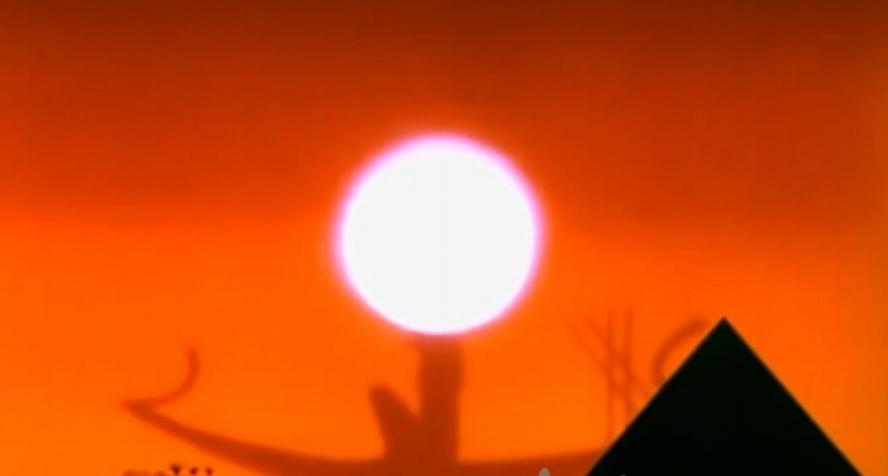
Archaeological evidence, such as the Khufu Solar Boat discovered beside the Great Pyramid at Giza, attests to this belief.24 The vessel was likely intended to allow the deceased Pharaoh to join Ra’s journey through the heavens, securing his own rebirth in the afterlife.
Ra’s voyage across the sky was therefore more than an astronomical image, it was a theological metaphor expressing the Egyptian vision of the universe:
Sunrise and sunset mirrored the cycle of life and death.
The solar barque embodied the soul’s passage through darkness.
Rebirth affirmed the triumph of Ma’at (cosmic order) over Isfet (chaos).
In short, the Sun God’s boat reflected the Egyptians ’ conviction that all existence moves within a divine rhythm of voyage, renewal, and eternal light. In the film, we see the solar barque rising to signify a new day and descending to mark sunset.
“The Fig Boy” (Le Garçon des figues) is more than just a retelling of a fable, it is a masterful creation infused with the soul of ancient Egyptian art. The film strictly adheres to Egyptian Frontalism, making the characters resemble moving murals that carry a sense of eternity and divinity. Meanwhile, the voyage of the “solar barque” elevates the passage of time into an epic metaphor for cosmic cycles.
Most remarkably, the “golden and warm-toned backgrounds” do more than recreate the brilliance and sanctity of Egypt, which they form a profound dialogue with the black silhouettes. The silhouettes strip away details, making the characters into universal archetypes, while the warm backgrounds become part of the narrative itself, symbolizing the divine grace enveloping their destinies.
What did this case study bring me?
It reopened the possibilities of “shadow narrative” for me. It not only presented the pure beauty of shadow animation but also showed me how shadows can carry
narrative power in different cultural contexts. What attracted me most was that the film didn’t directly enter the story but instead showed us how three creators “constructed” the story in the theater: they designed costumes, discussed styling, and refined the plot; the entire process from conception to realization was presented to the audience. This made me realize that shadow storytelling is not just about presenting the result but about allowing the audience to participate in the story’s generation. This open narrative approach greatly broadened my understanding of storytelling and the layers of story presentation.
Especially in “The Fig Boy”, the director’s precise extraction of ancient Egyptian visual language deeply moved me. The story itself is simple, yet its visual system imbues it with a unique emotional depth: Egyptian frontalism makes the characters appear as stable and sacred as an eternal mural; Ra’s sun boat transforms time from a “narrative” into a “cosmic cycle”; the dialogue between the golden background and black silhouettes elevates the characters beyond personal identity, making them universal moral symbols.
This made me realize that narrative is not merely a collection of plots, but a complete system of meaning constructed from visuals, culture, and symbolism.
How does this enrich my understanding of storytelling?
This case made me realize three key points:
1. Visual style itself is narrative. Frontalism, color, and light and shadow are not decorations, but part of the story; they can shape characters, express emotions, and imply values without language.
2. Stories can be constructed through cultural symbols, not simply driven by plot. The appearance of the sun boat is not merely about the “passage of time,” but embedding the story into a mythological universe, giving the narrative a philosophical dimension.
3. Shadows are an abstract force. The silhouettes eliminate specific details, making the characters more universal, cross-cultural symbols, leaving room for interpretation, thus enhancing the depth of the narrative. These discoveries led me to consider: can architectural narratives also tell spatial stories through “visual structure, cultural symbols and abstract silhouettes”?
How does it relate to Chinese shadow puppetry?
When I compared this film with Chinese shadow puppetry, I discovered a profound resonance between the two:
1. Both rely on light and shadow to construct their worlds. Like Ocelot’s silhouette animation, shadow puppetry expresses emotions and time through light sources, shadows, and silhouettes; the shadows themselves are a narrative language.
2. Both emphasize the symbolism of character movements. Every movement of the characters in shadow puppetry is highly refined, echoing the simplified yet precise actions in the film, such as “lightly jumping while riding a horse” or “covering one’s face while crying.”
3. Both use cultural symbols to construct narrative context. Shadow puppetry constructs its narrative through traditional costumes, colors, and stylized movements; Ocelot, on the other hand, uses Egyptian formal language and mythological systems to build its story background.
4. Similarly, using “abstraction” enhances the universality of the story.
Silhouettes allow characters to transcend specific identities, becoming vehicles for universal human experience; similarly, shadow puppetry uses stylized imagery to express emotional and moral themes that transcend everyday life.
Shadow narrative is not a simple projection, but a cross-cultural, cross-media storytelling method. It constructs a unique universe through abstraction, symbols, light and shadow, and movement.
Part 5 Tools and Method
Hospital to the ArtEZ Campus in Memory
Historical Background
When people first see the history of Zwolle campus, many think of a hospital. I’ve mentioned the word “hospital” several times already, and digging into the archives, I realized that the hospital era holds the most compelling stories. In the ArtEZ library in Zwolle, I found fascinating records. One article, “Gemeenteraad debatteerde jarenlang over bouw van Sophia Ziekenhuis” from ZWOLS HISTORISCH TIJDSCHRIFT, contains lively personal memories showing how the hospital played a vital role in public health, social care, and everyday life. I decided to focus on the historical stories of the hospital period to explore the relationship between architecture, memory and spatial narrative.
Story 1: Dr.Schaepman’s Brave Appeal (1870s)
In 19th-century Zwolle, hospitals were often seen as the last refuge for the poor. Anesthesia was still new, and many patients simply waited for death. Then one day, Dr. Schaepman saved his own daughter. News of this spread across the city like wildfire, then people realized that hospitals could save lives, not just witness deaths.
Motivated by this, Schaepman and several colleagues wrote to the city council, arguing that Zwolle needed a modern, fully equipped hospital for all social classes. They pointed out the repeated outbreaks of diseases like typhus and scarlet fever, which the city’s facilities simply couldn’t handle.² At first, the council was indifferent: wealthy citizens could be treated at home, while the poor relied on rudimentary
shelters. After more than five years of debate, in 1880, the council approved Sophia Hospital, located in Bagijnweide and named after Queen Sophia.25
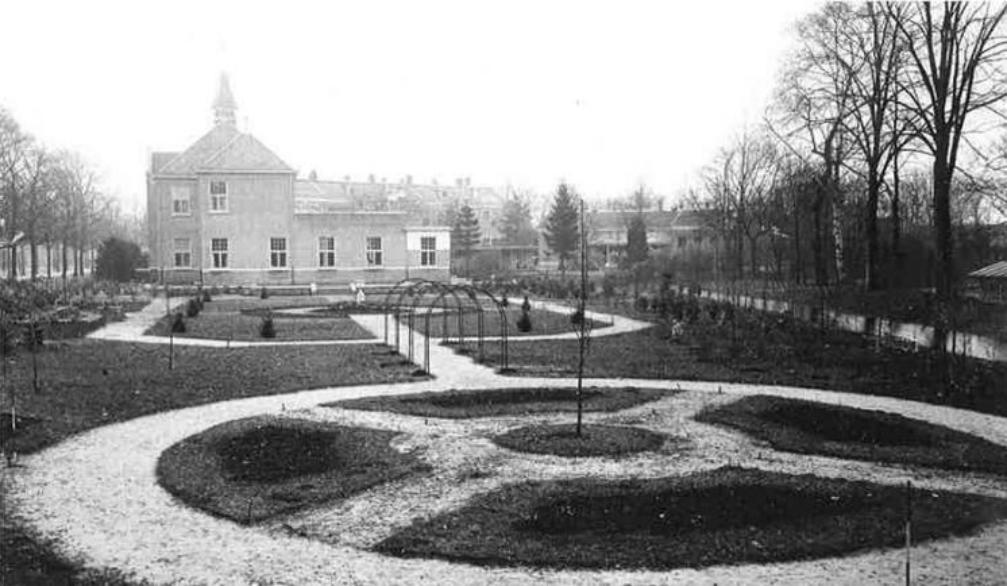
This story shows how medical innovation shaped public policy and highlights the hospital’s early role in supporting the city’s most vulnerable.
Story 2: Memories of a Young Patient in the 1940s
Decades later, Sophia Hospital became the setting for warmer, more personal stories. John Rijfkogel recalled his childhood experience: in 1940, under German occupation, he was admitted with severe peritonitis.⁴ During a seven-hour operation, the attentive care of doctors and nurses helped him slowly recover. In the post-op ward, sunlight streamed through the windows, nurses brought food and comfort, and by his bed hung a postcard: a hoopoe walking gracefully among flowers.26 For young John, the hospital was more than a place for treatment, it was a safe, nurturing space that gave him the courage to face life again.
From Dr. Schaepman’s courageous appeal to young John’s tender memories, Sophia Hospital witnessed both the evolution of Zwolle’s medical history and the personal lives of countless people. Today, part of this historic site lives on as the ArtEZ campus, where echoes of the past mingle with the present in every corridor and garden.
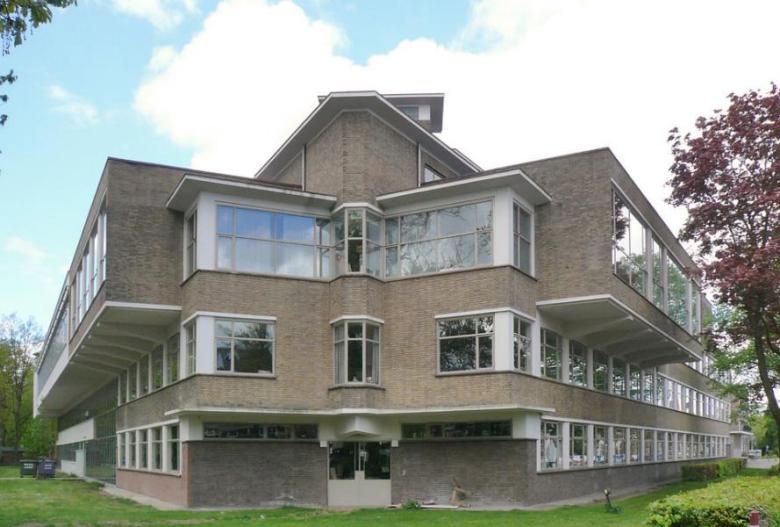
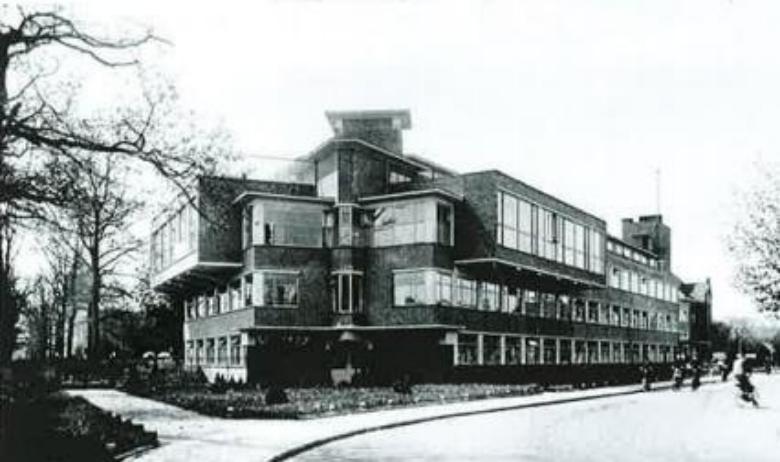
On the ArtEZ campus, the Sophia Hospital and its history are like the “shadows” left behind. Light and shadow, spatial proportions, materials and movement lines are like tools used by architecture to tell stories, allowing people to “see” the history and emotions hidden behind the appearance.
Personal Reflection
For me, the school is not only a place for study and work but also a space for self-exploration and transformation. Entering a completely new learning environment with a teaching model different from China has been both a challenge and an awakening. This process has pushed me to question how space, light, and atmosphere influence my emotional and creative state, how architecture itself can become part of one’s inner narrative.
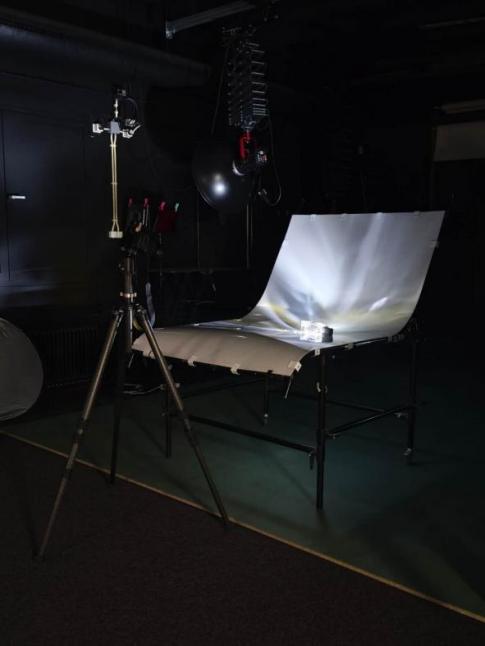
The workshop, in particular, represents a place of freedom and discovery. It is where I can experiment without boundaries, exploring how light interacts with materials and how these interactions shape perception. I still remember one afternoon in the photography studio that the darkened space, the moment when light passed through a
piece of glass and projected softly onto a white screen. In that silence, the image was simple yet profound. It felt complete, balanced, and somehow “perfect.” That brief moment revealed how the dialogue between light and matter can transcend the physical and touch something ideal, what Plato describes as the perfect archetype.
Through these personal encounters, I began to realize that architecture is not just about form or function, but about experience and storytelling. The way light moves across a wall, how a space holds silence, or how materials reveal traces of time, these are not just visual details; they are fragments of a narrative. They invite us to pause, to reflect, and to connect our own stories with the space around us.
In this sense, my research is not only theoretical but also deeply personal. It is about finding meaning in the everyday which discovering those fleeting, “perfect” moments where architecture, memory, and light merge into one continuous story.
Campus Environment Experience Interviews
Gathering insights about experiences of “perfect” spatial moments. The purpose of this survey is to better understand how people experience the “perfect moments” in the Artez campus.
Question 1:
What types of moments in the campus environment evoke a sense of “perfection” for you? For example, do factors such as natural light, building materials, spatial proportions, or other architectural elements contribute to this feeling? How would you describe the emotions or sensations these moments generate?
By asking when they feel a sense of “perfection,” we can capture the moments shaped by light, materials, spatial proportions, or specific scenes.
Question 2:
Which specific location or space within the campus do you find most appealing or meaningful, and why? Please explain the features, atmosphere, or qualities that make this place significant to you.
By asking which spot they like the most and why, helps reveal which elements of the space resonate emotionally with people, and which design details create a strong sense of connection or enjoyment.
Overall, the survey serves several purposes:
1. Capturing experiential feelings: Understand from users ’ perspectives which moments and spaces evoke an idealized sense of experience.
2. Validating architectural storytelling: See whether the building’s light, layout, and materials effectively convey history, emotion, or narrative.
3. Supporting the theory of the perfect archetype: Connect Plato’s idea of the perfect form with real-life spatial experiences, exploring how the “shadow” in reality echoes the ideal.
4. Informing design inspiration: The results can guide future campus design or art projects, especially in using light, material, and movement to create moments of ideal experience.
In short, this survey is not just about collecting data, it’s a way to explore how architecture can tell stories through space, light, and material, bringing the concept of the perfect archetype into tangible experience.
Survey Insights 1: Minji, student from ArtEZ Corporeal MA2
The survey responses highlight that her perception of “perfect moments” is closely
related to light, sound, and spatial conditions. For the Question 1, she mentioned:
“ When I got school before 9am to prepare my assignment or
presentation, there are not many students but the light is on, the sound
is quiet. The mood makes me more being productive, so this start point seems opening the day productively. ”
Her response indicates that arriving at school before 9 a.m. to prepare assignments or presentations, when the campus is quiet and the lights are on, creates a productive and focused atmosphere. This shows how specific temporal and sensory conditions can evoke an ideal experience.
Regarding favorite spots, Minji further explained:
“ When I want to focus something on, I listen music to cut the sound from others in my place in studio. When I do something without concentration, I usually like to use the kitchen area, because I like use the big table to put my paper and laptop or something. ”
She prefers the studio with music for deep concentration, as it helps block distractions. For less focused work, she chooses the kitchen area because the large tables allow spreading out papers, laptops, and other materials.
These responses suggest that both environmental qualities for instance light, sound, spatial layout and functional affordances of specific spaces influence the experience of “perfect moments.” Such insights help understand how architectural elements and spatial design can support user focus, emotional engagement, and experience, linking directly to the concept of the perfect archetype in architectural experience.
Survey Insights 2: TIAN, student from ArtEZ Corporeal MA2
TIAN’s responses highlight the significance of privacy, spatial enclosure, and lighting in creating moments of personal reflection and ideal experience. Regarding moments of “perfection,” TIAN wrote:
“Ifeel good at school when there is no one around. I am the only one in the whole space, especially when it is a dark, semi-enclosed space with only a little light. Ifeel a surreal illusion. ”
This indicates that moments of solitude in semi-enclosed, dimly lit spaces can evoke a sense of calm, focus, and even a surreal experience. The combination of enclosure and selective lighting allows the space to act as a personal retreat from the busy campus environment.
For favorite spaces, TIAN stated:
“I like the toilets in school. Since I was a child, the toilet has been a ‘non-space ‘ independent ofthe real world, where I can vent my unauthorized thoughts. ”
This response emphasizes the emotional and symbolic role of unconventional or overlooked spaces. Even a typically utilitarian area, like a toilet, can serve as a private, reflective environment where one can engage with thoughts and emotions freely.
TIAN’s responses suggest that spatial intimacy, light, and isolation contribute strongly to the perception of “perfect moments,” highlighting how both architectural form and user experience intersect. These insights complement the concept of the perfect archetype, showing how certain conditions in the built environment can evoke idealized emotional and sensory experiences.
Survey Insights 2: Jing, graduate from ArtEZ Corporeal
The survey responses reveal how students perceive “perfect moments” through light, material, and atmosphere, often connecting these experiences with emotional resonance and a sense of place. For example, Jing described:
“It was in the afternoon, sitting near that lawn and looking toward the workshop, the moment the sunlight hit the facade facing the grass. The bronze dome on top of the workshop building gave me a solemn feeling… The row of small windows below shimmered vividly under the reflected light, while the workspace beneath appeared transparent… To me, this facade feels closely connected to the outside world, yetfull ofits own character. ”
Her reflection shows a deep sensitivity to light, color, and material transformation. She perceives the oxidized green of the facade and the reflected sunlight as signs of time and memory, linking the building’s materiality to its historical and emotional depth. The light, reflections, and visible activity inside create a visual dialogue between past and present, interior and exterior, embodying what Plato calls the pursuit of the perfect archetype that a moment when harmony between reality and perception is briefly achieved.
Regarding her favorite spot, Jing shared:
“I really like the spot under that big tree on campus where the trunk extends and forms an independent space as it reaches the ground… The flickering light and shadows are truly beautiful. ”
This space under the tree represents a natural form of architectural storytelling, where filtered sunlight and shadow create a tranquil yet dynamic environment. The changing light patterns provide a sense of rhythm and intimacy, turning an ordinary outdoor spot into a personal retreat of reflection and inspiration.
Together, Jing’s responses demonstrate how light, material, and nature interact to shape personal experiences of architectural space. Her observations reveal that “perfect moments” often occur when environmental qualities evoke emotional balance and spatial awareness — moments that bridge the sensory and the ideal, aligning with the philosophical concept of the perfect archetype in architectural perception.
Integrating the “Perfect Archetype”
This is my first attempt to transform personal spatial experiences into a visual narrative. On the lawn in front of the Artez campus, I discovered my own “perfect archetype” that a space in which I could be completely immersed. After classes, I often come here to sit in the sunlight, feeling the gentle breeze and the rhythm of life around me. The calm and comfort make me feel as if I am part of the space itself.
In these moments, the architecture is no longer just a backdrop; it becomes an integral part of the experience. The curved stone benches are shaped like small animals, quietly resting on the grass, while the open sky and the green-domed together create a sense of openness and harmony. The black-and-white image on the right is my reinterpretation of this scene: the curves of the animal-shaped benches are abstracted into soft shadows, floating over the lawn, like an interplay of light and form across time, this embodies the “perfect archetype” as I perceive it, visually capturing the stillness, rhythm, and light of the space.
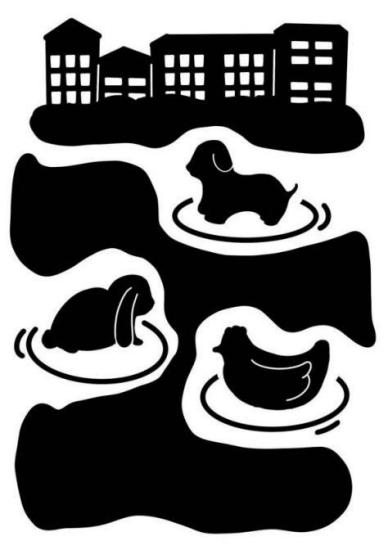
Through this experiment, I began to realize that everyday spatial experiences themselves carry narrative potential. Seemingly ordinary elements such as a patch of grass, a ray of sunlight, a few animal-shaped benches that reveal layers of emotion and philosophy when observed and expressed anew, forming my own “perfect archetype,” a space memory that is both real and idealized.
From Narrative Input To Visual Narrative
In this phase, I want to transform the experiences of former Sophia Hospital patients,
my own spatial impressions on campus, and the interviewees ’ stories of “perfect moments” into a spatial narrative built around light and shadow.
This process isn’t just about turning text into visuals, it’s really about turning perception into the language of light, so that emotions, memories, and time can reappear through the play of light and shadow within architecture.
The goal is to create a storytelling system that follows the logic of shadow play by using light and darkness to give the building emotional and mnemonic depth, allowing it to become a kind of theater that tells its own story.
Storyboard Creation
1) I start by breaking each story down, almost like writing a script for a shadow play, turning words and memories into a series of visual fragments.
2) Each frame represents a “perfect moment” like the breeze lifting a curtain in a patient’s room, the reflection at the end of a corridor, or the shadows of trees drifting across a glass wall.
These scenes don’t just record history; they capture the behavior of light that how it enters, reflects, diffuses, and fades that becoming the pulse of the narrative.
Scene Composition
1) The building itself becomes the stage, and light and shadow become the actors.
2) Architectural elements mentioned in the interviews that walls, windows, corridors, domes act as characters, participating in the story through projection and shadow.
3) The movement of light works like a moving camera, shaping the rhythm and emotional shifts ofthe story.
Temporal Layering
Different moments in time overlap within the same scene:
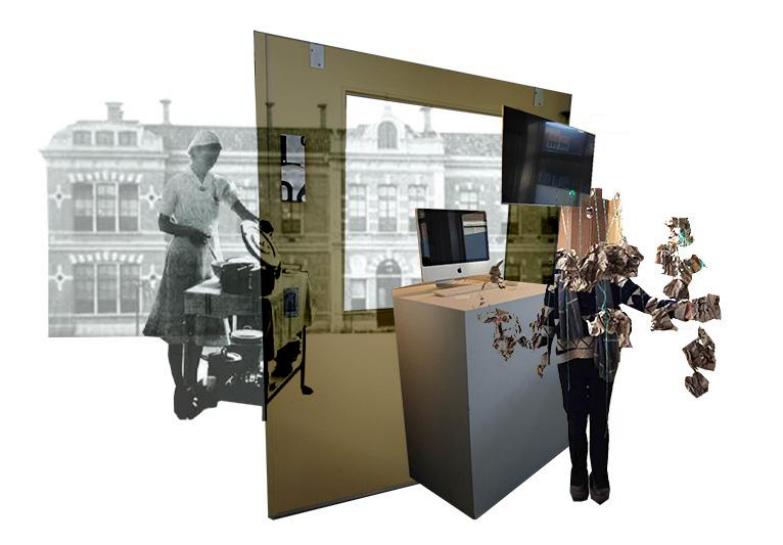
1) The silhouette of a past patient slowly appears on the wall of a present-day
classroom.
2) The old hospital windows reflect the faces of today’s students. Light and shadow become a bridge between memory and reality, like two layers on a shadow puppet screen, one belonging to history, the other to the present.
Material Experimentation
1) Using translucent and opaque materials like paper, glass, or fabric to simulate a visual structure of interwoven light and dark, or yin and yang.
2) Each material bends, filters, or blurs light differently, revealing the layered quality of memory.
3) The path of light itself becomes part of the storytelling that its appearance, direction, and fading symbolize the flow of time and emotion.
Translating the Perfect Moment into Light and Shadow
From the interviews and my own experiences, most “perfect moments” were connected to light which soft morning light, afternoon reflections, evening shadows, or quiet, dim corners.
I can translate those sensations into specific light-shadow scenes:
1) Warm sunlight suggests healing and the revival of memory.
2) Cool shadows express solitude and contemplation.
3) Flickering or moving light represents the passage of time and shifts in consciousness.
These storyboards will form the visual foundation for subsequent cinematic or installation-based creations, allowing the story to be “projected” through dynamic light and shadow.
Outcome
I took Jing’s interview as an example, tried to represent her feeling into image.
“I really like the spot under that big tree on campus where the trunk extends and forms an independent space as it reaches the ground…
The flickering light and shadows are truly beautiful. ”
Scene 1 In the campus
Visual: A wide shot of a quiet university campus in the afternoon. She walk in the distance; sunlight filters through trees.
Mood: Peaceful, nostalgic
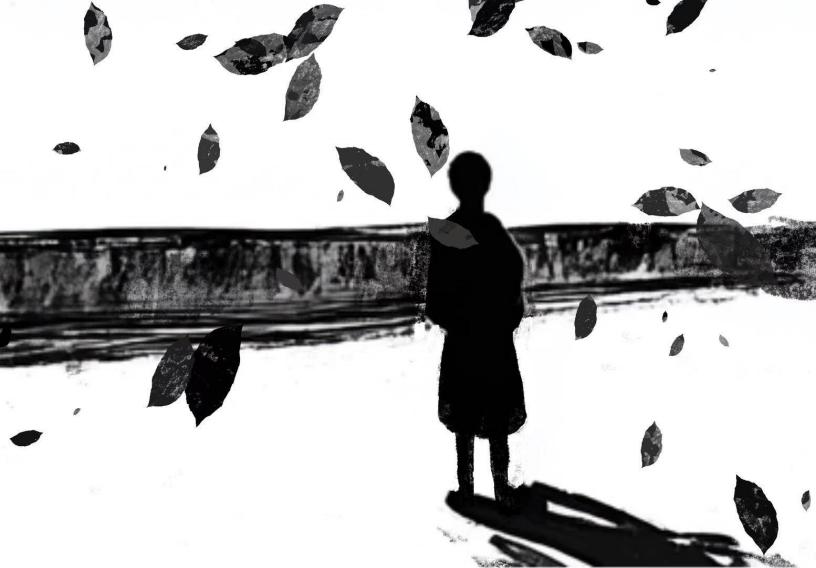
Scene 2 The hidden Space
Visual: She is standing quietly under the tree, small against the vast tree. The light slowly changes as clouds drift by.
Mood: Reflective, emotional closure.
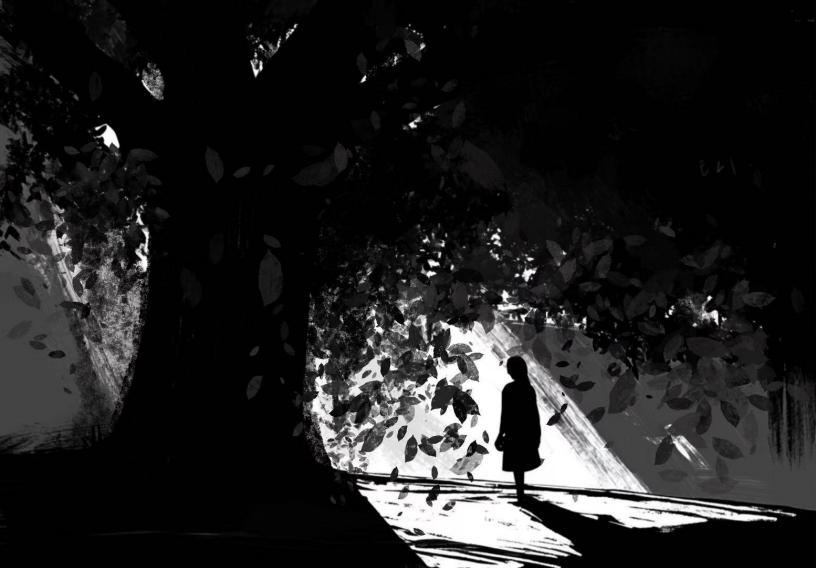
Scene 3 The Light and Shadows
Visual: Close-up of her face. Flickering light and shadows dance across her skin and the tree bark.
Mood: poetic, quite.

Based on my research so far, my next steps will focus on two main areas: developing the narrative and creating the visual language for the shadow puppetry.
For the narrative part, I’ll organize together different threads that histories from the Sophia Hospital era, the building’s physical evolution, and those “perfect moments” shared by students and teachers during interviews. The core theme will be from healing to creating. I plan to structure the story along three layers:
1) A timeline based on the three major expansions ofthe building.
2) An emotional layer built around patient stories and artistic experiences.
3) A philosophical layer inspired by Plato’s Cave and the concept of yin and yang. The goal is to develop a complete shadow play script with key scenes and emotional highlights.
On the visual side, I’ll be designing a unique symbolic system where the architecture itself becomes the “character.” I’ll abstract elements like the building’s surface, iconic features such as the bronze chimney and glass walls, and spatial components like corridors and windows, turning them into shadow puppets and scenic elements. This way, the building tells its own story: the walls speak, light and shadow perform, and everything comes together into a practical, visual storytelling method.
Narrative Framework: Blending “Story” and “Thought”
1) Historical thread (from Part 5: Site Research)
The entire narrative is structured around the building’s three major expansions, weaving in real stories from the Sofia Hospital era, such as Dr. Schaepman’s appeals. This keeps the narrative grounded in events that truly happened here, giving it historical weight as well as rich storytelling detail.
2) Emotional layer (from Part 5: Field Interviews)
This layer incorporates my own “perfect moments” along with the spatial experiences shared by Minji, TIAN, Jing, and others. These personal, emotionally charged fragments create a bridge between the building’s history and contemporary experience that making the past feel close enough to resonate within our present moments.
3) Philosophical layer (from Part 2: Shadow-Puppet Philosophy & Part 3: The Cave Allegory)
Plato’s idea of the “ideal form” is combined with the Daoist notion of yin and yang as the conceptual backbone of the narrative. In this way, the project isn’t just describing the evolution of a building; it is using the building to explore broader questions:
How do reality and illusion overlap?
How do memory and existence shape one another?
How do the ideal and the real reflect each other?
This framework ensures the work goes beyond storytelling—it proposes a way of thinking.
Visual Language: Building a “Shadow-Puppet” System of Expression
1) Architecture – Character (Icons)
Architectural elements like walls, corridors, windows, the bronze dome are treated as characters in a shadow-puppet performance, their shapes simplified into readable icons. When viewers see a silhouette, they immediately recognize:
“Oh, that’s an old 20th-century window,”
or “That’s the newly rebuilt pathway.”
The building becomes alive, carrying an identity within the narrative.
2) Light and shadow – Movement (Indexes)
The story is driven by the shifting behavior of light and shadow. How light moves,
how its brightness or color changes, and how shadows react which all become narrative cues. For example:
Light slowly gliding across a wall → time is passing
A sudden beam of strong light → an emotional shift, a surge of hope
A shadow projecting into another room → memories overlapping or time being traversed
3) Meaning – Culture (Symbols)
Cultural and philosophical meaning is embedded into the visual language.
Colors follow the shadow-puppet palette:
Red shadows symbolize life and courage (as in Schaepman’s story)
Black and white contrast reflects past vs. present, the balance of yin and yang
Philosophical symbols: yin–yang forms may appear subtly in compositions; transitions from darkness to light echo the Cave Allegory’s journey toward awakening.
Archetypal symbols: Jing’s “light under the tree,” for example, becomes a symbol of an ideal moment, something close to a “perfect form.”
Overall, I will focus on narrative construction and the establishment of visual language, so that the work not only tells the history of a place, but also makes the architecture itself a medium for thinking about the relationship between reality, memory and ideal.
References
- Lewis, P. 2011. “Storytelling as Research/Research as Storytelling.” Qualitative Inquiry 17 (6): 505–510. ↩︎
- Lewis, “Storytelling as Research, ” 505-508. ↩︎
- 《京剧脸谱》(Facial Makeup in Peking Opera), Prince Kung’s Palace Museum, accessed October 22, 2025, https://www.pgm.org.cn/pgm/index.shtml. ↩︎
- Wang Tian-le and Ye Si-yuan, “The Travelable Realm and the Ideal of Literati: The ‘Narrative Structure ’ of Chinese Landscape Painting,” (School of Art, Sun Yat-sen University, Guangzhou, 510275, China). ↩︎
- Ban Gu. Han Shu [Book of Han]. Vol. 97a. ↩︎
- Wei Liqun, Zhongguo PiyingYishu Shi(History ofChinese Shadow PuppetArt) (Beijing: Wenwu Chubanshe, 2007), 58–65, 128–30. ↩︎
- It was a time of great fragmentation and transformation in Chinese history. This era witnessed a great explosion of intellectual and cultural activity known as the “Hundred Schools of Thought,” where great thinkers like Confucius and Laozi emerged. ↩︎
- Joseph Needham, Science and Civilisation inChina, vol. 4, Physics andPhysical Technology, Part 1:Physics (Cambridge: Cambridge University Press, 1962), 81–86. ↩︎
- Wang Kefen, Chinese Shadow Puppet Plays (Beijing: China Intercontinental Press, 2007), 30–45. ↩︎
- Zhao Yiheng, Fuhao xueyuanliyu tuian[Semiotics: Principles and Problems] (Nanjing: Nanjing University Press, 2011), 31-33. ↩︎
- Jinhao Dou, “The Flow ofEmotion in Peking Opera Singing: FromVocalMelodies to PhysicalGestures”, Qiqi Xie, https://dimzou.feat.com/zh-Hans/dimzou/1425856/1430524. ↩︎
- Sun Jianjun, TheArt ofChinese Shadow Puppetry (Beijing: China Federation of Literary and Art Circles Publishing House, 2015), 28 ↩︎
- Sun Jianjun, The Art ofChinese Shadow Puppetry, 28. ↩︎
- Shen Ying, “’Intangible Cultural Heritage + IMAX’: Haipai Shadow Puppetry ‘Hua Mulan ‘ Makes Traditional Culture ‘Break the Circle ‘!,” WeChat Official Account “Shanghai Yangpu,”, accessed October 25, 2025, https://www.shyp.gov.cn/shypq/xwzx-bmdt/20250214/474196.html. ↩︎
- Wikipedia, s.v. “Allegory of the cave,”https://en.wikipedia.org/wiki/Allegory_of_the_cave (accessed October 15, 2025) ↩︎
- Plato, The Republic, trans. Allan Bloom (New York: Basic Books, 1968), Book VII, 514a–520a. ↩︎
- Ibid., Book VII, 517a–518a ↩︎
- “Zhuangzi Dreaming of Becoming a Butterfly,” KeyConcepts inChineseThought andCulture, accessed October 22, 2025, https://www.chinesethought.cn/shuyu_show.aspx?shuyu_id=4214 ↩︎
- MAD About Jewelry 2019, Museum of Arts and Design, New York https://madmuseum.org/loot/artist/namkyung-lee (accessed October 13, 2025) ↩︎
- Metropolitan Museum ofArt, “Egyptian Art,” in Heilbrunn Timeline ofArt History, accessed October23, 2025, https://www.metmuseum.org/essays?toah=true&department=egyptian-art ↩︎
- Gay Robins, The Art of Ancient Egypt (Cambridge, MA: Harvard University Press, 1997), 22–24. ↩︎
- Solar Folklore, Stanford Solar Center, accessed October 23, 2025, https://solar-center.stanford.edu/folklore/Solar-Folklore.pdf ↩︎
- “Ra’s Solar Barque: Origin Story, Meaning & Importance,” World History Edu, accessed October 23, 2025, https://worldhistoryedu.com/ras-solar-barque-origin-story-meaning-importance/. ↩︎
- “Solar Boat of King Khufu,” Egypt Museum, accessed October 23, 2025, https://egypt-museum.com/solar-boat-of-king-khufu/. ↩︎
- Steven ten Veen, “Gemeenteraad debatteerde jarenlang over bouw van Sophia Ziekenhuis,” Zwols Historisch Tijdschrift 30, no. 2 (2013): 180-183 ↩︎
- Steven ten Veen, “Gemeenteraad debatteerde jarenlang over bouw van Sophia Ziekenhuis,” Zwols Historisch Tijdschrift 30, no. 2 (2013): 188 ↩︎