Preface
I was born in the early 1990s, a time that allowed me to witness how rapidly digital technology entered our lives. In my childhood, everyday activities involved longer processes than today – for example, finding one’s way using paper maps or memorizing friends’ phone numbers to make a call. With the subsequent development of digital technology, many aspects of our lives have been simplified and accelerated. Consequently, society increasingly values efficiency and quick results, and we have become accustomed to accepting pre-established systems rather than questioning them.
Mass housing is a representative example of this trend, and among them, student apartments are one of the more accessible cases for observation in this research. While the historical origins of mass housing can be traced back to the 18th century following industrialization, the mindset shaped by the current digital era has further standardized the way we live. Students, in particular, living in identical apartment structures, often unconsciously adopt similar lifestyles, which can dull their senses and negatively affect their identity formation.
I argue that even within these uniform spaces, students should – and indeed must – have the opportunity to express themselves. A home, as a space where one can fully manifest oneself, should not only serve survival needs but also provide a setting for self-exploration and expression, allowing the inhabitant to become one with the space.
Thus, this research investigates how students living in standardized mass housing express themselves, and how such expressions can serve as starting points for understanding diversity, self-awareness, and the understanding of others. Through this study, I aim to emphasize the importance of self-expression even in uniform environments, and to highlight how it can provide the foundation for recognizing and embracing diverse ways of life.
Abstract
This research begins by questioning whether mass-produced student apartments truly offer only benefits. As global populations have grown and international mobility has increased, many students have concentrated around university areas, and student apartments have provided a fast and economical solution to housing issues. While this approach has addressed practical needs, it has simultaneously become depersonalized, paying little attention to individual ways of living.
Because standardized mass housing focuses primarily on providing functional space, it has resulted in problems such as a lack of architectural diversity and aesthetics, the emergence of social perceptions and divisions, and a diminished emotional connection to one’s living environment. Drawing on the theories of social scientists such as Sarah Pink, I examine the meaning of dwelling and establish a theoretical framework for approaching this issue. I also review various design attempts through investigations of real-world spatial applications.
Based on these theories and cases, my research observes how residents of student apartments in the Netherlands express personal identity within their homes and interprets the relationship between their living contexts and spatial configurations from a design perspective.
Through this analysis, the research reveals that the structural limitations of student apartments conflict with students’ strong desire to express their individual characteristics, exposing tensions within current housing conditions.
Chapter.1
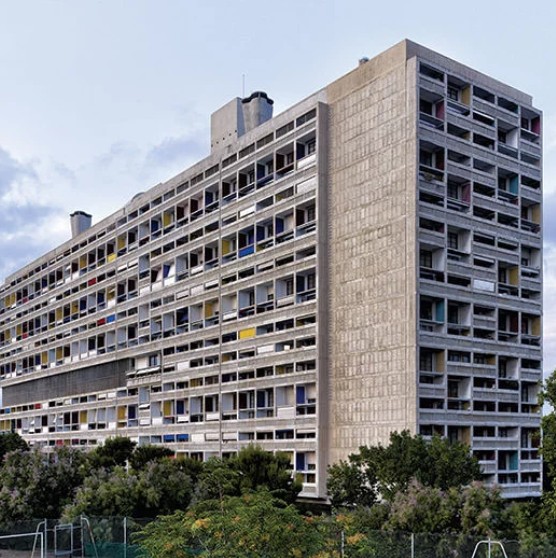
1.1 The Emergence of Mass Housing
As society developed and transitioned into an industrialized system, the emergence of the welfare state in the early twentieth century led to a new perception of housing as a social right rather than a private asset. Consequently, across many parts of Europe, movements arose that regarded housing as a fundamental element of public welfare, positioning it as a social infrastructure to be managed by the state rather than by individuals.
In parallel, within the field of design, Walter Gropius and his colleagues at the Bauhaus pursued (1919~1933) an aesthetic rooted in machine production, advocating for the standardization of factory-based manufacturing. As mass production became the dominant mode of industrial operation, this logic gradually extended to the domestic sphere, giving rise to the phenomenon of mass housing.
According to architectural sociologist Florian Urban in his book Tower and Slab, after the Industrial Revolution, increasing social concern arose regarding poor housing conditions, and movements to resolve these problems were initiated. These efforts spread rapidly across the world, transcending differences of climate and culture.1 Florian Urban points out that “The social question, formulated with increasing pressure in all industrializing countries since the mid-nineteenth century, was fundamental for mass housing programs”.2
Mass housing, which received wide support, was not only constructed quickly but also provided at a reasonable cost. For this reason, we have come to take this mode of housing for granted and live within it. Moreover, such mass housing is offered to large populations with standardized features – walls in identical positions, uniform ceilings, and windows and entrances placed in the same locations. As a result, residents are deprived of the opportunity to express their personal stories and tastes architecturally.
From a historical perspective, the reasons for the gradual emergence of mass housing can be traced back to developments before 1914. Population growth led to housing shortages, while increasing urban poverty and instability in rural societies caused the working and impoverished classes to be perceived as a growing threat by the upper classes. In Europe, there was a noticeable trend of migration from rural areas to cities, whereas in North America, large numbers of immigrants from Europe led to the formation of shantytowns.3 These overlapping processes – population growth, rural-to-urban migration, and cross-border migration – combined to such an extent that state intervention eventually became inevitable. To look at a more specific example, theorists such as Tony Garnier drew attention for their visions of the ideal city, seeking to design housing that was simple yet rational, aimed at ensuring the minimum conditions for human existence.4
Subsequently, throughout many parts of Europe, numerous efforts were made toward urban reform, and in 1856 Émile Müller designed the Quarter House Block, which had an enormous international influence. This development marked the emergence of the prototype of speculative housing, which began to be provided in a planned and affordable manner.
From an architectural perspective, modernist architectural thought had already been gaining support before the Second World War. After the war, as housing across Europe was destroyed, the remaining land, combined with demographic changes, naturally connected architects to the desire to resolve these pressing issues.
In 1933, Le Corbusier prepared the Athens Charter for the International Congress of Modern Architecture (CIAM), presenting a modernist conception of urban planning that was adopted as a fundamental principle of city planning. This vision, based on functionalism, sought to make cities operate more efficiently. In this conception, the purpose of the residential district was to provide housing for those who worked in the city. Furthermore, it advocated technocratic solutions, emphasizing design-oriented approaches, product innovation, and industrial methods of construction. This modernist vision, accepted as the principle of high-rise housing, was embraced by architects, urban planners, and politicians across European countries as a new solution.5
As a result, mass housing can be understood not merely as a type of architectural form, but as a symbol of modern rationality and control. It transformed housing from a place of protection into a space of productive efficiency, turning the living environment into an experimental stage of social engineering that often deteriorated the conditions of its inhabitants. Henri Lefebvre, in The Production of Space, states that space is a social product – a condensation of social relations.6 From this perspective, mass housing can be interpreted as the materialized expression of the economic and political order that structures and represents collective life.
1.2 Student Housing that Emerged in the Wake of Mass Housing
Although spaces for students existed in earlier periods, they were often focused on religious or scholastic life rather than on dwelling itself. Because the number of students was relatively small, these spaces differed from the mass housing that emerged in the modernist era. After the Industrial Revolution, as the number of students rapidly increased and universities became part of a more democratized education system, dormitory-type blocks began to appear by adopting the concept of mass housing .7
In the early stages, student accommodations often took the form of barrack-like dormitories. For example, a student housing complex built in Amsterdam in the 1960s shows this characteristic structure: minimal private rooms, shared bathrooms, and collective living areas. This clearly reflects how the principles of mass housing influenced the design of early student residences.
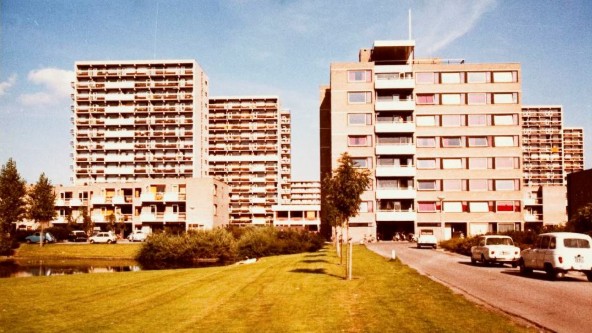
Popov describes the student housing of this period as follows: “Despite the high economic efficiency of accommodation density, the space-planning arrangement of the student accommodation buildings of this period misfits scientific and educational work and everyday life”.8 As this statement suggests, the architectural layout of the time was unable to meet the diverse needs of students’ daily lives.
From the 1970s onward, however, awareness of individuality and personal dwelling began to expand, and various design attempts were made to reflect this change.
One representative example can be found at the University of East Anglia in Norwich, England. This residence strengthened the sense of privacy by providing more individual rooms while minimizing shared spaces into small group clusters.
Through this design, a concept of “micro-community” was introduced, allowing students to feel a stronger sense of belonging within a collective environment.
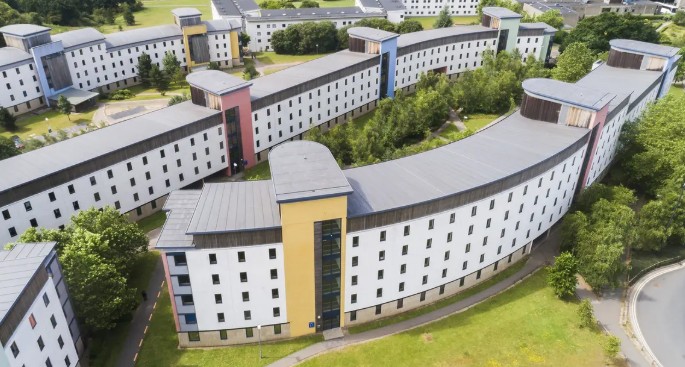
Over time, student housing has increasingly emphasized the importance of private space. However, the repetitive arrangement of identical rooms can still be easily found today. For example, a student housing complex in Amsterdam, originally built in the 1970s and renovated in 2010, retains its corridor-type layout where identical rooms are placed in sequence.
Although these units have been converted into individual studios, they still offer little spatial diversity.
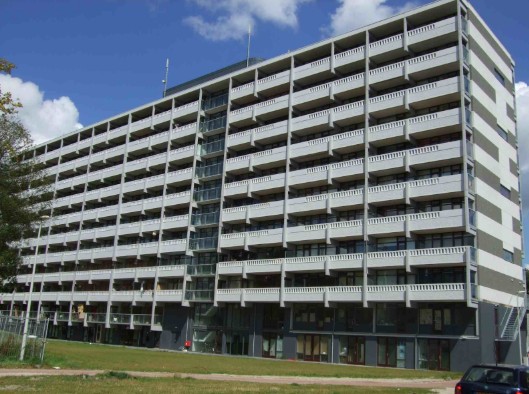
Such standardized structures were rapidly established during a period of intense economic, social, and cultural change, and have long remained as mere functional spaces without emotional connection. In particular, student apartments are often accepted as inevitable spaces by students who have limited housing choices.
When we reflect on the uniformity of mass housing, it becomes clear that complete sameness is not something humans can naturally relate to.
“Uniformity may therefore be seen as un-natural in the sense that it is an artificial phenomenon. In this way, mass housing as we see it today is unnatural because it is an artificial way of housing.”9
For students, the word diversity may, in fact, represent the most natural and genuine way to express themselves.
1.3 Dwelling and Human Behavior within Student Housing
It is necessary to think about whether the residential space is simply a physical space in which we live. According to the thought of Martin Heidegger, “To dwell, to be set at peace, means to remain at peace within the free sphere that safeguards each thing in its nature.”10 This means that we do not just live, and it is not the concept of using things as a means for a purpose, but that I make things meaningful. In other words, it means a state in which things and the world exist in their original state and become a peaceful coexistence. I think that this concept does not end simply with decorating the space to make it look pretty or arranging it for the convenience of life to control the space. We live by forming relationships with things and space by giving meaning to them.
During the stage of life when individuals are forming and expressing their identities, being merely accommodated within standardized housing can restrict or delay this process of self-development. According to Jane Kroger’s theory, adolescence is a crucial period for exploring new relationships, environments, and roles, all of which contribute to identity formation. Although this stage begins roughly between the ages of 12 and 18, Kroger emphasizes that the search for identity continues into early adulthood, which includes the typical university student age range. It is during this period that individuals deepen and stabilize their sense of self through diverse social and relational experiences.11
In this respect, dwelling has a layer of time. We accumulate our habits and emotions in the space, and as those traces pile up, the identity of the place is revealed. Bachelard (1958) in The Poetics of Space says that the house is one of the greatest powers of integration for the thoughts, memories and dreams of mankind. It is the human being’s first world12. Therefore, even a temporary living space can become deeply personal, as memories and habits accumulate through daily actions during that period. In such limited environments, the human desire for self-expression often comes into conflict with spatial restrictions. A clear example of this tension can be seen in Adrienne Salinger’s photographic series In My Room (1995), which documents teenagers expressing their identities within single-room spaces filled with personal objects. Her work illustrates how individuals—especially young people – use even the smallest spaces to construct and communicate their sense of self.
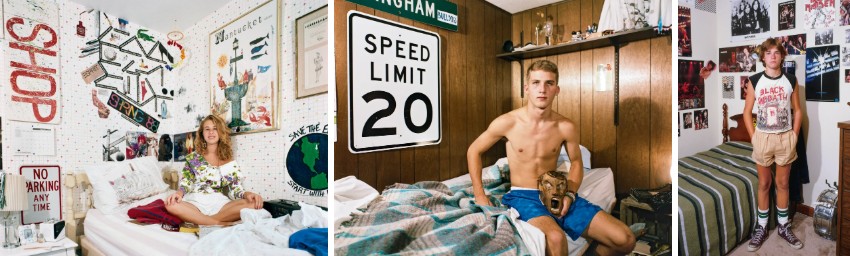
Therefore, dwelling is beyond something for our simple survival; it is an essential individual space of society that exists to create one’s existence and to expand it into society. This process of interaction to confirm oneself means that humans and space live together. This process of interaction to confirm oneself shows that humans and space live together, which is essentially what it means to dwell.
1.4 Problems Arising from Student Housing
Living within standardized structures limits residents’ ability to express their individuality. Housing composed of identical walls, windows, and ceilings provides little room for personal narratives to emerge. In the case of student housing, this lack of diversity neglects the cultural and personal differences among residents – whether they are domestic or international students—and ignores the specific needs related to their age and academic lives. As a result, the very space that should serve as an intimate foundation for self-expression becomes a neutral and impersonal environment. The inability to project one’s identity within such standardized surroundings inevitably affects self-understanding and the formation of personal identity.
Anthropologist Time Ingold frequently discusses the concept of the “dwelling perspective” in his books and articles. This concept goes beyond the idea of merely living in a space; it refers to the constant interaction and relationship between people and their environments. It suggests that rather than simply accepting something fixed, humans have an inherent desire to appropriate and shape their environment. 13 As Ingold’s concept suggests, it is a natural human tendency to form relationships and interact continuously with one’s surroundings. However, such interaction is often overlooked in the design of student housing, where spaces are temporary, standardized, and limited in flexibility. It is important to recognize that the places where students spend time outside of academic activities also shape their social, emotional, and personal development from a broader perspective.
This oppression and frustration of space can go beyond an individual problem and lead to the standardization of society. Marc Augé, in his book Non-Places, says, “If a place can be defined as relational, historical and concerned with identity, then a space which cannot be defined as relational, or historical, or concerned with identity will be a non-place.”14 This concept can be observed in student housing, where residents of different ages, nationalities, and lifestyles often experience a sense of alienation within anonymous spaces such as shared kitchens, corridors, and common areas.
Therefore, it is important to develop ways to transform these feelings of isolation into opportunities for community building. An environment in which such desires are not reflected can also have negative social consequences. When personal identity is left undefined or confused, individuals may hesitate to express themselves within society. As a result, society is prevented from becoming one of diverse coexistence and instead tends toward uniformity and simplicity. This problem of personal expression not only affects individuals but also group living: members who share residential spaces may resign themselves to passive conformity, thereby lowering their quality of life
Therefore, my research examines how students construct their own ways of expressing their culture and lifestyle within student apartments that repeat the same structure as mass housing, and shows examples of various methods they have used. Through this, it examines how students, who are in an important period of forming themselves even within standardized spaces, can express their individual stories and emotions. This research examines ways to express such emotions through spatial design and proposes possible design approaches to address them.
1.5 Research Question
As I observed the many identical student apartment structures, I realized that while we cannot change their overall framework, the various elements that shape the interior remain within our freedom, offering numerous possibilities.
This led me to the following question:
“How have students adapted standardized student housing units or dwelling units to reflect their personal preferences and identities?”
Sub-Question
1. What are the problems of standardized Student Housing?
2. What spatial, material, and emotional patterns emerge
when students adapt their standardized rooms?
1.6 Research Objective
This research begins with student housing. Students move in order to pursue their academic goals and personal growth, yet due to housing constraints, they often end up selecting standardized student housing provided by universities or national housing organizations. During this stage of life, when self-exploration and identity formation are particularly important, many students experience discomfort as they attempt to discover themselves within restrictive and predetermined spaces. International students and those coming from other regions frequently express dissatisfaction with the limited housing options available to them, clearly revealing the presence of a structural problem in the current system. As an international student living in a shared house, I experienced discomfort due to the limited size of my room. The small space restricted my ability to modify textures or colors, and constrained my daily life, leading me to spend most of my time engaging in activities at school.
The purpose of this research is to explore how students living in mass-produced student apartments configure their spaces in ways that reflect their personal habits, emotions, and identities. This study highlights the tension between the needs of students – who are in a crucial period of identity formation – and the restrictive nature of standardized housing, while also revealing the innate human tendency to personalize and claim space despite such limitations. Through this investigation, the research argues that living spaces should not be understood merely as physical structures, but as places that accumulate identity, sensory experience, and emotional expression. Furthermore, the study aims to propose how spatial design can incorporate these aspects in various ways, ultimately suggesting directions for the future of student housing.

1.7 Methodology Overview
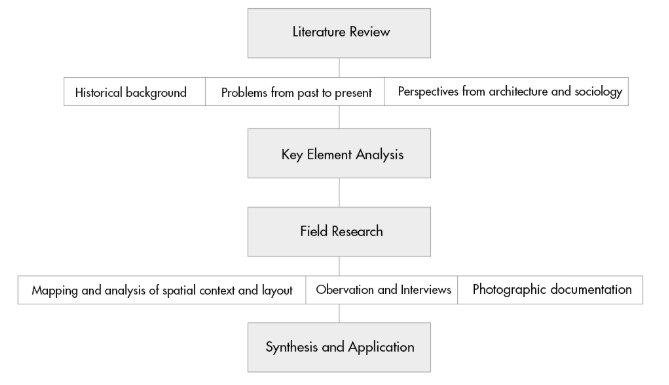
To investigate the research questions of this study, both secondary research (desk research) and primary research (field research) are conducted in parallel. The study begins with secondary research to understand the historical background and issues related to student housing. In addition, perspectives from architects, designers, anthropologists, and sociologists are examined to gain the understanding that domestic space is not merely a structural entity but a place where identity and sensory experiences are embedded. This preliminary investigation helps sharpen the focus of the research and refine the elements that need to be explored during primary research.
In the primary research phase, archival work is first conducted to examine the structural characteristics and historical information of the selected buildings for the field study. Based on this, the living context of residents and potential sources of discomfort are anticipated to set the direction of the investigation. During the site visits, the physical aspects of the space – such as layout, materials, and traces of use – are documented through photographs and sketches. Interviews are carried out to understand non-material aspects, including behaviors, emotions, and sensory experiences. Complementary observations are also conducted to capture usage patterns that may not fully emerge during interviews.
The data collected through both primary and secondary research will be analyzed and organized to identify the structural issues and processes of identity expression observed in the student housing. Based on these findings, conclusions regarding the study will be drawn.
Chapter.2
2.1 Literature Review
1) Theoretical perspective
This research examines student housing – one of the mass-housing categories in which residents, particularly university students, strongly desire freedom of expression. To understand why this research is necessary, it is important to first look at the philosophical, anthropological, and design-related discussions that have addressed similar themes.
In her book Home Truths: Gender, Domestic Objects and Everyday Life, Sarah Pink discusses the meaning of home through the case of a single participant. She argues that a home is not merely a physical structure, but a place where one’s life and stories are visually and sensorially expressed.15 Drawing from this perspective, the present study does not limit its focus to the differences in structure or furniture layout but pays attention to the resident’s story, personal habits, and emotions that evolve over time.
Similarly, the article Perception of Personal Identity at Home by Juan I. Aragonés, María Amérigo, and Raquel Pérez-López demonstrates how personal identity is extended and expressed within the home, particularly through the bedroom. The authors argue that a home is a space where internal aspects – such as personality, preferences, and values – can be externalized.16 Therefore, it becomes necessary to investigate how decoration, arrangement, personal belongings, and color choices reflect a resident’s identity.
Students live in highly standardized housing units during a period when identity formation and experimentation are crucial. According to the theories of Pink and Aragonés, such standardized conditions may limit opportunities for personalization, influence identity expression, and potentially contribute to the development of a society where similar narratives dominate.
2) Design perspective
From a design perspective, it is important to consider the process of user-centered design. This process consists of four stages: understanding the context from the user’s point of view, identifying and defining needs, developing the design, and finally conducting an evaluation.17 This process is not only applicable to product or app design, but can also be applied to spatial design by adopting the perspective of the user who occupies and experiences the space.
Lacaton & Vassal emphasize in interviews that “more space creates more freedom,”18 arguing that space should not be delivered as a finished product but should serve as a foundation for people’s lives. Their renovation of social housing in France created new possibilities for residents by adding gardens and extendable platforms to previously monotonous floor plans, allowing occupants to use the space in ways that suit them. This design approach attempts to restore the potential for expressing identity – something often lost in rigid, unchangeable structures—and it highlights the problem of inflexibility in student housing, thereby reinforcing the relevance of this study.
Yona Friedman’s concept of Self-planning also contributes to this discussion. Friedman argues that residents should be able to organize their own space, emphasizing that identical structures cannot serve all people in the same way. He claims that architects should provide only a framework that enables users to create meaning in their own way. This perspective reinforces the idea that the process of altering and experimenting with one’s living environment is itself a form of identity expression. For students, whose desire for self-expression is particularly strong, this viewpoint explains why they try to leave traces of themselves even within highly restricted spatial conditions.
Through these design concepts and discussions, it becomes clear that housing should not impose limitations but should instead provide a framework that allows diverse ways of living. However, student housing lacks such design flexibility and often limits opportunities for identity expression. Therefore, this research aims to explore how students use and reinterpret these restricted spaces in their own ways, and how they project their identities within such limitations.
2.2 Field Research
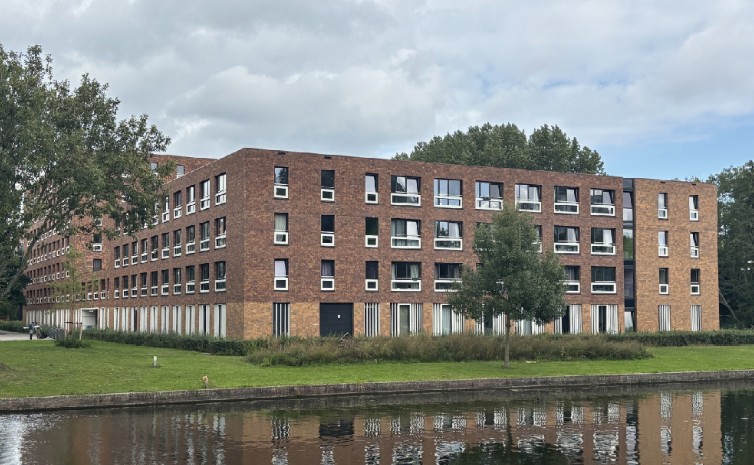
Based on the perspectives and knowledge I gained through the desk research,I conducted field research to understand how students actually live and how their living spaces are formed in reality.
The field research focuses on apartment-type student housing located in the cities of Amsterdam, Arnhem, and Zwolle. The selected building in Amsterdam was originally constructed in the 1970s as general social housing and was later acquired by DUWO, which remodeled it into student apartments. The building in Arnhem was built in 1975 as an apartment complex and appears to have been later converted into student housing. In the case of Zwolle, the building is newly constructed in 2020 as part of a student housing complex.
The participants included in this research have been living in these units for periods ranging from as short as four months to as long as one and a half years.
Amsterdam _ 1 person
Zwolle _ 1 person
Arnhem _ 1 person
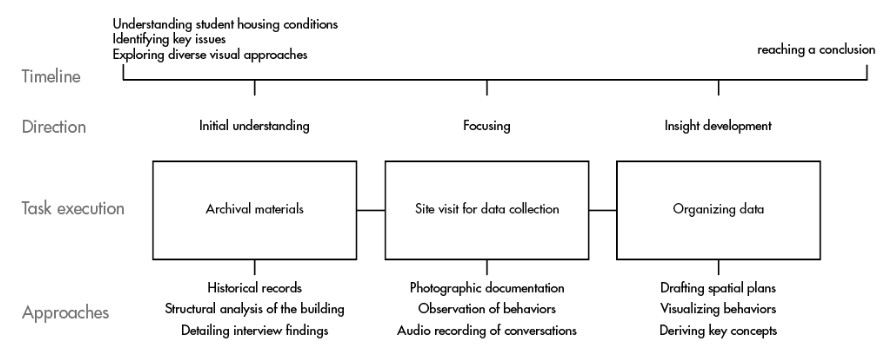
Before conducting the site visits for the case study, I first gathered archival materials to understand the historical context and structural characteristics of the buildings. Following this, I refined the interview framework to collect data on the emotions and behaviors that take place within these spaces. This approach allows me to gain a preliminary understanding of how the structural conditions of the building create certain limitations, which in turn helps me develop more focused interview questions.
During the site visits, interviews with residents are conducted based on the prepared questions. On-site, the visual expressions of residents’ characteristics are documented through photographs, while non-visual aspects are recorded through direct observation. Together this combination of methods supports a detailed and multidimensional understanding of how students inhabit and personalize their living environments.
Field Research.1
Jacques Veltmanstraat 631 Amsterdam
Information about participant.1
Age : 20s
Gender : Female
Nationality : South Korea
Major : Fine Art
Photos
Feature : Unified dark color scheme / Basic furniture /Simple structure
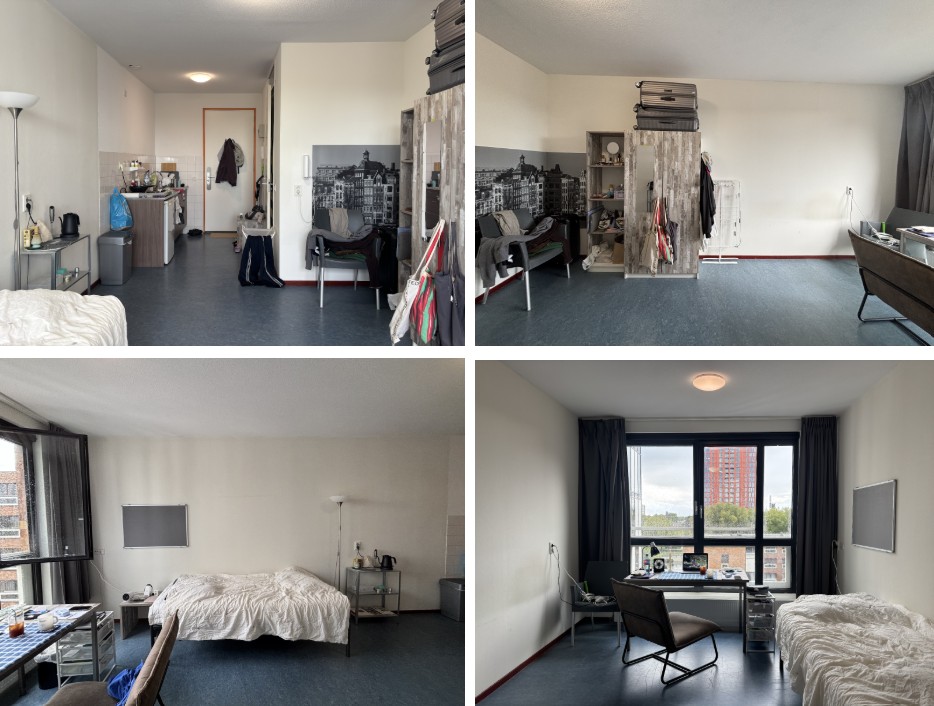
Room structure and habits : Participant.1
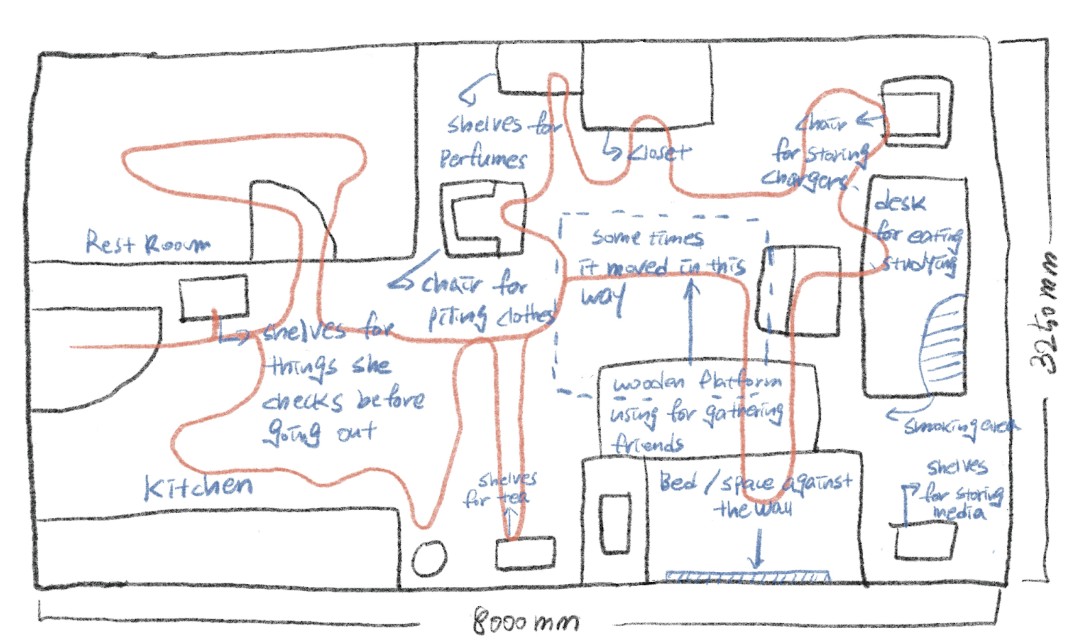
<Floor plan>
Participant 1’s room has a simple rectangular layout with standard grey furniture provided. The room measures 8 meters in length and 3.25 meters in width, representing the most basic and minimal spatial configuration.
<Images of room>
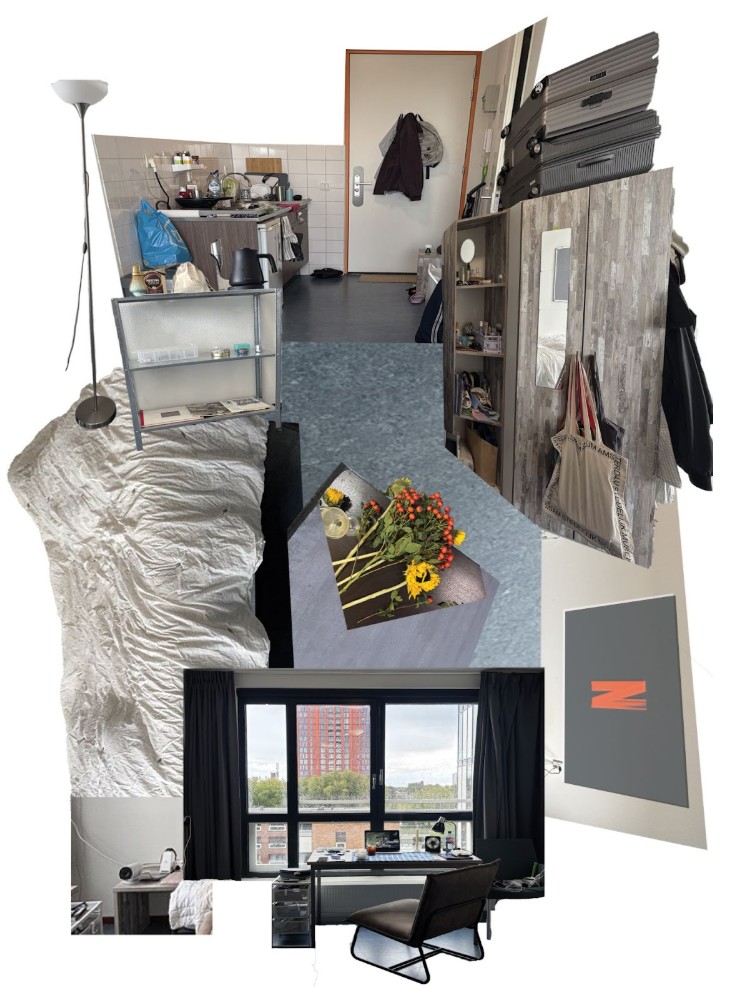
Although the standard furniture and materials provided in the room are in grey tones, giving a rather dark impression, Participant 1 prefers a basic and brighter atmosphere. Therefore, she purchased light-toned fabrics and small pieces of furniture. Occasionally, she places flowers as accent elements to prevent the overall tone from feeling too dark.
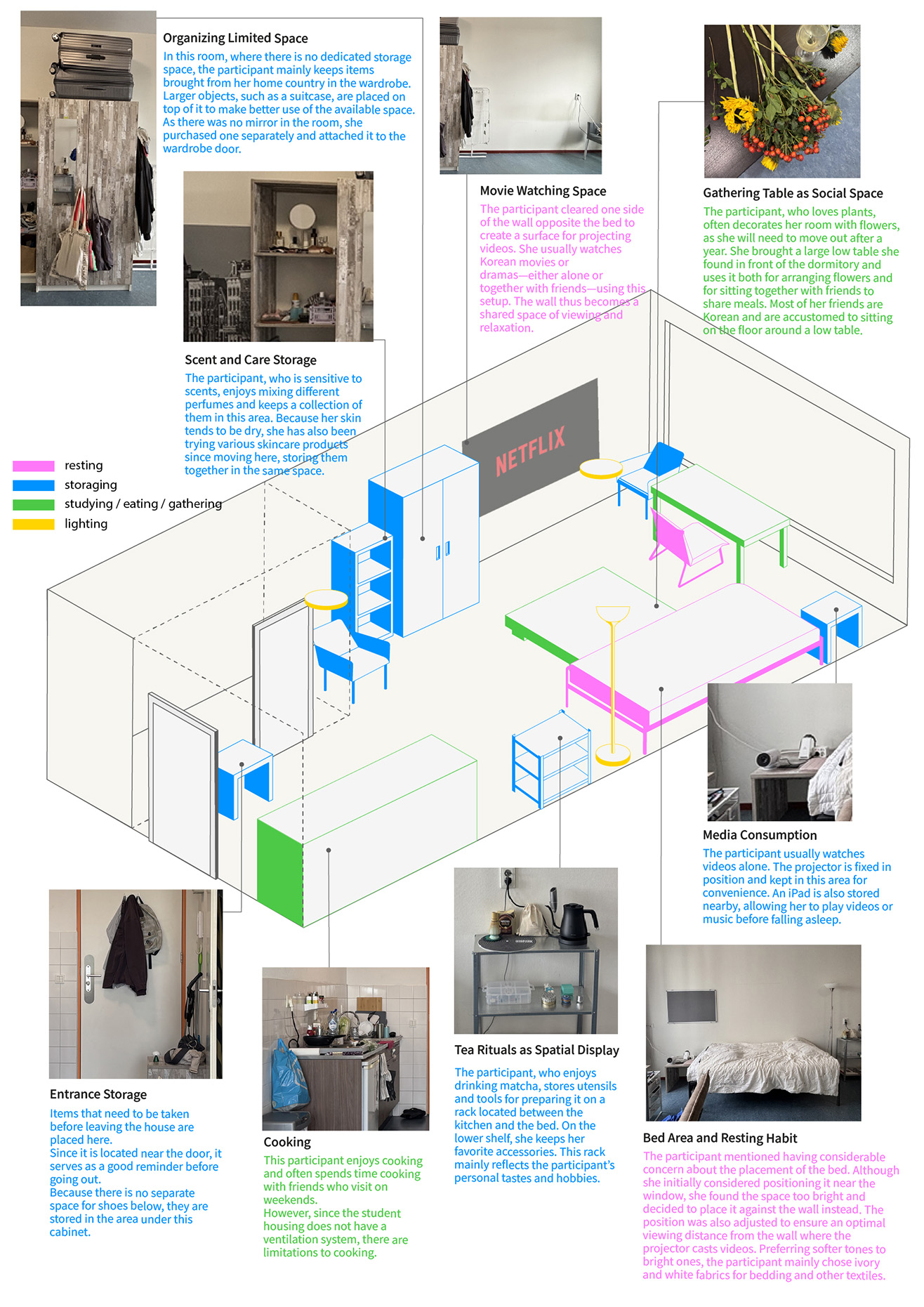
<Detailed structure and description>
<Reflections on the Interview>
The participant values tea and scents, as seen from the various fragrance products placed throughout the room. However, the kitchen is not located close to the window, which makes ventilation difficult after cooking, leaving the air somewhat stagnant. The absence of a ventilation hood in the kitchen also adds to this structural discomfort.
Although the overall layout of the room is simple, the participant mentioned that the predetermined materials and furniture limit her ability to express her personal taste. To adapt to the darker tones of the interior, she chose to purchase small storage boxes and use fabrics in neutral, muted colors.
Since her stay in this apartment is temporary-approximately one year-the participant feels that the space is insufficient for expressing a renewed sense of self. She is therefore minimizing the number of furniture and decorative items used here, keeping in mind the ideas she wants to realize in her next home. Rather than identifying with this room as a personal space, she perceives it as a transitional stage for exploring and preparing her own sense of dwelling.
<The space the participant desires>
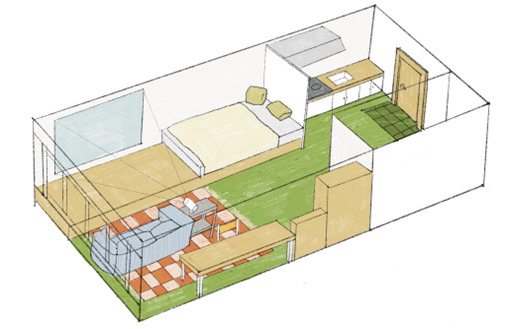
Field Research. 2
Arien Verhoeffstraat 431, Arnhem
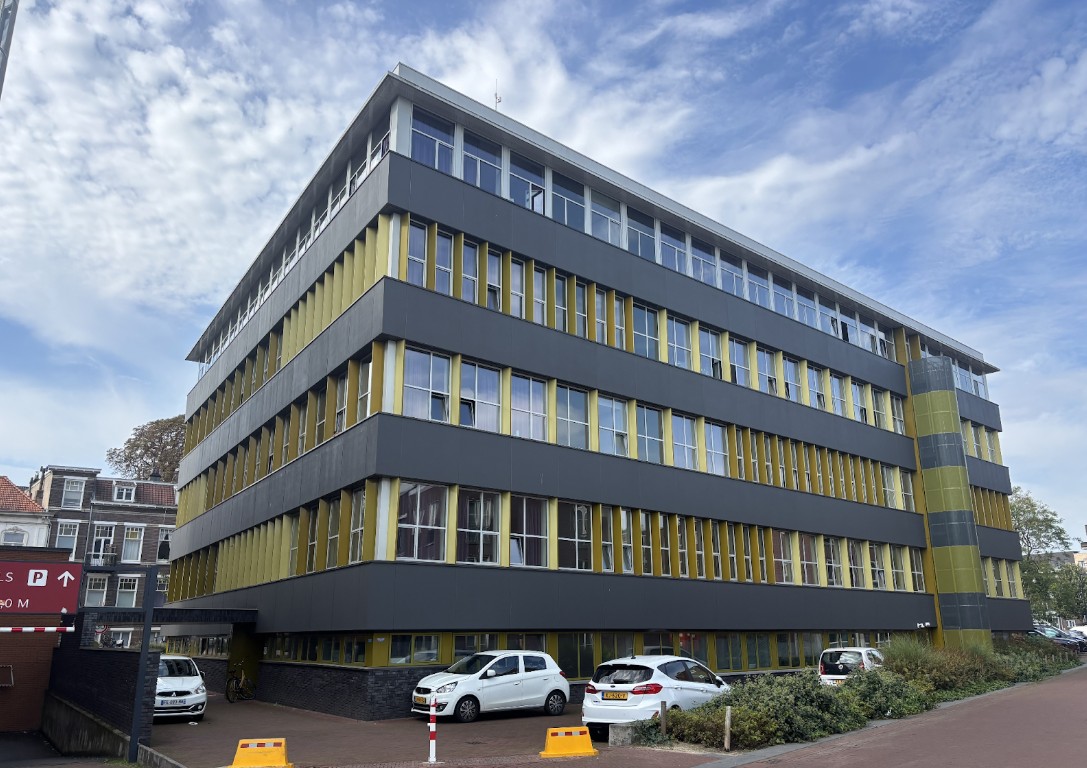
Information about participant.2
Age : 20s
Gender : Female
Nationality : South Korea
Major : Technology Art
Photos
Feature : Bright atmosphere / Space with diverse materials / Wide and simple layout
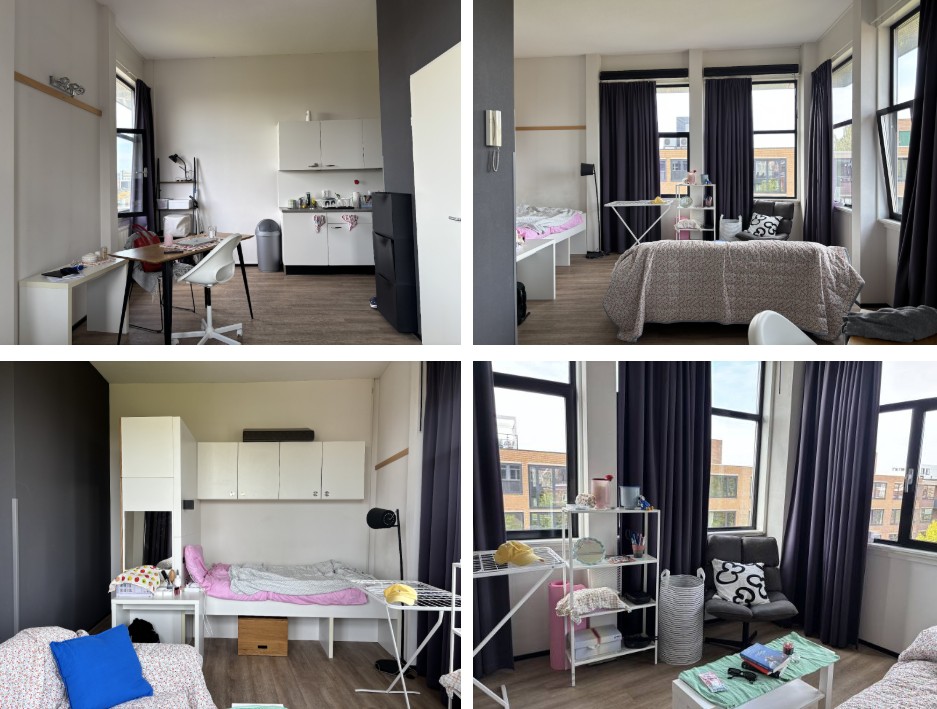
Room structure and habits : Participant.2
<Floor plan>
Participant 2 lives in the largest room among all participants. Although the space is simple, the large area and multiple windows create a subtle sense of separation even without walls. This room is also furnished with standard furniture provided by the housing.
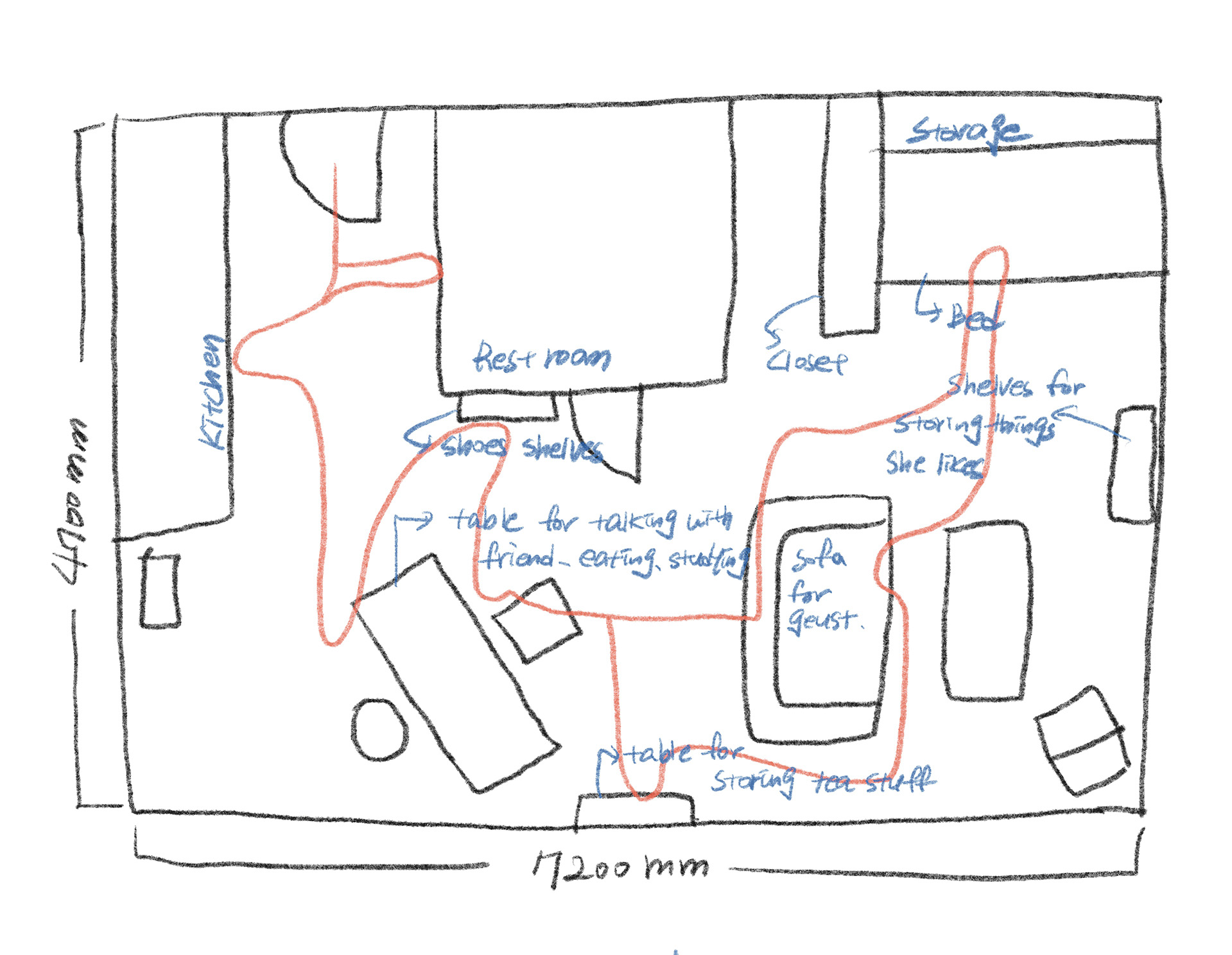
<Image of room>
The participant, who prefers bright colors, tried to personalize the space by incorporating her favorite tones wherever possible. She covered the sofa with patterned fabric, changed the bed cover to her preferred color, and placed colorful objects around the room. However, the pre-existing furniture, with its fixed colors and forms, limits how much she can transform the space.
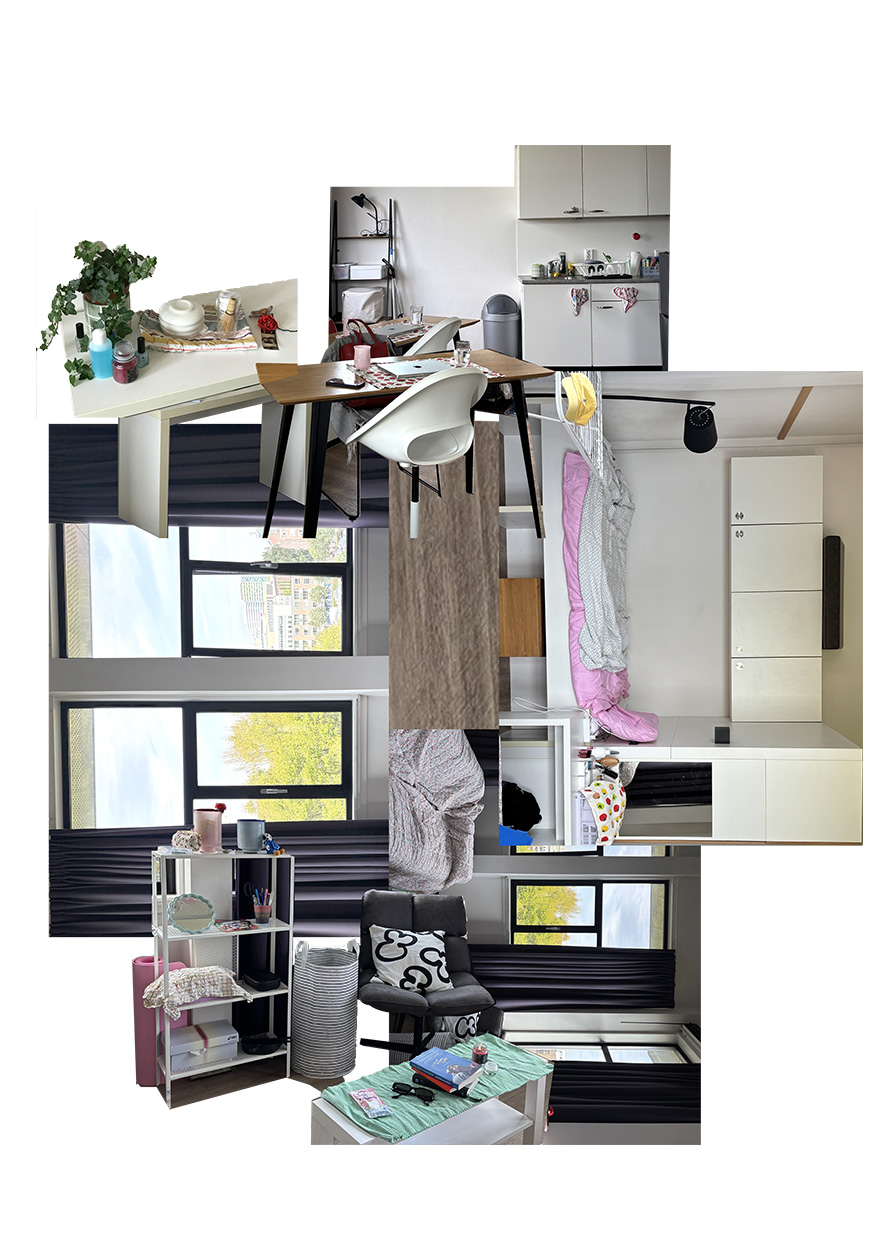
<Detailed structure and description>
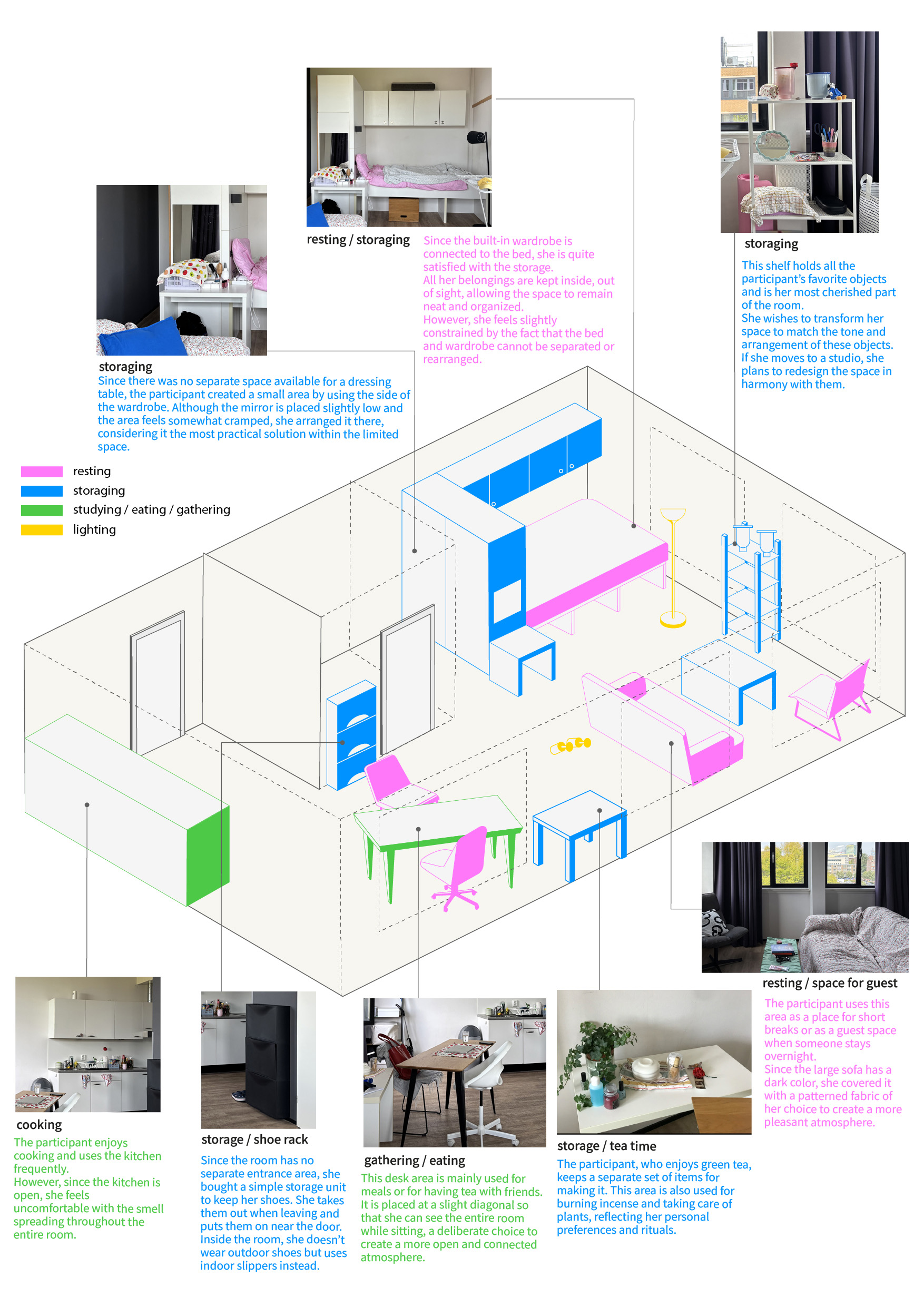
<Reflections on the Interview>
Among the participants, Participant 2 is the one most satisfied with her current living space. The spaciousness removes any feeling of confinement, allowing her to feel less restricted and freer in arranging her furniture. However, she is most dissatisfied with the color, material, and form of the provided furniture, which prevent her from achieving the atmosphere she envisions.
Her personal belongings – clothes, objects, and accessories – are mostly in pastel tones, so she feels that her current room does not reflect her character well.Thanks to the large space, she occasionally invites friends over for meals or hosts guests visiting from Korea. Yet, the lack of ceiling lighting makes studying or creating work somewhat inconvenient, as she relies only on standing lamps for illumination.
She is also unhappy about paying monthly rental fees for furniture she does not like. Although the spaciousness gives her a sense of freedom, she rarely turns on the heating due to separate utility costs, which makes the large room cold and uncomfortable for working.
Despite some affection for the current space, she believes she would feel much more attached and comfortable if she could move to a studio and design it with her preferred colors, shapes, and materials.
<The space the participant desires>
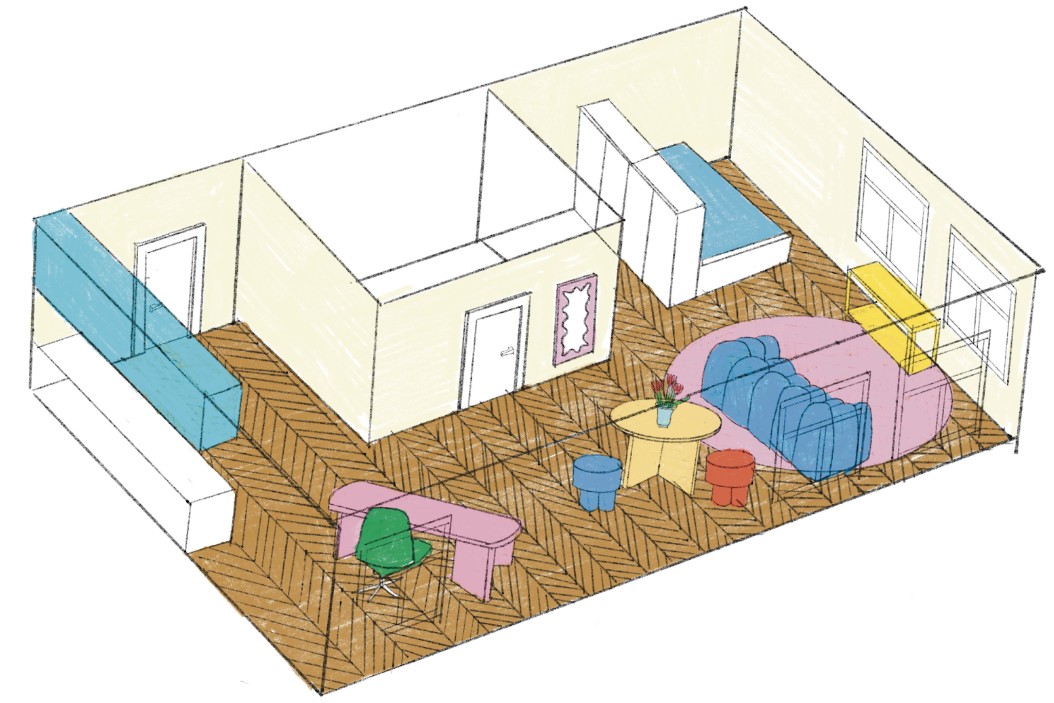
Field Research. 3
Talentenplein, Zwolle
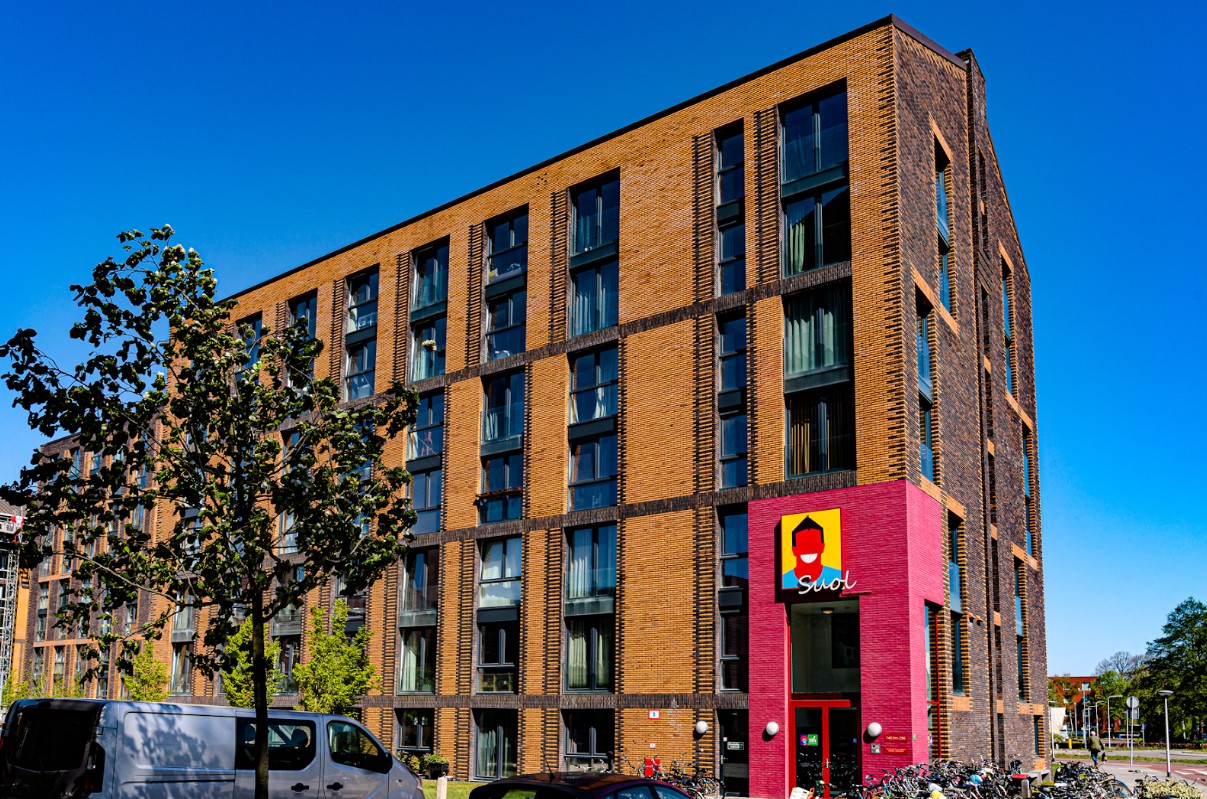
Information about participant.3
Age : 20s
Gender : Male
Nationality : The Netherlands
Major : Journalism
Photos
Feature : Outdated Furniture / A Strongly Colored Interior / A Compact and Minimal Space
Room structure and habits : Participant.3
<Floor plan>
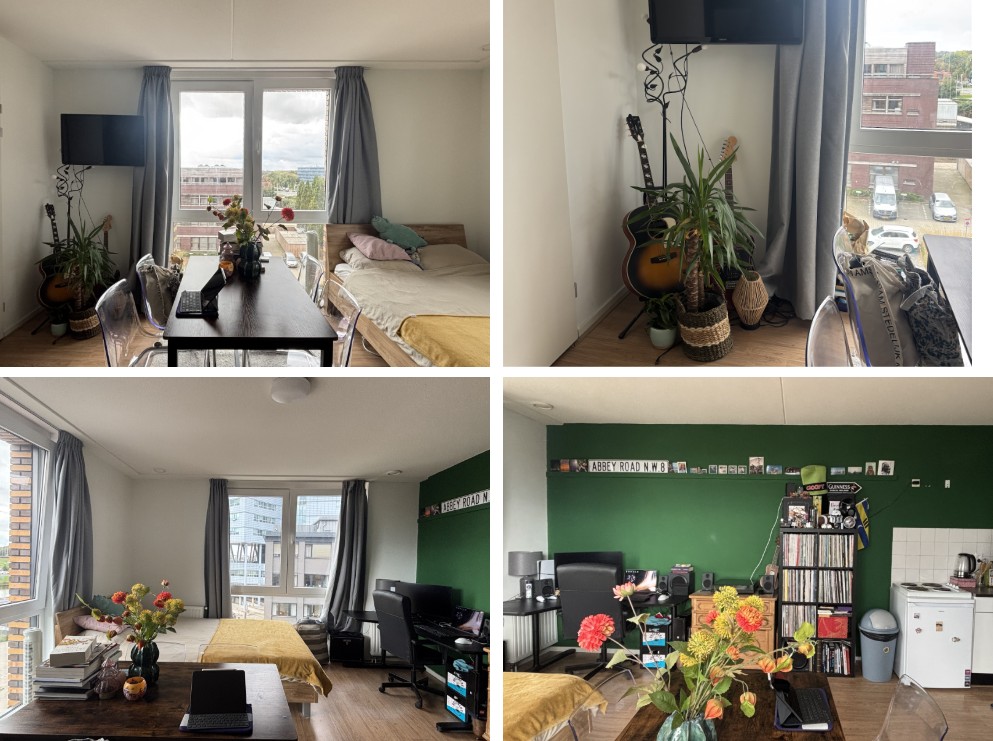
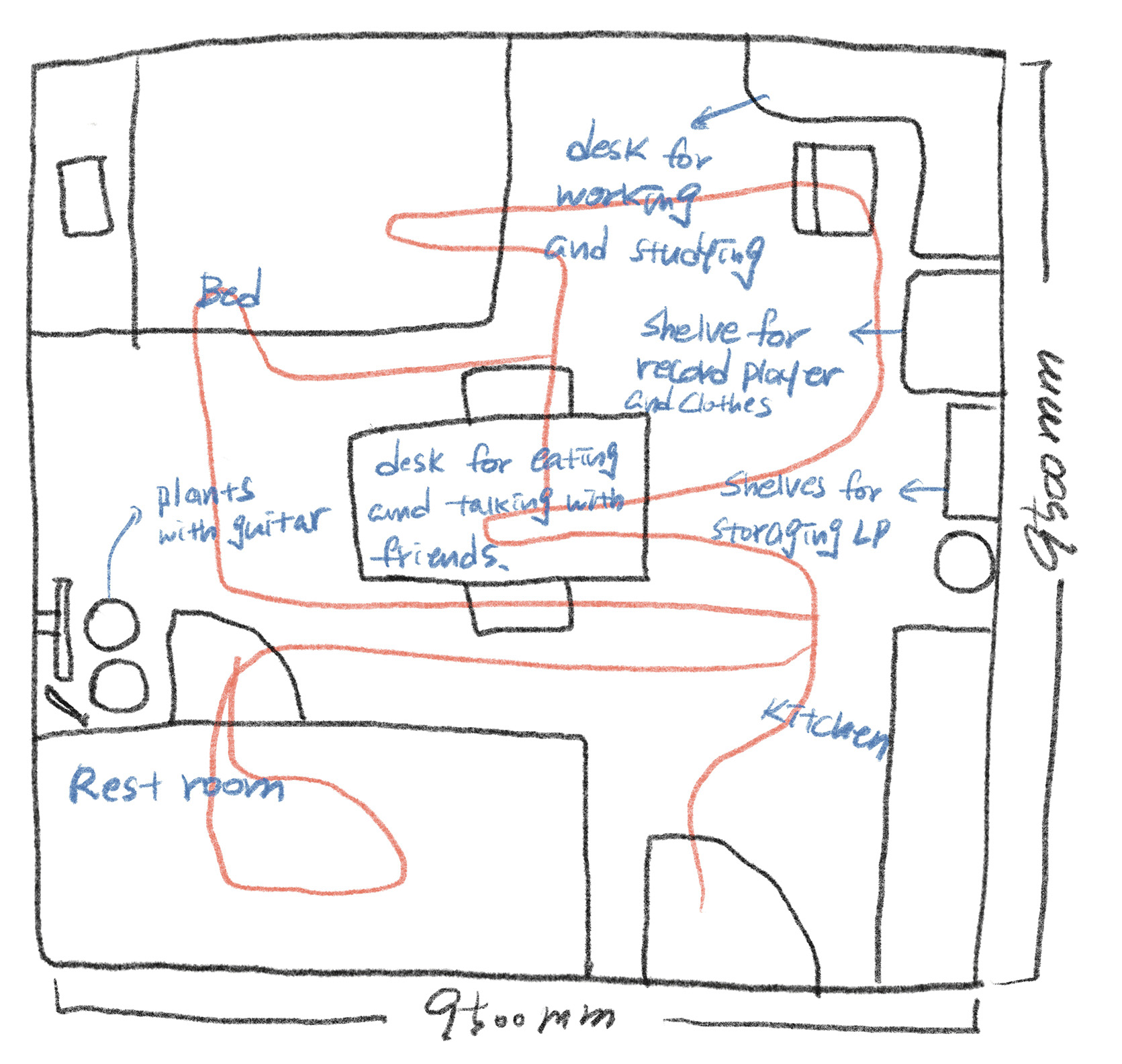
Participant 3’s room, characterized by a small and simple layout, features notably strong colors. Among all areas, it is the space where the participant’s personal preferences are most distinctly expressed.
<Images of room>
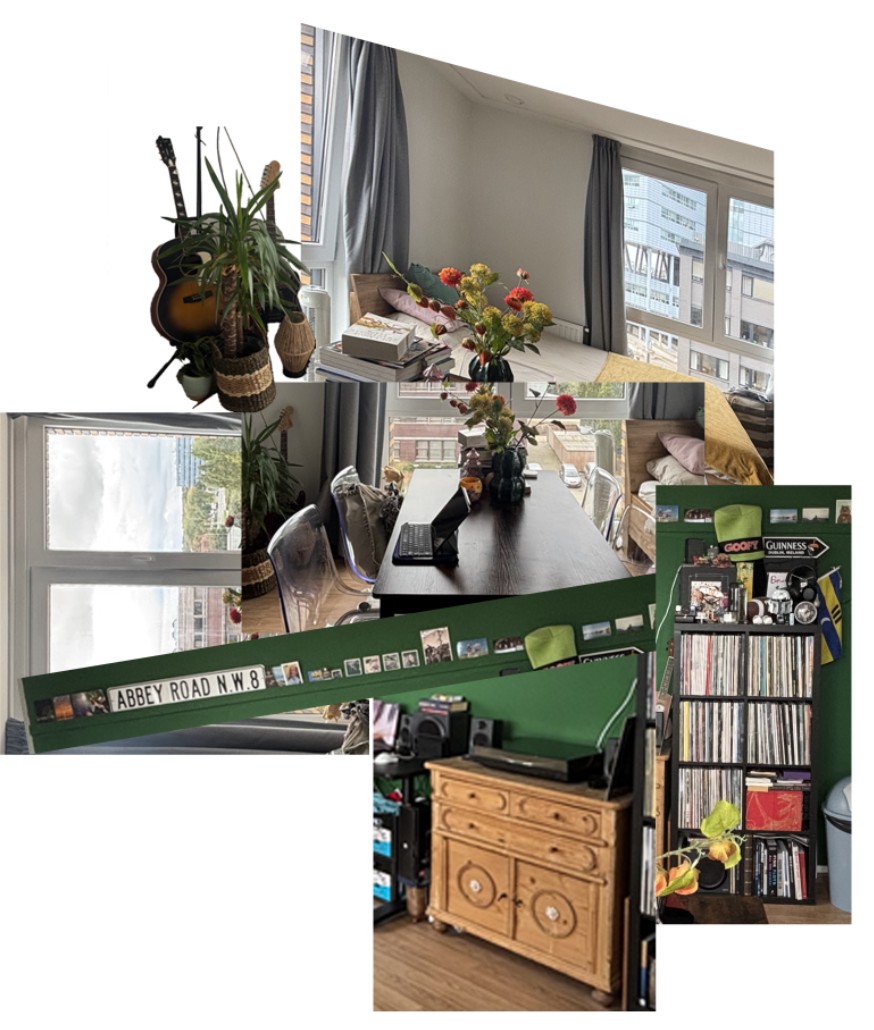
The participant, who has interests in music and various hobbies, arranged related objects throughout the room, creating the largest display area among the participants. They also painted the walls in their preferred colors, expressing their tastes in a distinctly personal way. However, the participant reported discomfort due to the outdated basic furniture provided in the accommodation.
<Detailed structure and description>
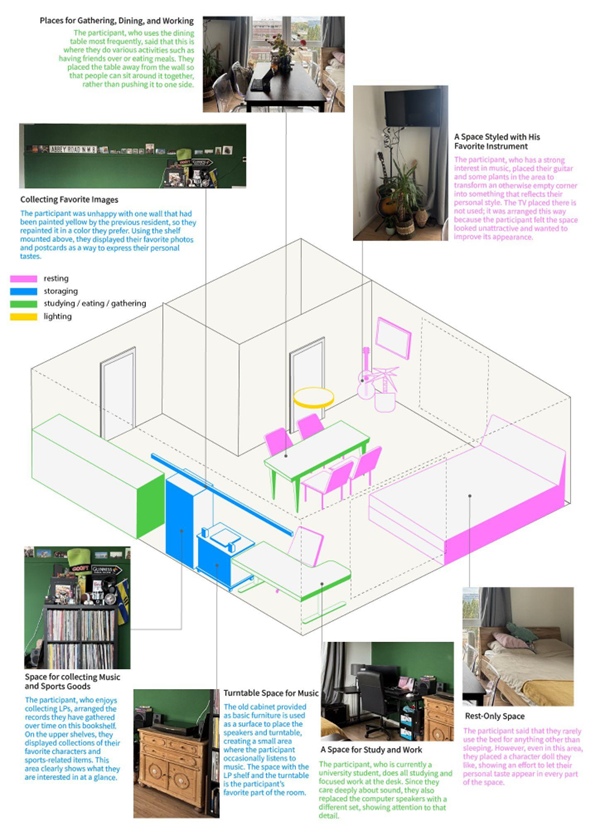
Fig. 24 : Overall Layout and Details of Participant 3’s Room (Drawing by Minji Kim, 2025)
<Reflections on the Interview>
Participant 3 has lived in this studio apartment for about two years after moving out of a student share house. He moved into a vacated room with limited options and expressed strong dissatisfaction with the all-in-one layout, particularly how odors spread. Even a small separation, like a divided kitchen area, would improve comfort.
He repainted a previously yellow wall to his preferred green and decorated the walls with posters and postcards. As a music enthusiast, he placed his LP records on shelves and added favorite characters and sports items.
Working in IKEA’s kitchen department, he noted that the existing kitchen furniture is old and visually unappealing, and he is also dissatisfied with the ceiling light. Rather than buying new furniture, he personalizes the existing pieces, but the furniture’s age and mixed materials limit his ability to create a cohesive aesthetic.
<The space the participant desires>
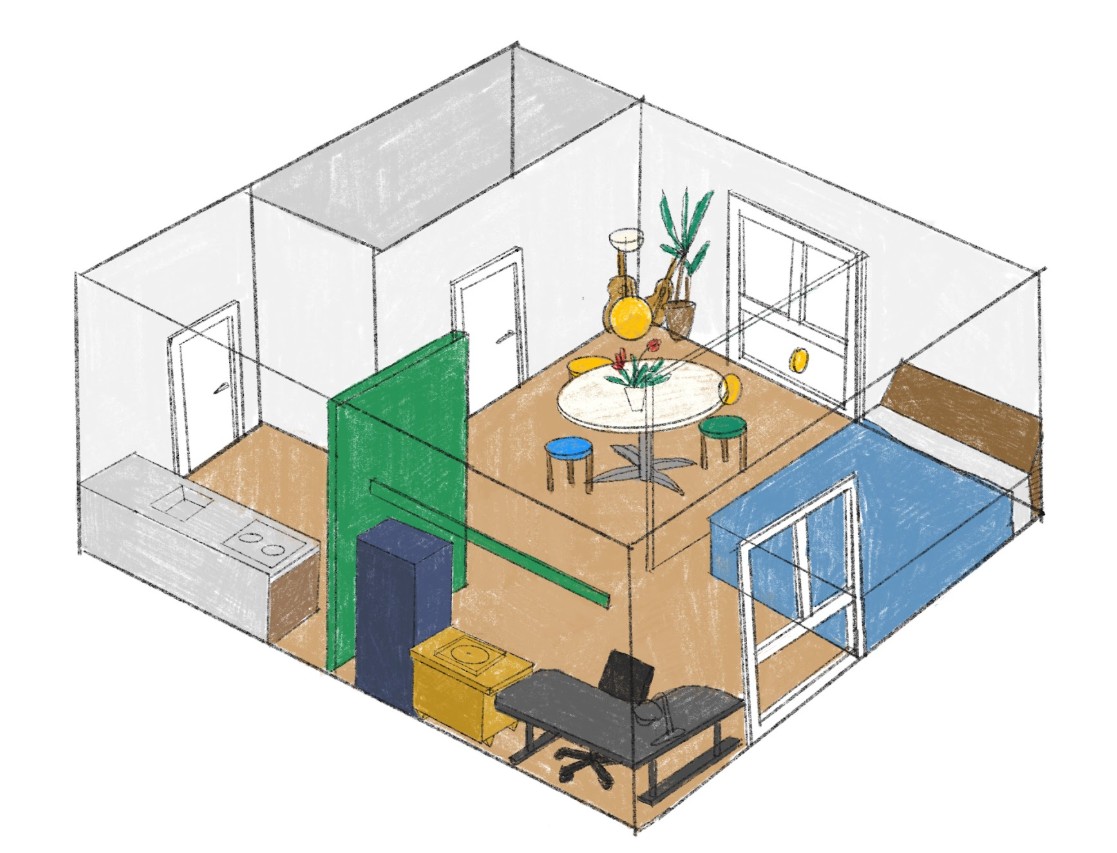
<Summary of Participant Characteristics and Spatial Responses>
| Participant | Spatial Characteristic | Discomfort | Modes of Self-Expression | Identity and Emotions |
| 1 | Small and Dark | 1. Poor Ventilation 2. Undivided Space 3. Texture From Provided Furniture | 1. Light-toned fabrics 2. Small Objects | 1. Loneliness 2.Low Attachment 3. Simplifying Daily Life at Home |
| 2 | Largest Space | 1. Dissatisfaction with Provided Furniture (color/material) 2. Poor Ventilation | 1. Bright-Colored objects 2. Covering with patterned textiles | 1. Sense of Freedom And Loneliness 2. Low Attachment 3. Simplifying Daily Life at Home |
| 3 | Oldest Unit | 1. Undivided Space 2. Provided Old Furniture | 1. Wall painting 2. LP collection | 1. Strong Self-Expression |
Chapter.3
3.1 Patterns and Variations in Field Research Findings
1) Physical / Tangible Aspects
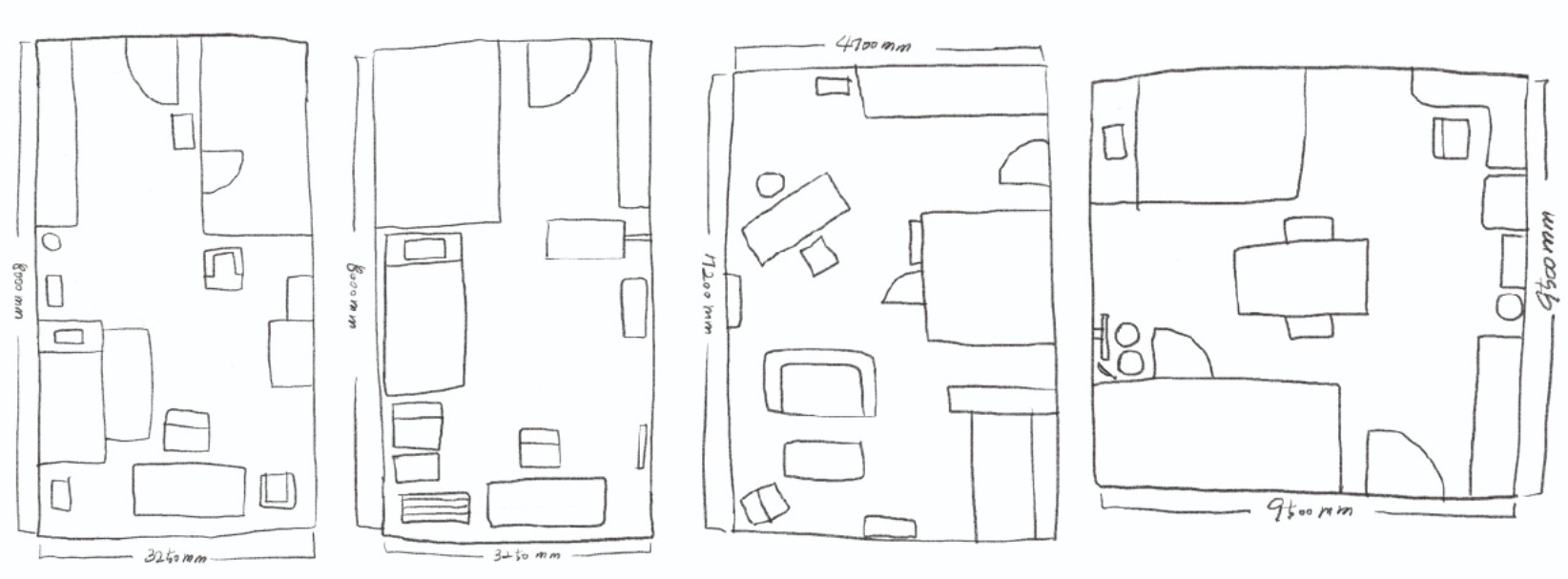
All participants shared a strong desire to divide their spaces according to use.
Most student apartments have rectangular, open layouts without interior partitions, which often evoke a sense of instability. Particularly when sleeping or working, participants tended to push their beds or desks against the wall to create a feeling of security and enclosure.
Another recurring issue is the spread of smell during cooking. Because the spaces are not physically divided, the smell easily circulates throughout the entire room. All participants except one owned scented candles to manage this issue. Those living in Amsterdam expressed additional discomfort due to the layout of their windows – the kitchen and the main window are positioned on opposite sides, making air circulation difficult even when ventilation is attempted.
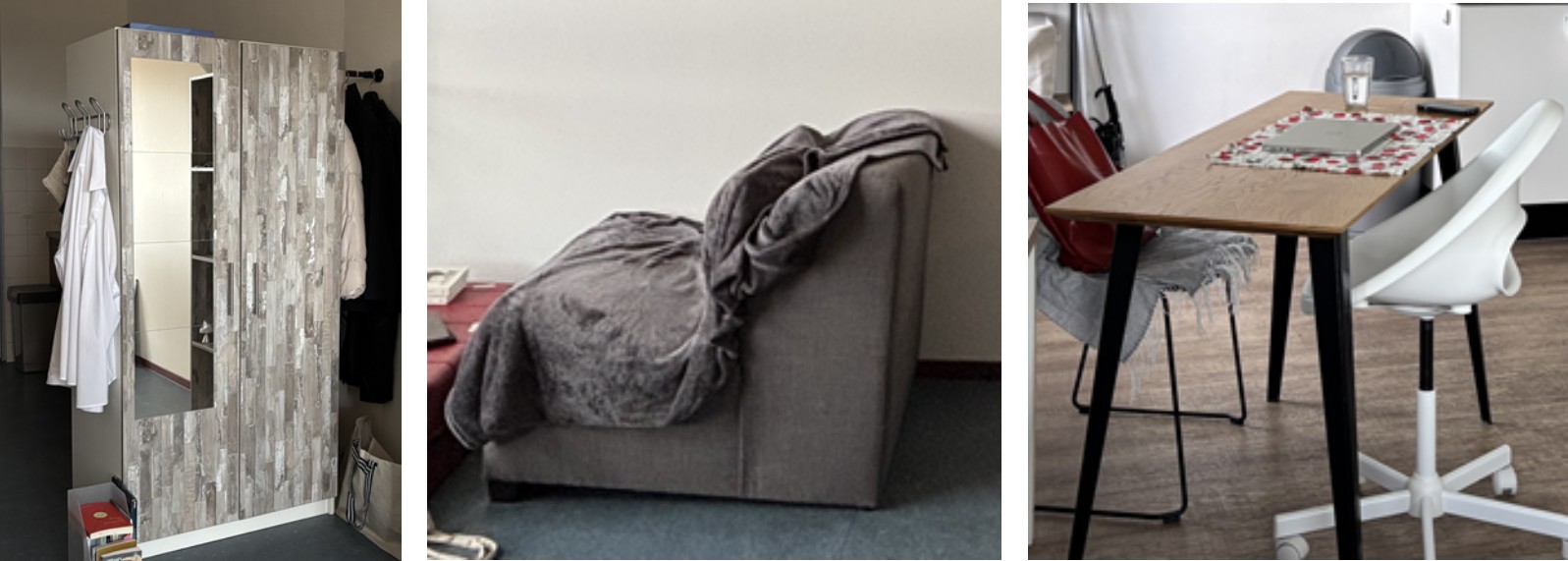
Participants also felt limited by the provided furniture.
The color, texture, and form of the furniture often constrained their ability to shape the space according to their preferences. Participants 1 and 2, who live in the same apartment complex and therefore have identical furniture, mentioned that the dark tones and unusual textures of the furniture already determine the overall atmosphere of their rooms. Participant 3, who values color harmony, felt emotionally detached from her space due to the lack of coherence among different materials and colors. She tried to compensate for this by covering the sofa with fabric and adding colorful objects of her own choice.
Participant 3, on the other hand, mentioned that the provided furniture was old and worn out, which made the space feel untidy. As an employee in IKEA’s kitchen department, he was particularly sensitive to the deteriorated condition of the kitchen units, which he found especially frustrating.
Another shared limitation was the inability to choose the color and material of surfaces within the room. Participants in Amsterdam – and even their roommates – expressed that the combination of blue flooring and gray walls created a cold and distant atmosphere. Participant 3 mentioned that although her room’s basic tone was neutral and acceptable, she missed the warmth of colors and textures she personally preferred, and planned to change them once she moved into her own space. Participant 4 addressed this issue more actively by painting the wall in his preferred color. He explained that the previous resident had already done so, which made him feel free to personalize the space in the same way.
2) Behavioral and Emotional Aspects
Next, the common behavioral and emotional aspects of the participants are discussed. The first characteristic observed is that none of the participants showed a strong attachment to their space. Several factors contribute to this. First, the limited duration of residence plays a role. Residents in Amsterdam stay for a maximum of one year, and for participants 1 and 2, their stay is limited to the period they attend school. They viewed these spaces as temporary, places they could leave at any time. As a result, rather than purchasing furniture or objects that they truly wanted, they tended to live with only minimal possessions.
Additionally, due to the limited opportunities for personal expression, participants 2 and 3 – who stayed longer than the Amsterdam residents – still felt constrained. They tried to compensate for the predetermined environment by adding personal objects, but noted that this limitation created a sense of restriction in the space.
The second shared tendency is the simplification of daily life. Since most participants lived in compact spaces, their rooms primarily served for essential activities such as resting, eating, or sleeping, rather than diverse or expressive routines. Participant 2, who previously preferred integrating her workspace and living area, mentioned that the limited size of the current apartment forced her to use her room only as a resting place. Similarly, participant 3 said she wished to work at home but found it uncomfortable due to the small desk and fragile furniture, so she often stayed at school until late to complete her work. As a result, the participants’ domestic activities were mostly confined to the basic functions of dwelling-resting, eating, sleeping, storage, and washing – while expressive or creative actions were largely absent.
A third common emotional pattern is the coexistence of loneliness and freedom. Three of the three participants were international students living away from their home countries, and all used student apartments as their primary residence. They described their spaces as somewhat empty and impersonal, often struggling to perceive them as truly their own. However, at the same time, they expressed a sense of independence and freedom that came with living alone as adults. This ambivalence-feeling free yet lonely-illustrates the emotional duality embedded in their spatial experience.
3.2 Design Implications
1) Translating finding into design language
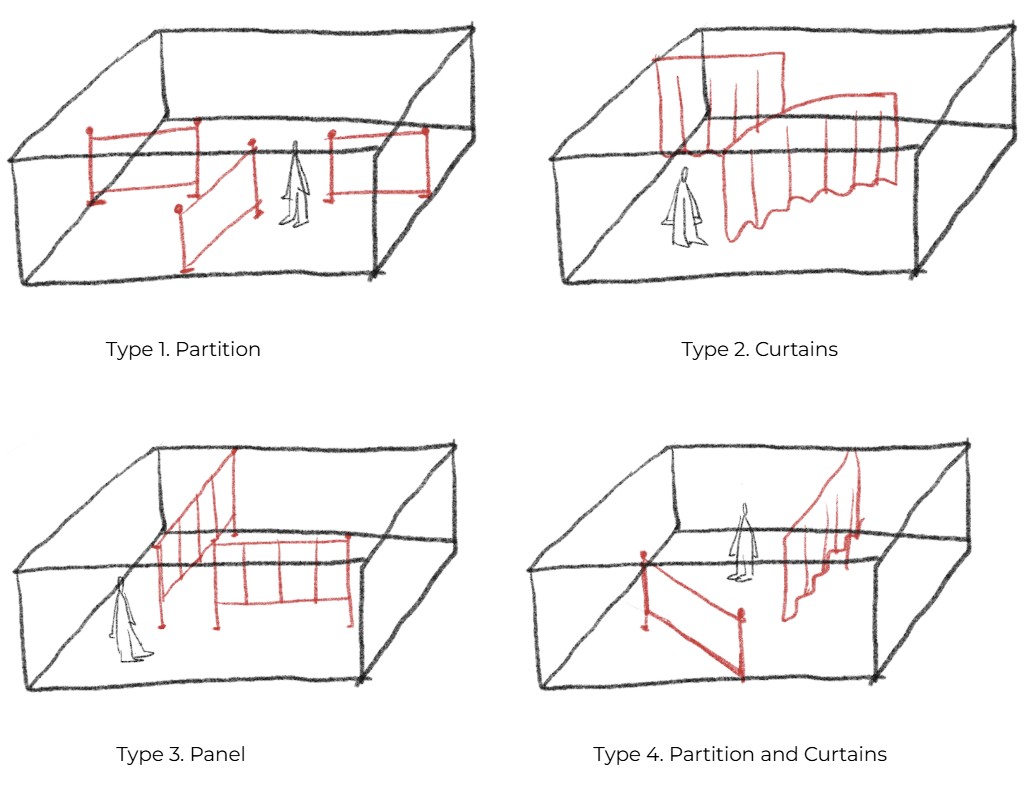
The first finding is that all participants expressed a strong desire to divide their space in order to achieve a sense of stability. When a room is separated according to purpose or sensory needs, each zone gains a distinct psychological role. In contrast, an undivided studio forces various activities and emotional states to mix within a single space, making it difficult for residents to feel grounded. Therefore, creating both horizontal and vertical allowances within the room can help residents form their own spatial divisions. This separation not only clarifies the purpose of each area but also allows different materials, colors, scents, and atmospheres to belong to each zone, contributing to a layered sense of comfort.
The second point concerns the limitations of the provided furniture and finishes. The materials, colors, and forms of the default furniture often restrict participants’ desire for personal expression. Rather than “living in a space,” they feel they are “being placed in one,” which undermines their sense of agency and slows the process of self-formation. This lack of control can lead to detachment and even helplessness toward the environment. For this reason, a system or space that enables the transformation of materials or furniture is necessary. Such a system would support residents’ identity-making while also enabling the sharing and circulation of preferences among residents, strengthening the apartment’s communal life.
Lastly, the simplification of daily life suggests the need for multifunctional shared spaces within student housing. Instead of providing only utilitarian facilities such as communal laundry rooms or kitchens, it is important to create spaces where thoughts, activities, and experiences can be shared. The limited size and structure of individual rooms often restrict activities, but shared facilities can expand these possibilities. By connecting individuality with community, such spaces can offer both functional and emotional support – addressing feelings of loneliness, especially for international students living away from home.
Through these findings, three design keywords are formulated:
Layered Comfort
Soft Personalization
Shared Expansion
2) Design Frameworks
Then, it is necessary to consider how these derived design languages can be materialized in concrete ways.
<Layered Comfort>
To support different forms of spatial separation, the room must have both vertical and horizontal allowances. Rather than pre-defining spatial divisions, designers should create conditions that enable residents themselves to decide how to divide the space. As spaces become layered and differentiated, their psychological functions and practical purposes become clearer, producing a sense of stability through multiple layers.
Vertical Allowance:
When vertical height is available, residents can create mezzanines or arrange loft-style beds, allowing them to assign different purposes to different vertical zones. This vertical division enables flexible, user-defined layers within a small space.
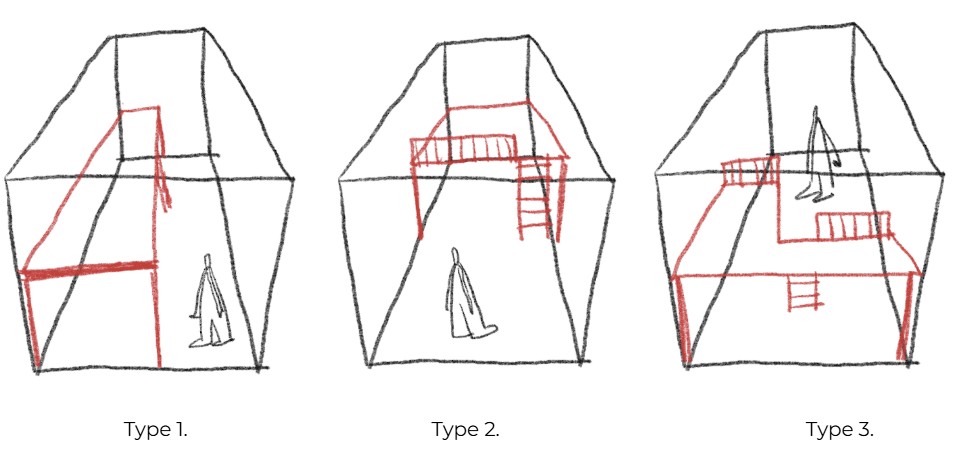
- Horizontal Flexibility:
Horizontally, residents should be able to divide their space using partition or curtain systems. Rather than separating spaces with fixed walls, the design should allow occupants to create their own spatial boundaries in a more autonomous way. In this case, the apartment complex could include a dedicated area where residents can purchase, replace, or repair materials for partitions or curtains, enabling them to change these elements freely.
<Soft Personalization>
Next, the provision of basic furniture – although it may seem like a minor detail – plays a significant role in shaping the atmosphere of the space. Being able to choose these details can function as a way of constructing one’s own sense of identity. Therefore, I propose introducing a customization system within student apartments, including a designated space where residents can repair, modify, or store furniture and freely change its materials or colors. This could be a service space where, before moving in or during their stay, residents can reupholster furniture in their preferred fabric or repaint certain pieces.
This system would not be offered for free but operated as a paid model, potentially in collaboration with local furniture repair shops or by hosting such services within the building, creating a mutually supportive structure. Another option would be to include a second-hand shop inside the apartment complex, where residents can buy, sell, or exchange furniture among themselves, establishing a circular system. Such a model maintains a balance between sustainability and personalization, and it also encourages residents to develop or deepen their sense of self through the act of shaping their space.

Erasmus University Rotterdam operates a pop-up swap store where donated items from graduating students or international students are collected and redistributed. This system prevents unnecessary waste caused by frequent moving and supports students who hesitate to purchase new items. It serves as a circular program designed to encourage reuse within the student community.
<Shared Expansion>
Students living alone away from home often feel restricted in their activities within student apartments outside their school life. For students who share this common emotional experience, the layout of shared spaces plays an important role. Instead of simply providing practical communal facilities such as shared laundry rooms or kitchens, the apartment should incorporate dual-layered structures that support both individual life and community life.
First, students were observed doing various activities – eating, studying, watching YouTube – at the single desk provided in their rooms. Expanding this into shared spaces could involve creating co-working areas or workshop rooms, allowing students to share academic interests, interact with other disciplines, and support collaboration and idea development.
Second, emotion-based shared spaces such as quiet lounges or communal balconies could be provided. These spaces move beyond resting in familiar and limited private rooms, offering emotional fulfillment through shared presence, emotional exchange, or simply being around others.
Lastly, there could be a space for sharing personal hobbies, allowing for item exchange or communal hobby activities. This supports community building and fosters a sense of attachment to the apartment. With basic equipment and workspaces, a variety of activities can emerge.
By arranging various elements within both personal and shared spaces, residents can actively select components to create their own “spatial recipe.” This approach allows students not only to shape their private rooms but also to influence the apartment’s overall community and activities. The selection of in-room elements can further evolve through exchanges or workshop activities, enabling a dynamic interaction between personal and communal spaces.
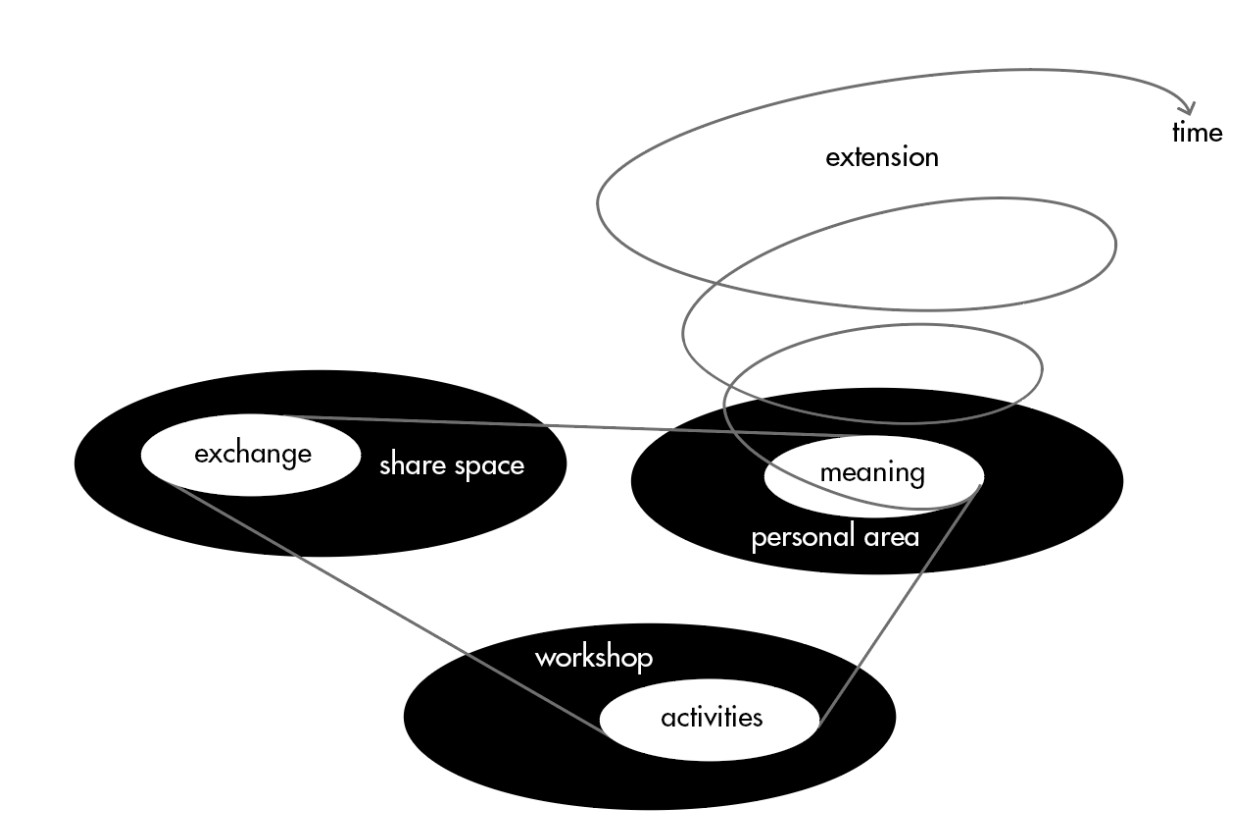
Such a flexible and cyclical structure, which permits residents to add or modify elements at will, fosters an environment where individuals can continuously develop their own spatial “recipes.” Over time, this promotes growth in multiple dimensions, including the personal meaning of the space, the expansion of individual activities, and broader engagement within the apartment community, ultimately creating an open-ended environment without fixed limitations.
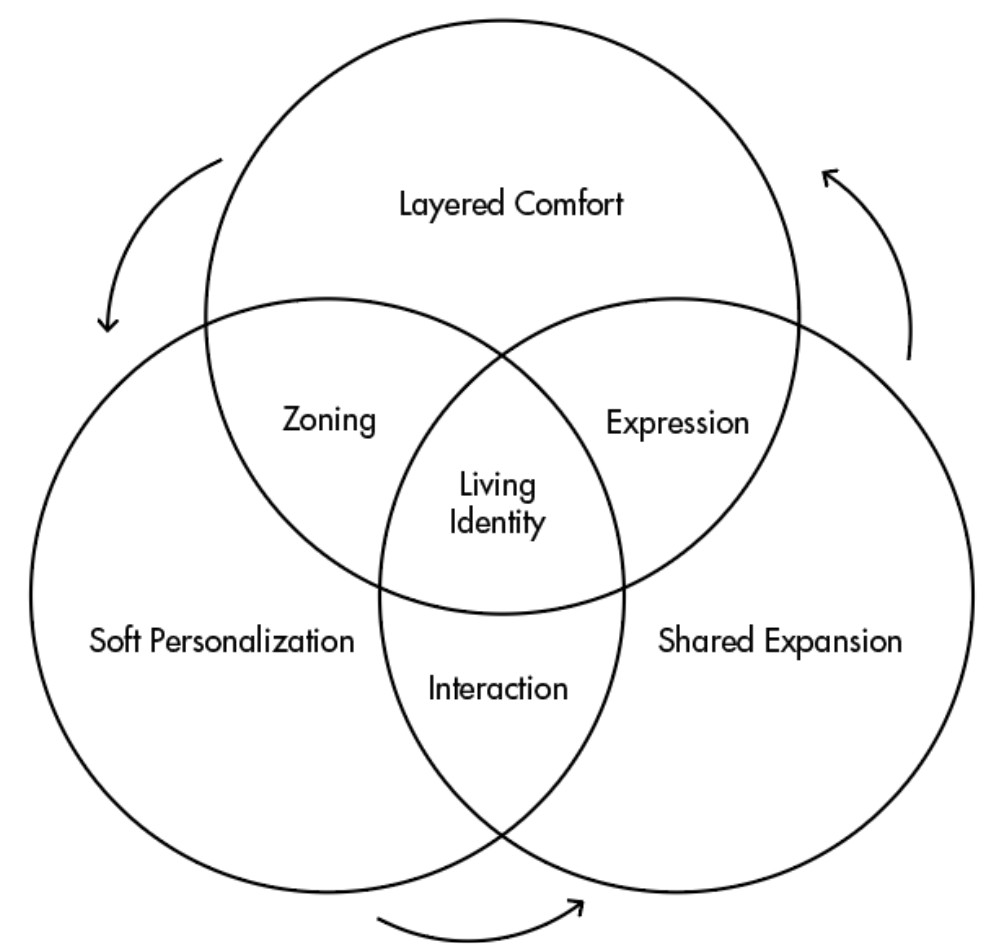
This diagram illustrates how the three key concepts interact and how each contributes to strengthening individual identity.
Chapter.4

4.1 Summary of Findings
This study was motivated by observing many students living in spaces that did not afford them a sense of freedom, raising questions about what approaches in spatial design could be proposed to society. This led to the research question: “How have people adapted standardized mass housing units or dwelling units to reflect their personal preferences and identities?” To address this question, both secondary and primary research were conducted, resulting in the following key findings:
1. Physical / Tangible Aspects
Participants reported discomfort with open-plan layouts that were not structurally divided. Commonly, this discomfort was associated with difficulties in ventilation and a lack of psychological stability. Additionally, the provision of standardized furniture—often featuring inconsistent colors, materials, and signs of wear—limited participants’ ability to express their individuality. The overall fixed atmosphere of the space was also perceived as constraining, making it difficult for residents to feel a sense of ownership or attachment.
2. Behavioral and Emotional Aspects
Firstly, participants repeatedly noted difficulty in forming an attachment to their spaces. This was largely due to the limited duration of residence and the restricted opportunities for personalization, leading them to perceive the space primarily as a functional living area. Secondly, participants described a simplification of daily life: instead of engaging in diverse activities at home, they restricted their behaviors to basic routines due to spatial constraints. Lastly, a coexistence of freedom and loneliness was observed. While living alone offered a sense of autonomy, participants simultaneously experienced loneliness due to the confined nature of their personal spaces.
From these findings, three spatial design strategies were derived:
Spaces should allow users to create their own vertical and horizontal zoning. Segmentation elements such as curtains and partitions, with customizable materials and colors, enable residents to adjust the sensory atmosphere and organize spaces according to their personal needs. This approach emphasizes providing flexibility for users to enact their intentions, rather than imposing designer-centered spatial structures.
Instead of providing fixed furniture packages, a system can be introduced where residents choose elements themselves. For example, vintage furniture shops or exchange markets within the apartment could facilitate the swapping of items among residents, while also connecting with the local community. This circulation-based model prioritizes meaningful, analog experiences over efficiency, enhancing residents’ sense of agency and fostering complex spatial narratives.
Apartments can incorporate diverse communal and activity spaces, enabling both emotional and behavioral expansion. Such spaces support not only academic work but also the sharing of interests and collaboration, laying the foundation for emotional development and promoting an expanded perception of personal space beyond its physical limits.
These three elements collectively form the concept of a “recipe space,” designed to help students create their own living environments. This model suggests that students need the flexibility to assemble their personal space “recipes” according to their individual needs and preferences, combining physical, emotional, and social dimensions of their living experience.
“Standardized student apartments have constrained students’ identity formation, yet students instinctively attempted to personalize their spaces. This reveals a design gap that future student housing must address.”
4.2 Limitations
1. Sample Size Limitation
The primary research of this study was conducted with interviews of three participants. The small sample size limits the generalizability of the findings regarding student apartments. Due to this limitation, perspectives from students from various countries could not be adequately represented. Additionally, as the researcher and most participants are from design or art-related majors, the findings may not be generalizable to students from other disciplines. A larger and more diverse sample would be necessary to capture the cultural and lifestyle differences across various countries and fields of study.
2. Geographical Scope Limitation
Due to the limited number of participants, the study focused on three cities. These cities are among those with relatively large student populations in the Netherlands, excluding students living in smaller towns. This limitation indicates that the study may not fully represent the range of student housing environments across the country. Focusing only on major cities may lead to a biased perspective, highlighting the need for additional research in smaller urban contexts.
3. Time and Context Limitation
Interviews lasted between one and two hours, lacking longitudinal observation that could capture multiple layers of meaning over time. As a result, in-depth insights into the adaptation process, including moving, adjusting to the environment, and seasonal changes, were not fully explored. Short-term interviews may reflect only immediate emotional responses or situational conditions, emphasizing the need for extended observation or follow-up interviews to gain a more comprehensive understanding.

4.3 Future Work
1. Expansion to a Larger Sample
To increase the generalizability of the findings, a larger number of participants should be recruited. This would allow for comparison of spatial patterns across differences in cultural background, field of study, and lifestyle habits. Furthermore, additional investigations into student apartments in smaller towns are necessary. Such research could reveal not only the patterns and common issues of urban student life but also those specific to smaller-town contexts. In addition, exploring the living environments of students from neighboring countries, as well as other cultural groups residing in the Netherlands, would provide insight into how students with different cultural backgrounds adapt to student apartments.
2. Longitudinal Study
Long-term observation and interviews are required to understand changes in student apartments from move-in to six months, capturing seasonal variations and evolving use of space. Observing changes in temperature, natural light, and other seasonal factors can reveal shifts in living patterns. Tracking the first six months of residence can document the evolution of how students adapt and personalize limited spaces over time.
3. Behavioral Tracking-Based Spatial Research
Integrating technological tools such as sensors or mobile apps to collect data on behavioral patterns can provide concrete insights. Such data can reveal temporal occupancy patterns and which areas of the space are most frequently used. Alternatively, recording spatial changes monthly can visualize step-by-step adaptations. Combining these approaches generates quantitative and visual data, enhancing the credibility and depth of the findings.
Bibliography
1 & 2 : Urban, Florian, Tower and slab histories of global mass housing. London: Routledge, 2013. 3 & 4 : Glendinning, Miles, Mass Housing. London: Bloomsbury Visual Arts, 2021. 5: Musterd,Sako, R.Rowlands, R.van Kempen, Kenneth A, Loparo, Ronald van Kempen, Mass Housing in Europe. Basingstoke: Palgrave Macmillan, 2009. 6 : Lefebvre, Henri, eds. The Production of Space. Oxford: Basil Blackwell Ltd, 1991. 7 & 8 : Popov, Aleksey Vladimirovich, “Historical Development Stages Of The Student Youth Accommodation Architecture From Dormitories Prototypes To Post-Industrial University Campuses”. International Journal of Civil Engineering and Technology 9, no. 11 (2018): 2526‑2536. 9 : Habraken, N.J., Support An Alternative to Mass Housing (London : Routledge, 2021), 40.10 : Martin Heidegger, Building Dwelling Thinking,New York: Harper & Row, 1971, 3. 11 : Jane Kroger, “Identity Development Through Adulthood: The Move Toward ‘Wholeness’,” in The Oxford Handbook of Identity Development,Oxford University Press, 2014, 65–80. 12 : Gaston Bachelard, The Poetics of Space,Boston: Beacon Press, 1994, 4–8. 13 : Time Ingold, The Perception of the Environment: Essays on Livelihood, Dwelling and Skill, London: Routledge, 2000 14 : Augé, Non-Places: Introduction to an Anthropology of Supermodernity, London: Verso, 1995, 77. 15 : Sarah Pink, Home Truths: Gender, Domestic Objects and Everyday Life. Oxford: Berg, 2004. 16 : Juan I. Aragonés, María Amérigo, and Raquel Pérez‑López, “Perception of Personal Identity at Home,” Psicothema 22, no. 4 (2010): 872–879. 17 : User Centered Design (UCD), Interaction Design Foundation,https://www.interaction-design.org/literature/topics/user-centered-design?srsltid=AfmBOor85aGbzKgfD0HS2PM3WuqpwMu6JJ-Y7QEoY_pqm9qrGE5_jRkO (accessed Oct. 15, 2025). 18 : ArchDaily, “Individual Space Is as Important as Collective Space,” ArchDaily, June. 2024.
List of figures
Fig. 1 : https://lecorbusier-worldheritage.org/en/unite-habitation/ Fig. 2 : https://www.geheugenvandevu.nl/plaatsen/uilenstede Fig. 3 : https://www.uea.ac.uk/uea-life/accommodation/en-suite-campus Fig. 4 : https://www.luntero.com/rent/amsterdam/echtenstein-132-b-1103-aa Fig. 5 : https://www.wallpaper.com/art/photography/teenagers-in-their-bedrooms Fig. 6 : Research Methodology Fig. 7 : Process of Field Research Fig. 8 : Student Apartment in Amsterdam Fig. 9 : Inside a student apartment in Amsterdam Fig. 10 : Floor plan of student apartment in Amsterdam Fig. 11 : Collage of the Room of Participant 1 Fig. 12 : Overall Layout and Details of Participant 1’s Room Fig. 13 : Illustration of Participant 1’s Room Reflecting her Wishes Fig. 14 : Student Apartment in Arnhem Fig. 15 : Inside a student apartment in Arnhem Fig. 16 : Floor plan of student apartment in Arnhem Fig. 17 : Collage of the Room of Participant 2 Fig. 18 : Overall Layout and Details of Participant 2’s Room Fig. 19 : Illustration of Participant 2’s Room Reflecting her Wishes Fig. 20 : Student Apartment in Zwolle Fig. 21 : Inside a student apartment in Zwolle Fig. 22 : Floor plan of student apartment in Zwolle Fig. 23 : Collage of the Room of Participant 3 Fig. 24 : Overall Layout and Details of Participant 3’s Room Fig. 25 : Illustration of a Simple Room Layout Fig. 26 : Photographs of Provided Basic Furniture Fig. 27 : Illustration Explaining the Layout of Vertical Space Fig. 28 : Illustration Explaining the Layout of Horizontal Space Fig. 29 : https://www.instagram.com/p/DMxsHi_s_pq/ Fig. 30 : Diagram of a student apartment with a composite function Fig. 31 : Framework of Spatial Identity Formation