Abstract
Every culture differs in terms of the importance and value they give to privacy. Culture being strongly connected to architecture, these different perceptions of privacy play an important role in how boundaries are defined in the built environment. The cultural perceptions and practices impact not only how designers create spaces but also how users develop relationships with their surroundings. This research paper aims to highlight how culturally sensitive design is essential and how cultural attitudes toward privacy and boundaries influence domestic spatial design especially in terms of connections between the interior and the exterior environment. Through detailed theoretical base and fieldwork focusing on multi-cultural neighborhoods in Zwolle, this study explores how people in the Netherlands interpret and transform threshold spaces and examines how concepts like privacy, boundaries, openness, and control are reflected in domestic spatial design.
The research draws from architecture, anthropology and architectural ethnography by considering various conditions such as social norms, religion etc. to understand how environmental, social, and cultural factors influence design choices in the threshold spaces. Essentially, the study aims to contribute to a more culturally sensitive design framework by examining how privacy and boundaries are actively shaped in daily life within multicultural contexts.
CHAPTER 1
1.1. Introduction
Being a designer from Turkey and now living in the Netherlands, I’m considerate of architectural and cultural differences between two countries and I’m in constant observation, researching and collecting information in that regard. One noticeable difference between two countries is the attitude towards privacy. While personal boundaries in the social settings are more emphasized in the Netherlands, there seems to be less attention to visual or spatial boundaries within domestic settings, where open front gardens and large uncovered windows are common. The situation is the complete opposite in Turkey as home and family are considered sacred therefore they are preserved with a greater attention. Naturally, these differences show themselves both in the visual language of architecture and in the ways people use the space. As part of my personal and academic interests, I often pay attention to the way spatial design reflects cultural values, particularly around privacy and control. Observing threshold spaces in this context fascinates me as a spatial designer with their ability to meditate the public and private relationship in domestic environments. In multi-cultural neighborhoods in the Netherlands, these observations become even more relevant, as residents from different cultural backgrounds have to negotiate and adapt their privacy needs and social practices within houses designed according to Dutch norms of openness.
The incorporation of cultural studies and architecture is highly relevant for my practice as a designer. An important source on that issue is Arturo Escobar’s book Designs for the Pluriverse where he introduces a perspective that criticizes dominant Western design norms and argues that design is not just functional and aesthetic but should depend on relationality and culture. “Design is ontological in that all design- led objects, tools, and even services bring about particular ways of being, knowing, and doing.”[1] Design shapes how people live and approaching design with one standardized framework is quite misleading. I also find it crucial to approach design from multiple cultural and relational perspectives and appreciate the richness of local knowledge and lived experience.
My interest in the relationship between architecture and culture has been shared by multiple theorists and designers such as Christian Norberg-Schulz, Yi-Fu Tuan, and Amos Rapoport, whose work significantly inspired this paper. They have each contributed to the idea that design is beyond aesthetics and function but holds meaning and shapes human experience. Yi-Fu Tuan’s arguments are quite valuable in that regard. He argues that places are shaped by a background of personal experience, memory, and emotion. Therefore, inhabitants form special connections to the place. He writes, “A place is an object in which one can dwell,”[2] suggesting that identity and spatial experience are connected.
A place, particularly a domestic one can reflect the user’s personal identity as we form connections and attach meanings to places. Considering culture is a core component of identity, domestic places in this context can also reflect broader socio-cultural understandings and a certain shared history. As psychologist and architect Amos Rapoport argues in The Meaning of the Built Environment, even the small design decisions such as the layout of a courtyard or the orientation of a window, reflect complex meanings and cultural logics.[3] Taking the traditional Dutch canal houses as an example, their tall, narrow facades and large front windows originally emerged from practical issues like limited urban space and property taxes based on facade width. However, they also have deeper cultural meanings as reflection of Dutch appreciation for openness, transparency and their attention to orderliness in everyday life.
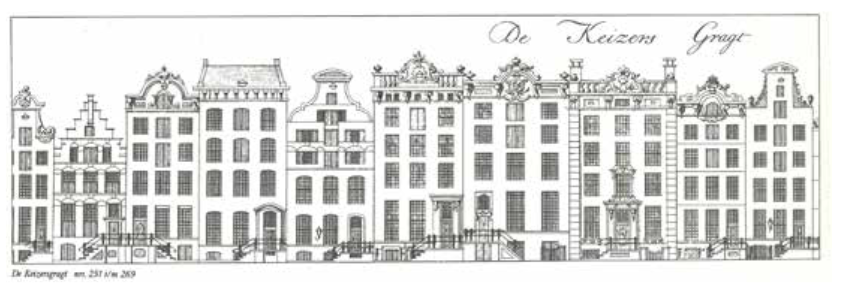
In The Hidden Dimension, Edward T. Hall adds to this discussion by introducing the concept of proxemics, which is the study of how people perceive and use space. According to Hall, how privacy is maintained varies across cultures and has an impact on both architecture and human interaction.[4] For instance, in many Middle Eastern or Mediterranean cultures, social life often extends into semi-public spaces such as courtyards or balconies, where thresholds between private and public are fluid and interaction with neighbors is common. In contrast, Northern cultures tend to emphasize clearer spatial boundaries and a stronger sense of privacy, where large windows might suggest openness, yet social interactions within the home are more contained. Hall’s work is relevant for this research especially in understanding spatial behavior across members of different cultures. In this context, thresholds function as sites of negotiation where privacy and boundaries are tied to cultural and social codes.
From a spatial viewpoint, architect Aldo van Eyck’s ideas on threshold spaces and the analysis of his work are significant sources for this research. Van Eyck emphasized the architectural and human importance of the “in-between” transitional spaces that exist between one realm and another. For him, architecture’s role was to “extend the narrow borderline” creating real places for real people and real things through construction. The in-between was not just a conceptual idea, but a tangible, constructive realm that mediates human actions and experiences.[5]
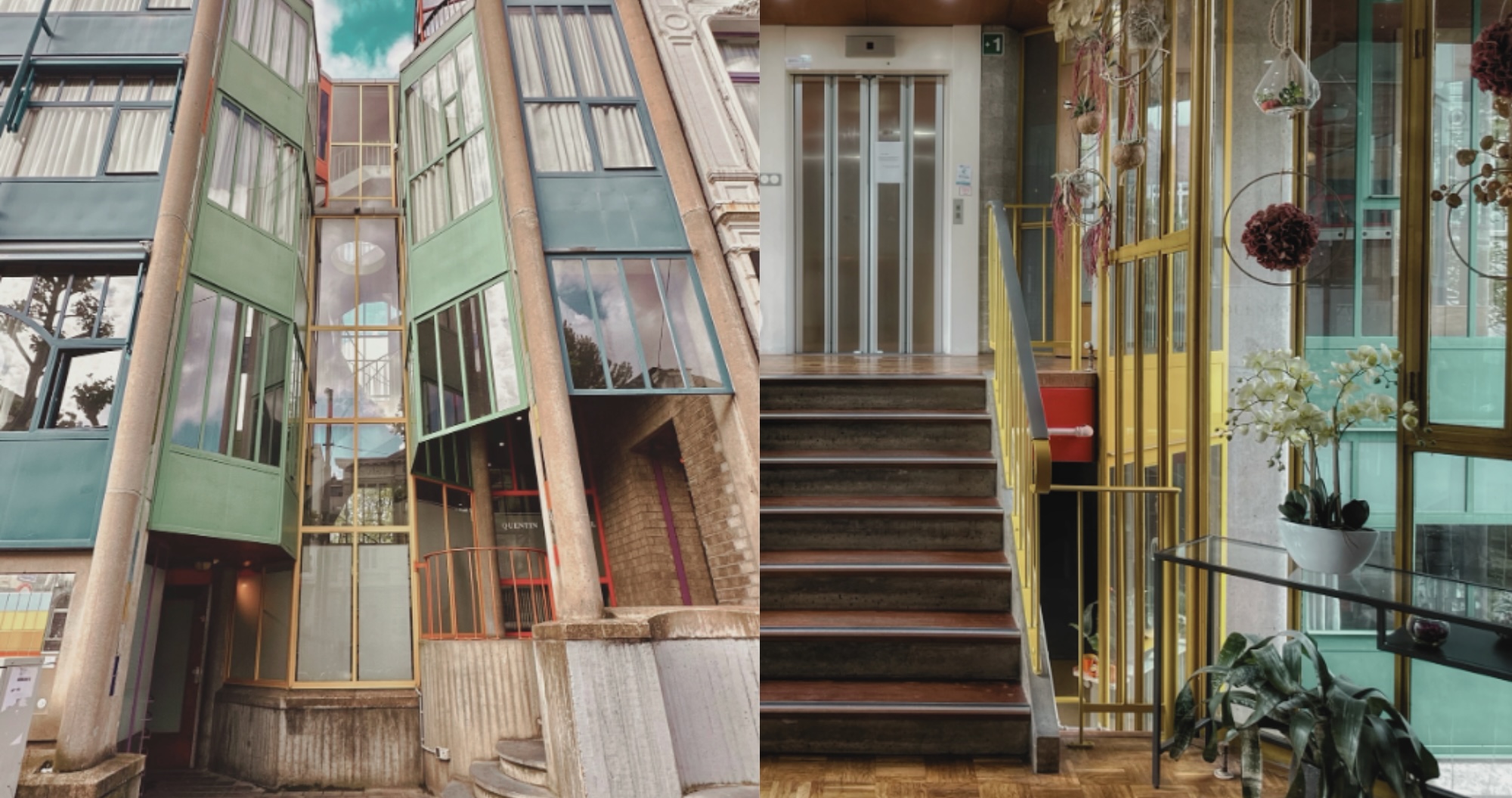
In the Moederhuis in Amsterdam, Van Eyck’s belief in the in-between space becomes highlighted. Thresholds become places and the building feels “open and protective at the same time” as Aldo van Eyck described in his writing.[6]The transitional “in-between” spaces create a form of architecture as care.
Together, these writers confirm that architecture is an active influence in shaping emotional attachment, spatial behavior and cultural identity. In this regard, design of threshold spaces becomes an important point of research for understanding how privacy is conceptualized and reflected across different cultures. By focusing on multi-cultural neighborhoods in the Netherlands, this research builds on and extends existing literature to explore how design can become more responsive to the complexities of cultural difference.
1.2. Problem Statement
In traditional spatial practice, designers often tend to prioritize aesthetics and functionality over the experiential, emotional, and cultural connections they create with the users. This approach overlooks the impact spatial design has on shaping human behavior, interactions and experiences. Moreover, design practices often accept the Western world norms as a standardized approach, which can lead to overlooking the diverse cultural values and personal experiences. As Christian Norberg-Schulz states “Architecture means to visualize the genius loci, and the task of the architect is to create meaningful places, whereby he helps man to dwell.”[7] The task of creating meaningful places is possible through deeper understanding of multiple variables. Because design is never neutral, it is shaped by the societal norms, values, and lived experiences of both users and designers. Designed spaces, especially the domestic ones, are powerful reflections of culture and society. Therefore, architecture and socio-cultural values exist in a dynamic relationship, shaping and being shaped by the other over time. This means it is not possible to have one standard way of designing that is meaningful and suitable to all cultural contexts.
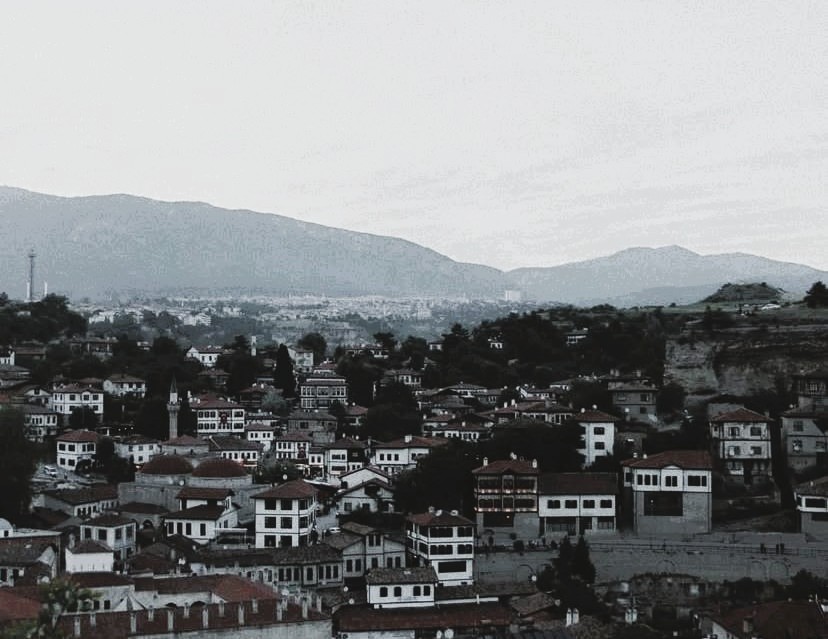
In this case, the socio-cultural norms of privacy and boundaries should be taken into account when making and evaluating design choices. This becomes especially important in multicultural urban settings, where people from different cultural backgrounds live within standardized housing designed according to dominant norms. Threshold spaces such as windows, balconies, porches and entrances serve as mediators between interior and exterior life and are often the points where cultural interpretations of privacy and social behavior become most visible. For example, Yi-Fu Tuan notes in Space and Place that “Western homes have picture windows,”[8] which highlights openness to the outside, while many Asian cultures prioritize inward focus. This inward focus shows itself as inner courtyards in some cultures. In Iran, these “private public spaces” as Mohamd Sedighi defines in his study, are places where Iranian families spend most of their time.[9] The hot climate of Iran and the importance of privacy that comes from religious beliefs affect how people live. It is evident that choices in design elements reflect strong cultural values such as religion and family structures. In many Islamic cultures the idea of privacy is deeply related to religious traditions and influences the design of threshold spaces as it is considered important to protect the private domestic space from public view. As another example of an islamic influenced culture, traditional Turkish houses, despite being in a close proximity to each other, usually not side by side in a linear form but rather scattered along the street in a way that maintains varying levels of privacy. Of course this spatial arrangement is also influenced by factors such as the greater availability of land and lower density in those areas during that period. However, socio-cultural values also played an equally significant role, especially in how threshold spaces were used. Entrances often opened onto intermediary spaces such as courtyards, rather than directly into the private interior, while privacy was mediated through layers of doors, curtains, shutters and natural elements.
These significant details of design elements and their use give many insights about the dynamics in the society. As Amos Rapoport states in his book The Meaning of the Built Environment, “The built environment reflects the culture of its creators and users, serving as a material expression of values, priorities, and worldviews.”[10] Over time, these cultural values become parts of domestic design, shaping the spatial character of neighborhoods and influencing how people live.
In the Netherlands, where housing design is traditionally open and emphasizes transparency, immigrant populations bring alternative cultural practices to the tradition. These often appear as subtle modifications to threshold spaces (such as the use of curtains, balcony enclosures, or garden fences) that reflect cultural understanding within the built environment. By particularly focusing on multi-cultural neighborhoods in Zwolle, Netherlands, this research aims to understand how different perceptions of privacy influence the use of threshold spaces in the Dutch domestic context. It aims to identify the cultural, environmental, and behavioral factors that shape these perceptions and practices.
1.3. Research Aims
This research aims to investigate how threshold spaces function as culturally and socially negotiated zones, where privacy, openness, and daily routines are expressed and adapted. It seeks to understand the historical and cultural significance of threshold spaces within Dutch and Turkish contexts, as well as their role in architectural theory. The study examines how residents from different cultural backgrounds reinterpret architectural frameworks to align with their values, habits, and notions of community, and observes how thresholds are used in multicultural settings. The goal is to contribute to a culturally responsive architectural framework that recognizes thresholds as flexible, lived spaces reflecting both tradition and contemporary practices.
1.4. Research Question
How do cultural attitudes toward privacy and boundaries influence the design particularly regarding the threshold spaces?
Sub Questions
- What is the significance of threshold spaces within architectural theory and practice?
- How do threshold spaces mediate between private and public life in Dutch and Turkish domestic architecture, and what historical or cultural factors influence this mediation?
- In what ways do residents adapt, reinterpret, or transform thresholds to align with their cultural expectations of privacy, community, and everyday routines?
- How is the boundary between private and public spaces negotiated in multi-cultural neighborhoods in the Netherlands?
1.5. Methodology
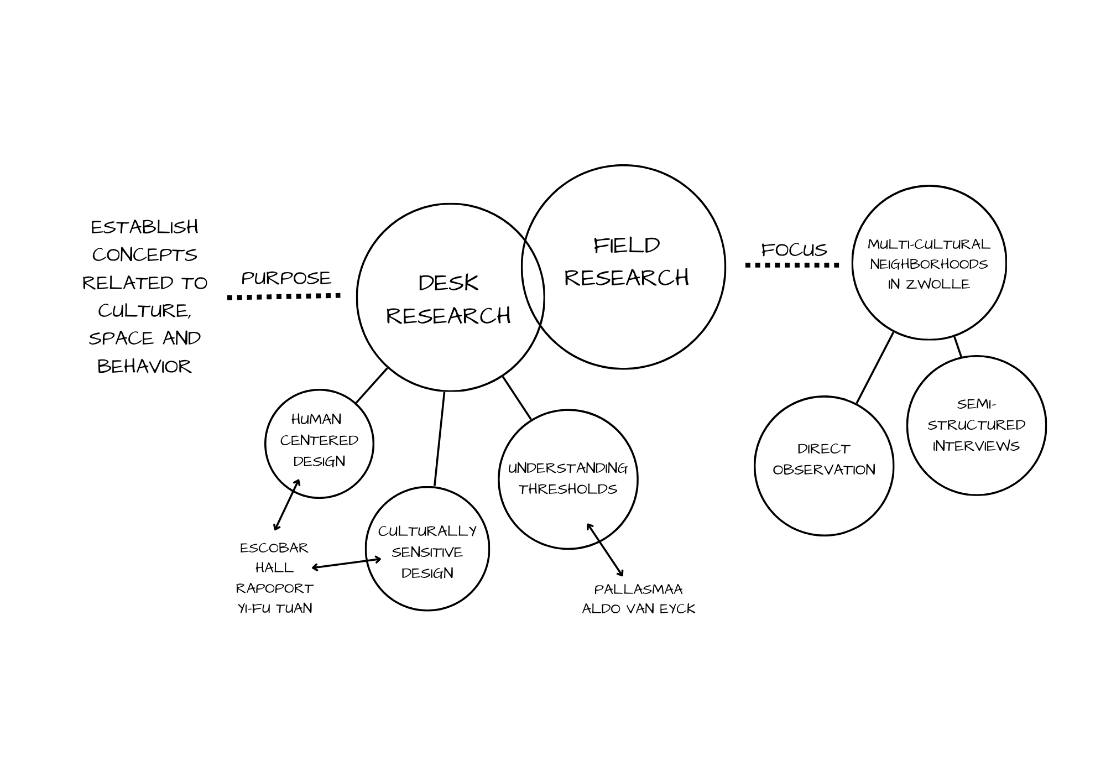
The research paper will use a combination of desk research and field research in order to answer the research questions. This dual strategy will lead to a strong approach through both theoretical framework and first-hand observation as each method brings its own strengths and challenges. In the initial phase, the desk research will involve reviewing academic literature mostly related to architecture, environmental behavior, and architectural ethnography. After forming the theoretical foundation, the field research will focus on neighborhoods in the Netherlands where cultural diversity is visible in everyday environments. Site visits will be carried out to observe and document how threshold spaces are designed, adapted, and used by residents in the Netherlands with attention to architectural forms and behavioral patterns, highlighting how cultural understandings shape spatial practices.
Visual documentation through photography, mapping, and drawings will form an important part of the fieldwork, providing material for spatial and behavioral analysis. These findings will then be evaluated to identify patterns, negotiations, and cultural meanings in threshold spaces.
1.5.1. Desk Research
The research paper will introduce theories and concepts on the importance of human centered and culturally sensitive design by including previous academic writings by Arturo Escobar, Edward T. Hall, Amos Rapoport and Yi-Fu Tuan. Those sources have great importance to address the problem statement and research aims. In chapter two, “thresholds” will be defined to specify the interior – exterior connections by drawing information and examples from academic research, particularly by referring to architects like Juhanni Pallasma and Aldo van Eyck’s work and writings. In addition to books and articles of architects and architectural theorists, the research paper will include academic sources from various disciplines such as architectural ethnography, sociology, anthropology etc. This interdisciplinary approach will introduce rich academic knowledge and enable making connections and correlations across fields. Besides that, the methodologies used in architectural ethnography will be incorporated to better understand how people interact with thresholds in everyday life.
1.5.2. Field Research
Field research is the core of this paper. After the review of the theoretical framework, first-hand data on how threshold spaces are physically constructed, used and culturally interpreted will be collected through site visits. The fieldwork will focus primarily on multi-cultural neighborhoods in the Netherlands, where different cultural understandings of privacy and boundaries meet Dutch architectural traditions. This presents an opportunity to study how diverse groups adapt or transform threshold spaces. The selection of the neighborhood will be based on two main criteria:
- Cultural diversity: areas with communities from varied backgrounds.
- Domestic scale: neighborhoods where housing design clearly reveals the relationship between public and private realms.
For the field work, the main method to be used is systematic, direct observation of threshold areas in daily life. After carefully selecting an area in Zwolle that fits the research aims the best, observations will focus on both physical modifications (for example, the addition of curtains, fences, or balcony enclosures) and behavioral patterns (how residents use or avoid these threshold spaces) of residents of the area. William H. Whyte’s research project The Social Life of Small Urban Spaces stands as a strong methodological reference in this regard as it emphasizes the importance of observing people’s behavior while it unfolds in real time.[11]
As another method drawn from architectural ethnography, the study will include semi-structured interviews with residents. These conversations will provide insight into how people perceive and negotiate thresholds, and how cultural attitudes toward privacy influence their choices. Inspired by methods in architectural ethnography, these interviews will not only highlight individual perspectives but also capture the behavioral patterns of residents from different backgrounds.
1.5.3. Documentation
Documentation will play an important role in capturing both the physical and behavioral use of threshold spaces. Three main methods will be used:
- Photographic documentation: systematic photographs of threshold spaces will provide visual evidence of design adaptations and practices.
- Drawing and mapping: abstracted diagrams and maps will show spatial patterns and their relationship to public/private boundaries within neighborhoods.
- Behavioral notes: observational analysis on how residents use threshold spaces (e.g., sitting on stoops, using curtains) will be noted.
This material will be analyzed through visual and spatial analysis methods drawn from architectural ethnography. The spatial data will be presented in an abstracted way, highlighting patterns of use. This approach draws inspiration from the documentation methods of Christopher Alexander, who uses maps and diagrams in his works like the books A Pattern Language[12] and Houses Generated by Patterns which serves as guides for creating a visual language to capture the experience of space.[13]
CHAPTER 2
2.1. Thresholds
Threshold spaces, in the context of this research, refer to the transitional zones between public and private space, functioning as both physical and symbolic mediators. To be exact, these spaces include the architectural elements windows, balconies, porches, entryways and courtyards, the interior-exterior connections that not only serve functional roles but also shape emotional, cultural, and behavioral responses to space. In Building and Dwelling, sociologist Richard Sennett makes a distinction between boundaries and borders. By stating that boundaries act as separators and borders allow for connection and exchange, he draws attention to how spatial design can either isolate or encourage interaction.[14] In this sense, thresholds can be understood as both. Depending on the context, they can be inviting or discouraging, welcoming or separating. What a threshold communicates often reflects deeper values related to privacy and community. Therefore, they are more than just architectural details, they become sites of negotiation, where spatial cues show how a society expresses.
Inspired by Martin Buber’s theories on philosophy of dialogue, which argues that the essence of being and relating to the world lies in the between “I and Thou”, in between human connection[15], Dutch architect Aldo van Eyck conceptualized “in-between” spaces. According to him, dualities (public and private, inside and outside, self and other) can meet and reconcile in the in-between spaces. For Van Eyck, those in-between spaces, thresholds in this context, are spaces of connection where opposites are complementary to each other. “The common ground where conflicting polarities can again become twin phenomena.”[16] In this way, threshold spaces are not simply architectural features but reflections of human nature itself showing balance, dialogue, and coexistence.
As architectural theorist Juhani Pallasmaa states, doors and windows are not only voids in a wall, but mediators between different realms of space and experience.[17] In domestic settings, windows are perhaps the most revealing threshold elements. The shape, size and use of windows in a domestic context can give insights on the background of people that are living in the place and the general attitude towards privacy. In a similar way that courtyards and balconies serve as examples of threshold spaces that carry cultural meaning. For instance, in Mediterranean and Middle Eastern architecture, courtyards are important transitional spaces that enable ventilation, outdoor living, and social gatherings, functioning as social filters that control the visibility of private life.
A clear example on the issue of visibility is the treatment of windows. In the Netherlands, it is quite common to see large, uncovered windows that are facing the street, allowing people passing by to see the interior of the house. In contrast, in Turkey, such transparency is often avoided. Street-facing windows tend to be smaller, higher and usually covered, reflecting cultural sensitivities toward visibility and privacy within the home. It’s even widely considered to be quite inappropriate to not cover the windows with curtains, especially in the evening, setting a sharp boundary to the public. As Amos Rapoport notes, “Environments send messages about what is appropriate behavior, who belongs, and what activities are supported or discouraged.”[18] These design choices are born from a mix of religious beliefs, social norms and historical developments. In many Islamic-influenced cultures, the public and private life are distinctly separated and the architecture reinforces these boundaries.
Another architect who works with the concept of thresholds is Rem Koolhaas, who introduced balconies as architectural elements in the Venice Biennale in 2014. He suggests balconies have this complex role of being unstable mixtures of public and private, inside and outside.[19] As he puts it, “The balcony serves as a laboratory where sometimes explosive mixtures of public and private, inside and outside, are tested”[20] Positioned on the threshold between the home and the street, balconies allow people to inhabit both worlds at the same time, offering openness without full exposure. In this way, Koolhaas highlights how the architectural elements mediate relationships between individuals and spaces.
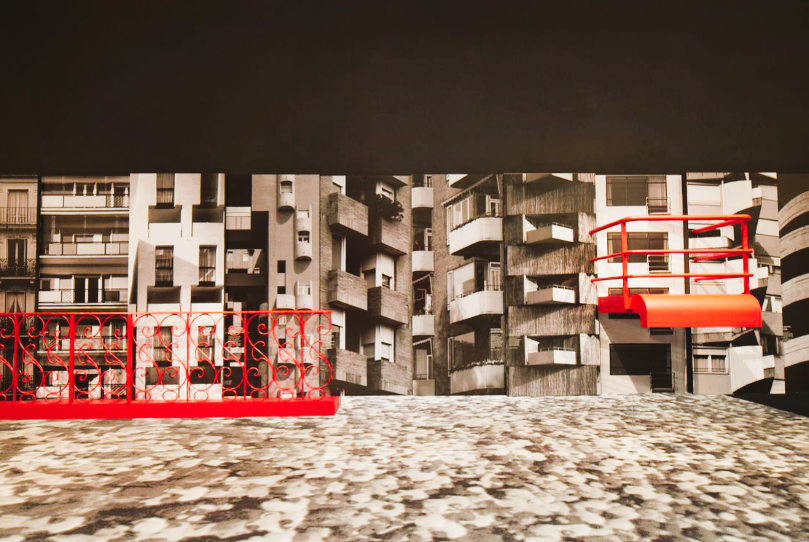
The use of windows, the structure of entrances and existence of balconies are not random, they are reflections of how different societies view privacy, family, gender roles, and public life. Once again, Edward T. Hall’s concept of proxemics supports this view by showing how cultures vary in their spatial behavior. Hall describes that personal space and boundary setting are learned behaviors shaped by cultural norms.[21] Building on that theory, thresholds become the spatial marks of these learned distinctions. They reinforce how people distinguish between “insiders” and “outsiders,” or between spaces of intimacy and those of formality.
In this research, threshold spaces are not examined only for their architectural form, but for their symbolic and behavioral significance. They are viewed as indicators of cultural identity and spaces of negotiating privacy, comfort, and belonging.
2.1.1. Front Garden
Among domestic threshold elements, front gardens serve as the one most socially expressive. Positioned directly between the home and the street, they function as spatial mediators that signal belonging, borders, and identity. They operate as what Edward T. Hall might call proxemic patterns, zones that regulate the flow of interaction between private life and public space.[22] Through planting, fencing, and decoration, the front garden becomes a communicative device.
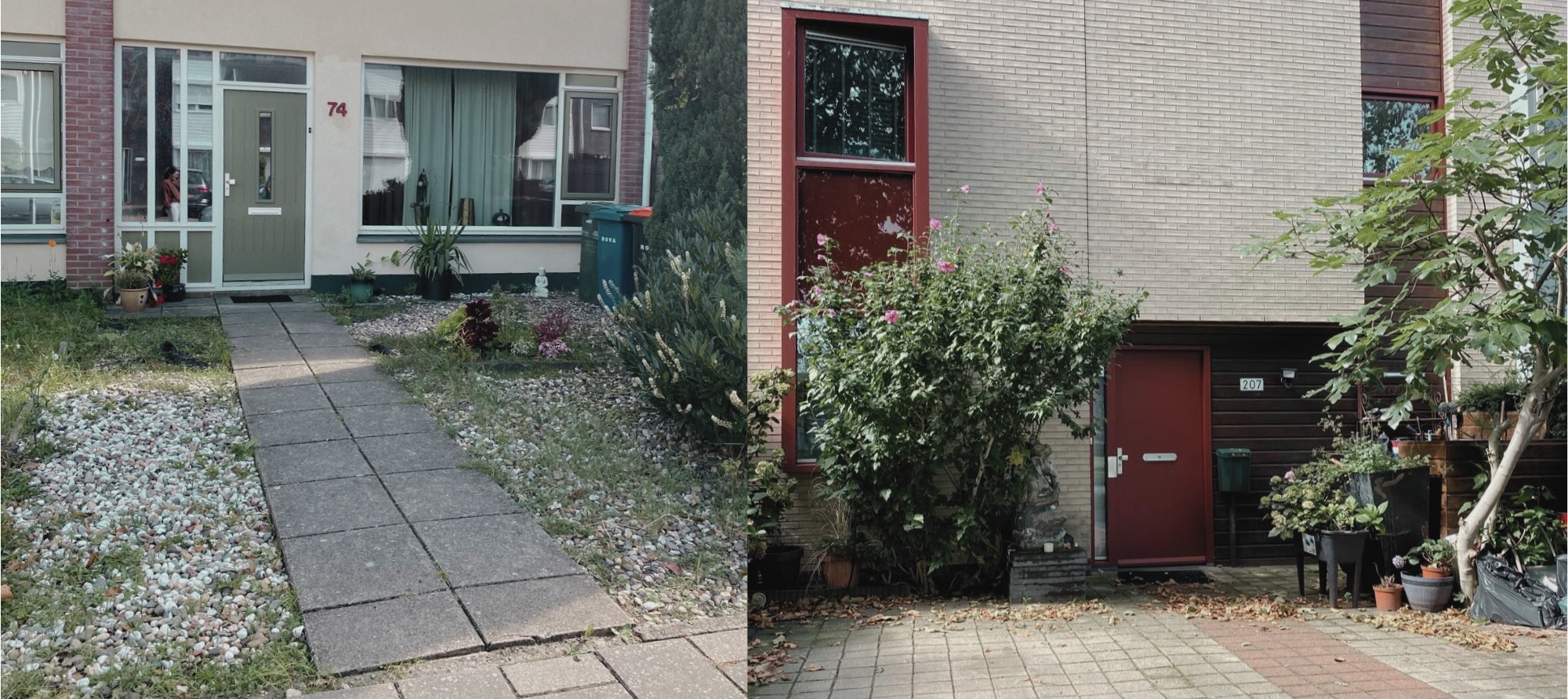
The voortuin, the Dutch front garden, is highly communicative in that sense. To keep the garden and the street continuous, they typically have low fences or none at all. The front gardens are well-kept and decorated with garden ornaments, flowers (especially hydrangeas), and walkways. One could argue that the cultural understanding influenced by Calvinism is the reason for the orderliness of the front gardens. Calvinism, as a branch of Protestantism, links moral virtue to neatness, order, and obvious discipline. In this way, the front garden turns into a carefully maintained facade that reflects the inner values of the house and serves as a moral landscape.
Aside from emphasizing order and cleanliness, historically, front gardens served as a symbol of wealth. During the 17th centuries, the Dutch Golden Age brought new domestic typologies and spatial behaviours that mirrored the growing prosperity of the bourgeoisie. As Simon Schama notes in The Embarrassment of Riches, the Dutch homes were transformed into theaters where prosperity was showcased through careful order rather than overt luxury.[23] In this way, the front garden served as both a status symbol and a moral declaration, a thoughtfully designed threshold that allowed virtue, order, and prosperity to coexist peacefully.
This tradition of open and disciplined domestic thresholds persisted into modern suburban planning. In the early twentieth century, for instance, the 1920 “Great Plan” for the Vreewijk garden suburb in Rotterdam explicitly included front and back gardens as key green elements in its design.[24] From merchant villas in the 17th century to garden suburbs in the 20th, the Dutch front garden has always served as a bridge between civic openness and domestic pride rather than as a strict enclosure.
Simultaneously, the front garden in Turkish houses in the 17th century either did not exist or was in a courtyard form enclosed with a high wall or a fence, marking territorial control. Even though many houses of that era have been lost or heavily altered, remaining examples show us that during the time, houses incorporated enclosed courtyards: semi-private zones defined by high walls or fences. These courtyard-like spaces, known as “sofa” reflected a broader cultural tendency toward controlled exposure, balancing visibility with privacy. This spatial strategy mirrors the broader cultural tendency to controlled exposure. The garden then becomes a site of symbolic and functional layering, a space where hospitality can be performed selectively.
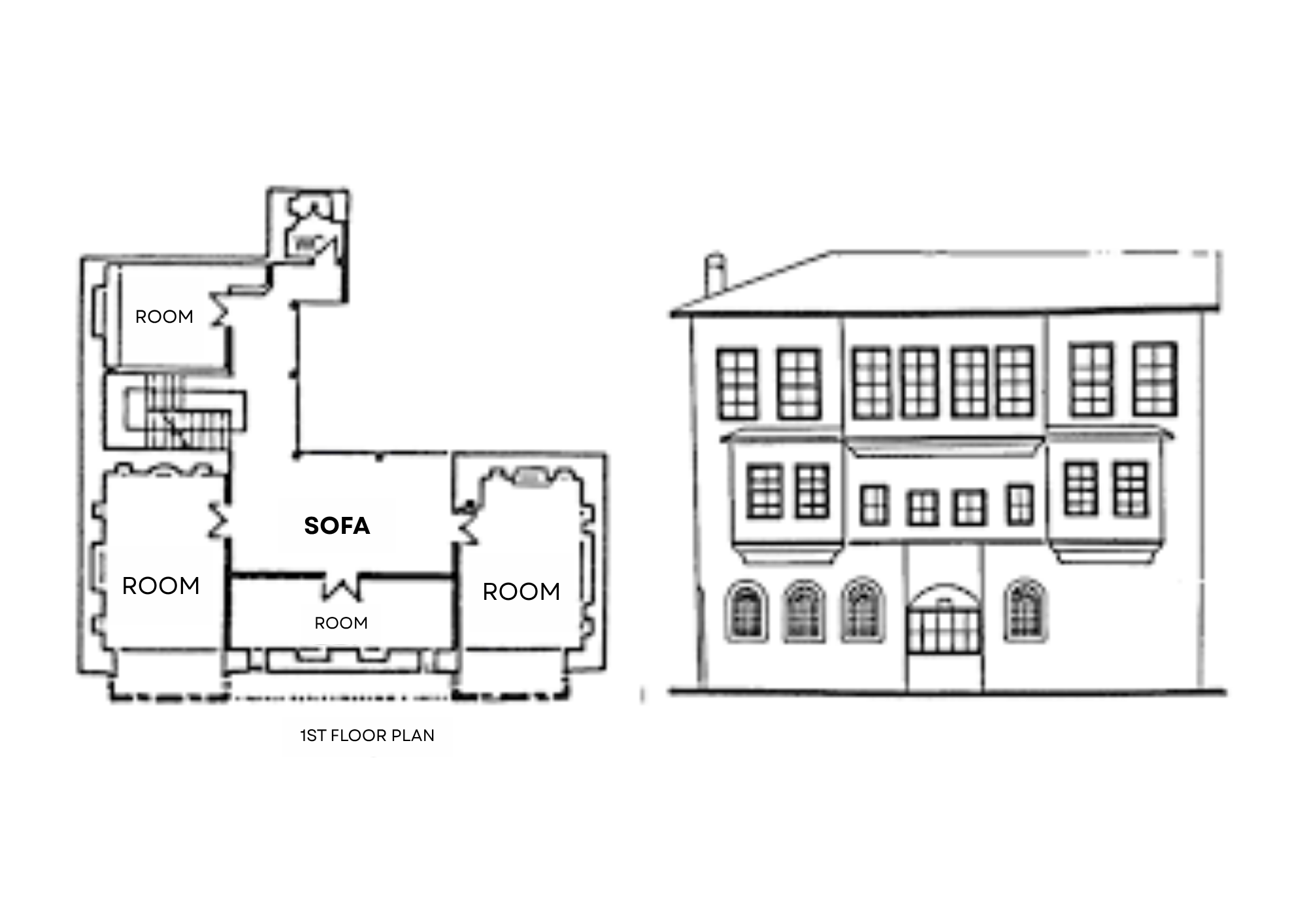
Each practice articulates a distinct philosophy of the domestic threshold: one that invites the gaze and exchange, and another that filters and frames them. From the standpoint of threshold theory, as Juhani Pallasmaa emphasizes, thresholds engage the senses and imagination.[25] The Dutch front garden encourages visual engagement, the continuity between house and street, while the onlooker takes in the flowers, hedges, and walkways. In the Turkish courtyard, on the other hand, screens of greenery, fences, and gates don’t allow gazes to shift between inside and outside.
2.1.2. The Dutch Stoop
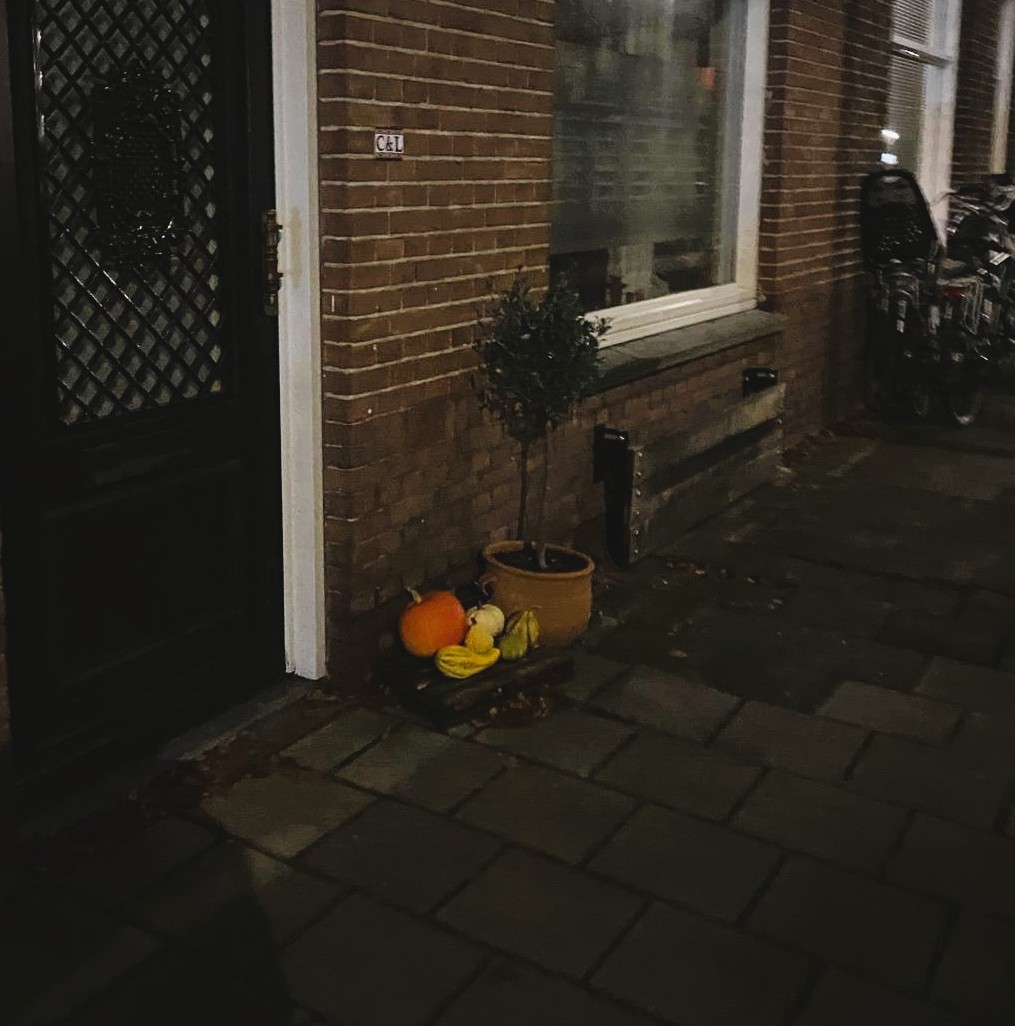
The Dutch stoop, or stoep, is one of those details that immediately captures your attention as a foreigner while walking through Dutch streets. Noticing that people use a part of the sidewalk is not common in many cultures. Yet in the Netherlands, you can see people putting decorations next to their door and even having benches on the sidewalk. The stoop stands as a distinctly Dutch invention: part architecture, part social ritual.
Emerging historically as a raised platform that protected the entrance from mud, refuse, and tidal fluctuations, the stoep soon acquired a broader cultural role. This small but significant strip of land between the street and the interior creates a social threshold while also separating the house from the urban ground to a slight degree. Residents can watch and take part in the rhythms of street life either from the stairs or from the bench, which is frequently incorporated into the facade. It turns sitting outside into a sign of community and belonging.
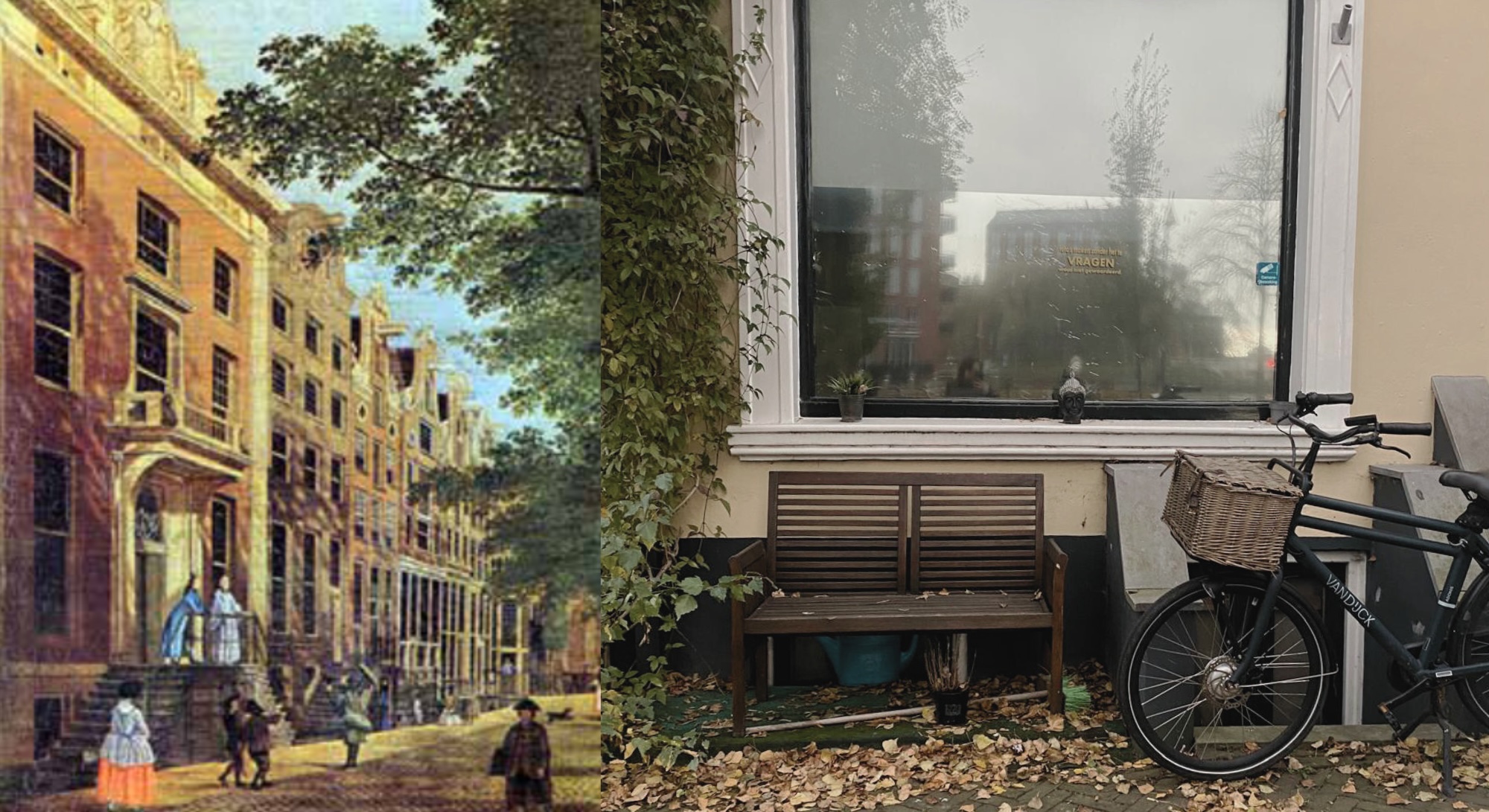
Figure 8 Stoop in Dutch domestic architecture: (a) Herengracht, Amsterdam, 1774, painting by Hendrik Keun, depicting canal houses with stoops; (b) Modern stoop in Zwolle, showing continuation of traditions. Photo by author, 2025.
Much like the front garden, the state of the stoop is also linked to the home’s moral value in relation to the public realm. The stoop’s careful maintenance and ornamentation such as potted plants, seasonal ornamentation etc. signal the household’s respectability, self-discipline, and moral order. In this way, each stoop becomes a small sociable stage: a space where domestic identity is subtly performed yet remains within the household’s control.
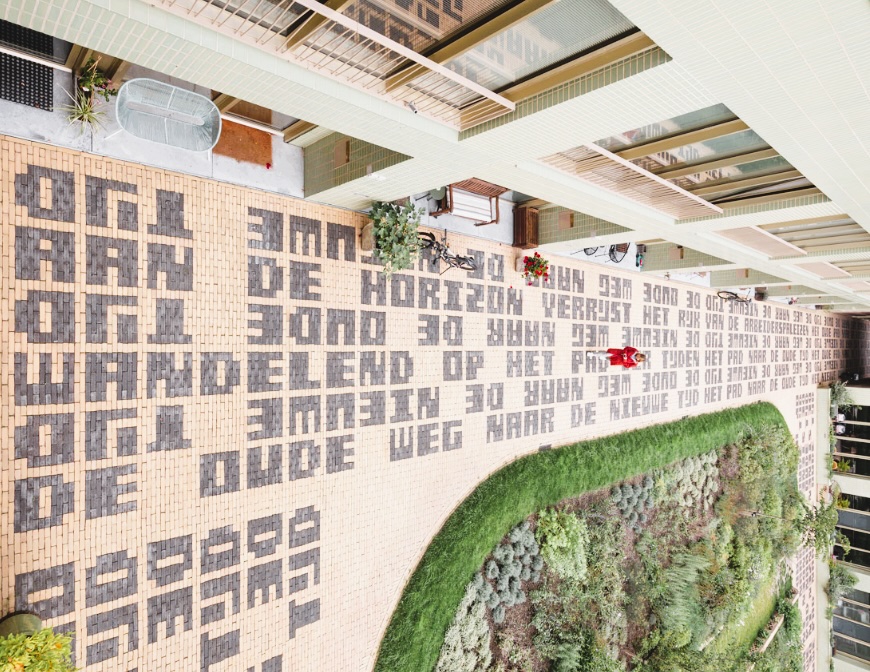
Dutch architecture today is still preserving this culture. One notable example is the Marcel Lok Architects project, Spaarndammerhart, where each stoop is highlighted with blue stone inviting residents to appropriate the threshold and preserving the Amsterdam tradition of “orienting homes towards the street”.[26]
2.1.3. Window
Windows as threshold elements are quite fundamental and possibly the most visible ones in terms of communicating the user’s attitude towards privacy. An uncovered, open window can be interpreted as a gesture of transparency and openness, reflecting a culture that values visibility and social connectedness. On the contrary, a closed or heavily curtained window may embody cultural notions of modesty, security, or the sacredness of domestic life, protecting the interior from external gaze.
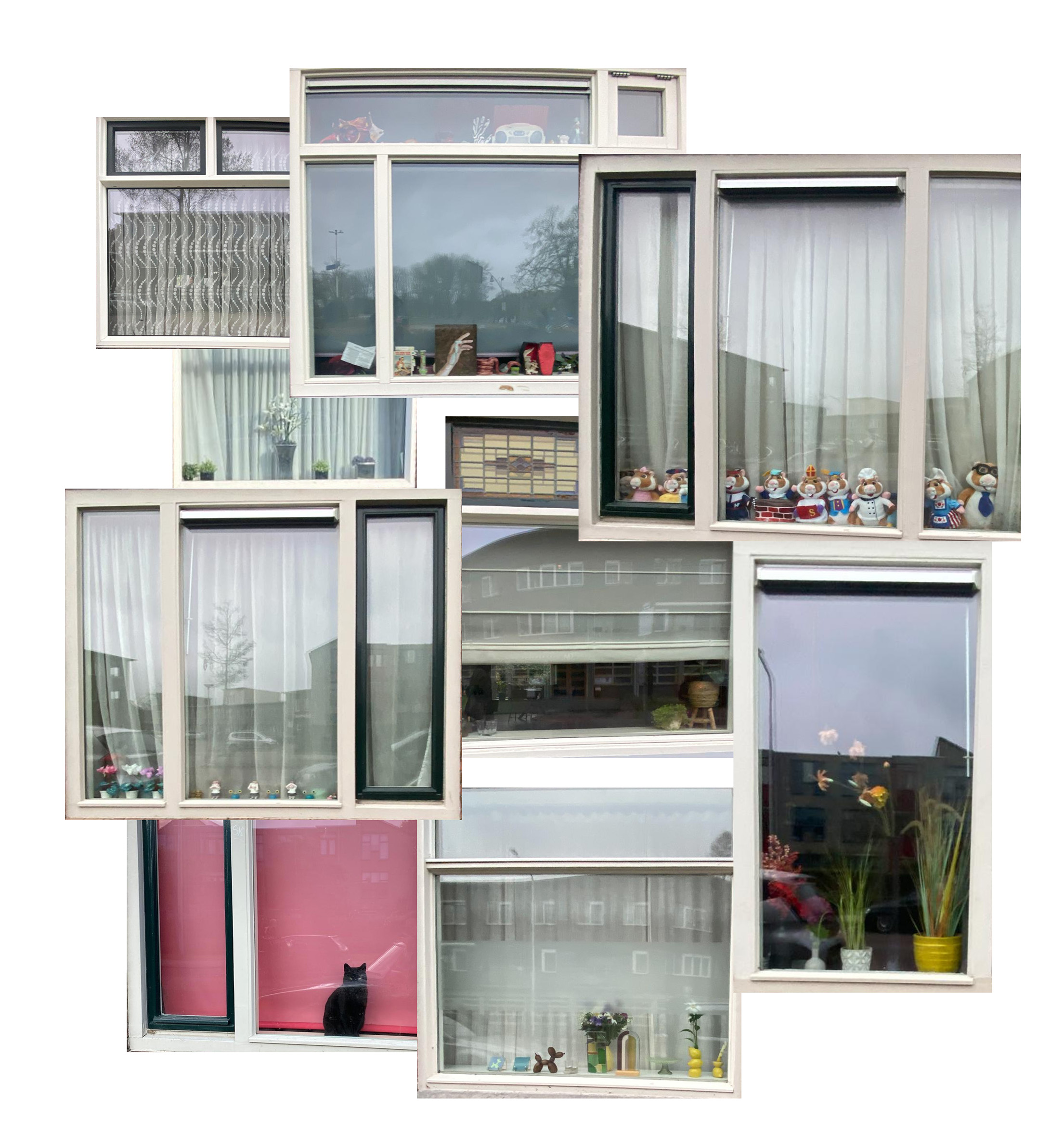
Beyond their physical function, they act as communicative devices that reveal values of different cultures. Moreover, windows operate as cultural displays that articulate identity and belonging. The way they are treated through curtains, decorations, plants, or objects placed on the sill forms a visual language that conveys the inhabitants’ aesthetic preferences, social status, and cultural affiliations. In the Netherlands, this becomes especially evident: large, low windows facing directly onto the sidewalk often feature carefully arranged decorations, from flowers and vases to playful or humorous ornaments. These compositions not only animate the street facade but also offer subtle glimpses into the residents’ personalities and values. As journalist Amber C. Snider notes in her article, being aware of the gaze of others shapes how people curate their living spaces. Therefore, whenever we know we might be seen, a degree of performance enters into how we arrange our surroundings and the messages we hope they send.[27] Therefore, the decorative gestures transform everyday windows into cultural statements, sites where private life meets public view, and where individuality interacts with broader social and spatial conventions.
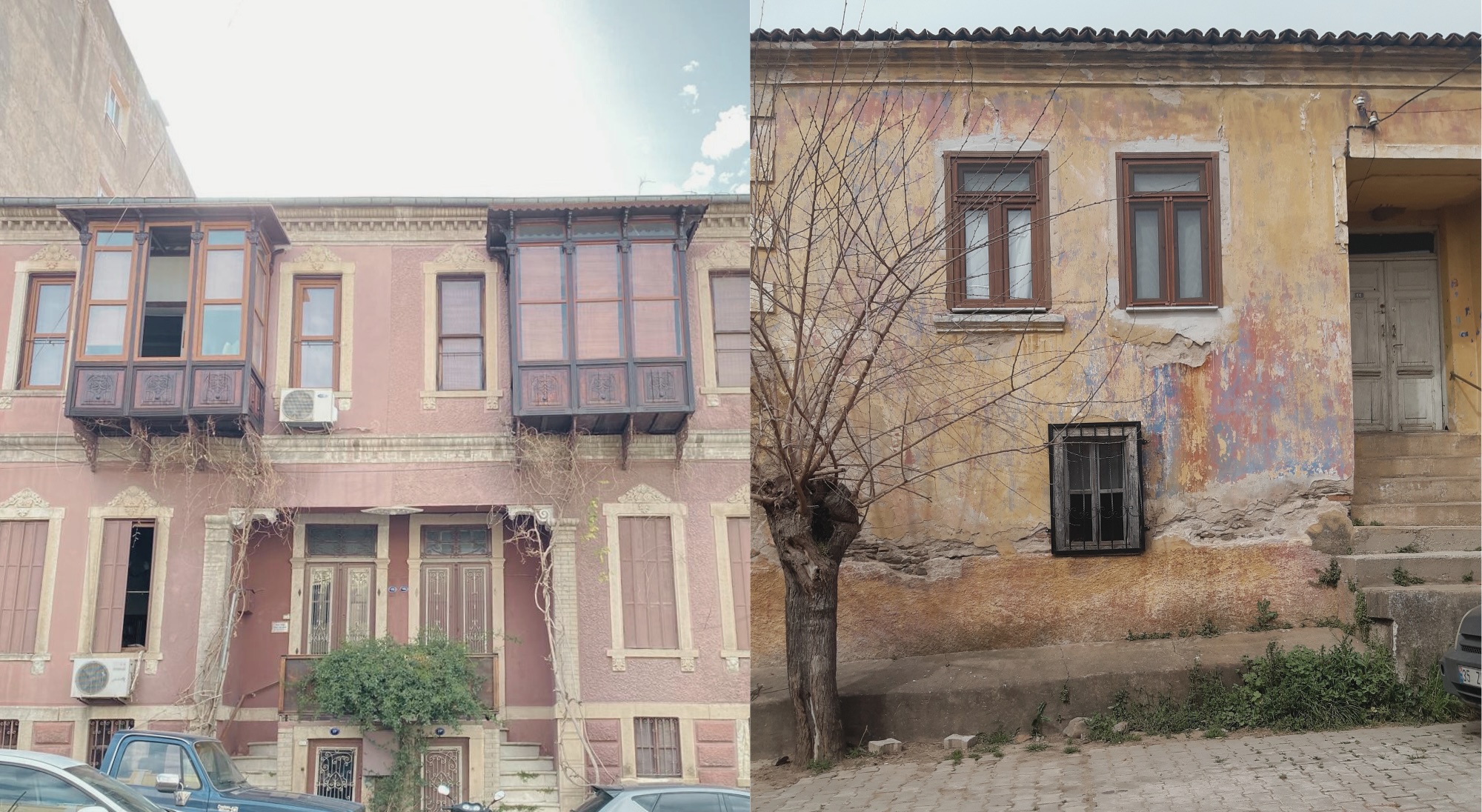
Cross-cultural comparisons reveal that attitudes toward windows vary significantly depending on historical, climatic, and social factors. In Turkey, for example, traditional residential architecture often negotiates a delicate balance between openness and seclusion. Back in the Ottoman period, traditional houses typically employed elements called “cumba” which are bay windows that allowed the residents, particularly women who were closed off to the outside world during the period, to observe the street while maintaining privacy.[28] These overhang elements became a symbolization of cultural norms in terms of visibility, power and control while also moderating sunlight and airflow. Even in modern Turkish urban contexts, the layering of windows with lace curtains, heavier drapes, and sometimes shutters continues to express a culturally embedded concern for privacy and visual filtering between inside and outside. However, the bay windows eventually turned into balconies in the modern architecture which allows a greater openness.
In contrast, the architectural culture of the Netherlands has historically embraced transparency and openness. Large, uncovered street-facing windows are a defining feature of Dutch urban houses, particularly in canal houses dating back to the 17th century. This openness has roots in both practical and moral traditions: the Calvinist principles of honesty and visibility discouraged concealment, while the limited availability of interior light in dense urban fabrics encouraged large windows. The result is an architectural and cultural expression where the domestic interior becomes, to some extent, a performative public display. The performative aspect of the Dutch windows is noted by Stephanie Lebas Huber in the book Dutch Neorealism, Cinema, and the Politics of Painting, 1927-1945 “When moving to a new town, for example, the gradual opening of curtains and removal of any other obstructive coverings signaled to the rest of the community one’s readiness for social integration. Extended to such a broad-reaching liminal, cultural concept, the window was a perfect local metaphor for addressing relationships to the outsider and insider alike.”[29]
In conclusion, when analyzed comparatively, windows emerge as more than functional elements; they are cultural thresholds that articulate deeply ingrained social values. In both contexts mentioned in this section, the window becomes an expressive medium, a tangible reflection of how societies construct, negotiate, and inhabit the boundary between the private and the public.
2.1.4. Balcony
Balconies, as liminal extensions of the interior, occupy a quite unique position among the threshold elements. Suspended between interior and exterior, they function as spaces of both retreat and exposure. Positioned between the domestic interior and the urban environment, the balcony becomes a performative interface where the individual negotiates visibility, sociability, and control.
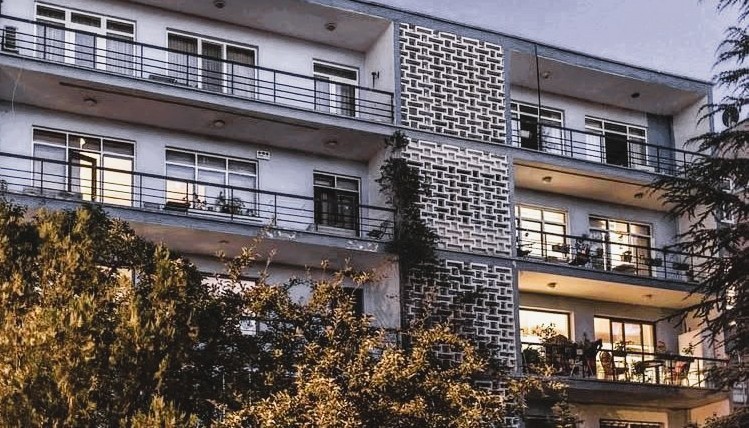
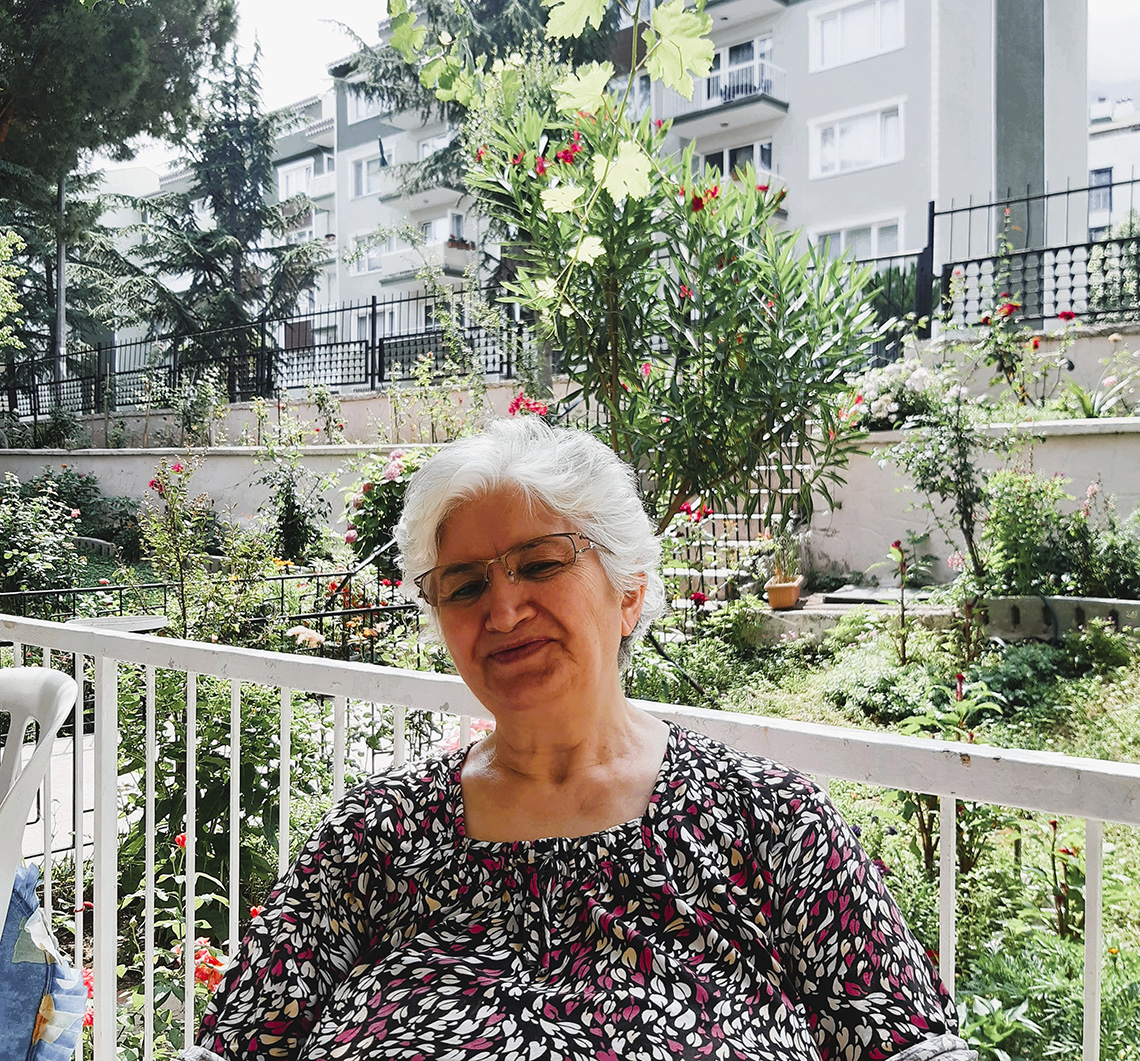
In the book Architectural Anthropology: Exploring Lived Space, Marie Stender defines the balcony as “an outdoor living room” a space where one can be in the comfort of their house and yet at the same time, outside.[30] This understanding of the balcony being an extension of the house was very evident in Turkey as I was growing up. On the Aegean coast, whenever the weather allowed, family dinners, weekend breakfasts, and evening tea times often took place on the balcony. The balconies were kept clean at all times and decorated with flowers. In urban settings, where detached houses are rare, balconies provide residents (especially the older generation who migrated from rural areas) with a way to maintain their connection to nature through small-scale gardening and plant growing.
Moreover, especially for the women raised in a more traditional Islamic culture where “going out” was less common and meeting at home was the standard practice, balconies also served as important social spaces. They offered a semi-private environment to meet neighbors, chat, and share food and drinks, illustrating how architecture mediates cultural practices and social life.
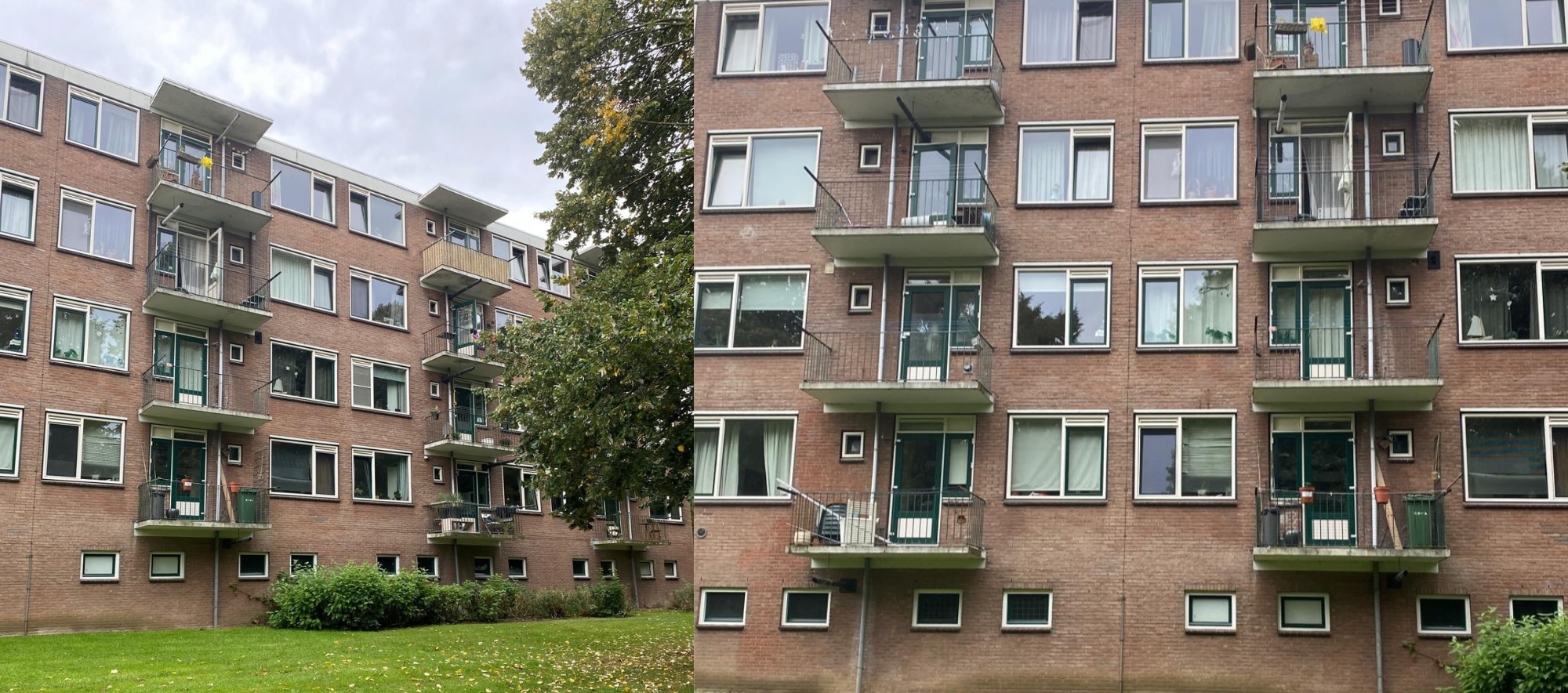
In contrast, Northern cultures reflect a different balcony culture shaped by distinct climatic and social conditions. Dutch balconies are often smaller, furnished sparsely and oriented toward visual engagement rather than active use. The focus is directed outward not as spaces for social gathering, but as points of connection between the resident, the street and the surrounding environment. They serve more as visual and symbolic links to the outside world than as extensions of domestic sociability.
Although in recent years, the cultural significance of balconies in Turkey also shifted from being a social space. Younger households now choose to enclose their balconies with glass panels, often converting them into storage areas or extensions of interior living rooms. This change reflects new housing realities such as smaller apartments, denser urban fabrics, and a growing emphasis on efficiency and practicality over decoration and sociability. As a result, it can be said that now it’s aligning more closely with Northern European tendencies with the efficient use and the practice of using balconies as a way of connecting with the environment especially during and after the COVID-19 pandemic. A study conducted in Turkey during the pandemic found that 81% of participants used their balconies more frequently, often repurposing them for relaxation, gardening, or social interaction at a distance.[31] These changing patterns suggest that the balcony remains an adaptable space with its meaning continuously negotiated between cultural tradition, modern efficiency, and shifting social conditions.
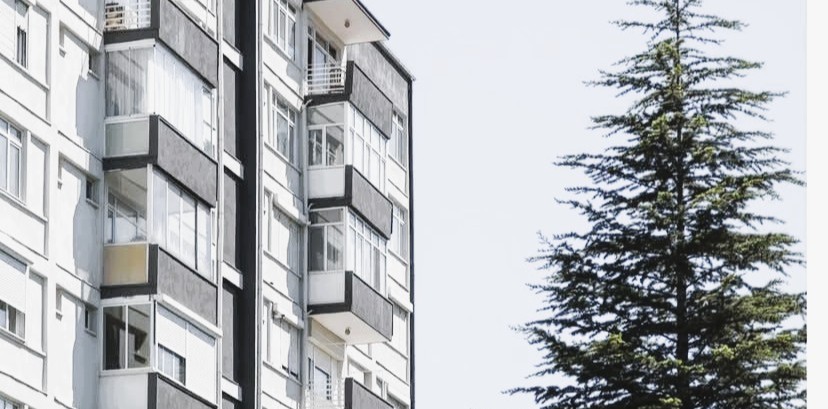
Figure 16 Enclosed glass balconies of Etiler Sitesi, Ankara, illustrating the trend in Turkey toward enclosing balconies as semi-private threshold spaces. Photo by unknown, n.d.
In both cultural contexts compared in this paper, the balcony represents a spatial and symbolic negotiation between exposure and privacy. While Turkish balconies are characterized by a culture that values controlled visibility, Dutch balconies embody a visual continuity between domestic and urban life. They articulate how different societies spatialize comfort, modesty, and community revealing how architectural thresholds mediate not only between spaces, but between cultural ideals of living.
CHAPTER 3
3.1. Case Study
For the case study, it had great importance to choose a street where the use of threshold spaces can easily be observed through a specific span of time and somewhere in close distance. After careful consideration, Waningstraat, located in the Holtenbroek area of Zwolle was selected. The selected part of the street is small and residential. It is lined with humble Dutch houses that have large front windows and small front gardens facing directly the street.
Holtenbroek, Zwolle itself is known for its multicultural character, where people from various cultural backgrounds live together within the same area. This diversity and the neighborhood’s accessibility and openness, created a great opportunity for observing the use of the threshold spaces.
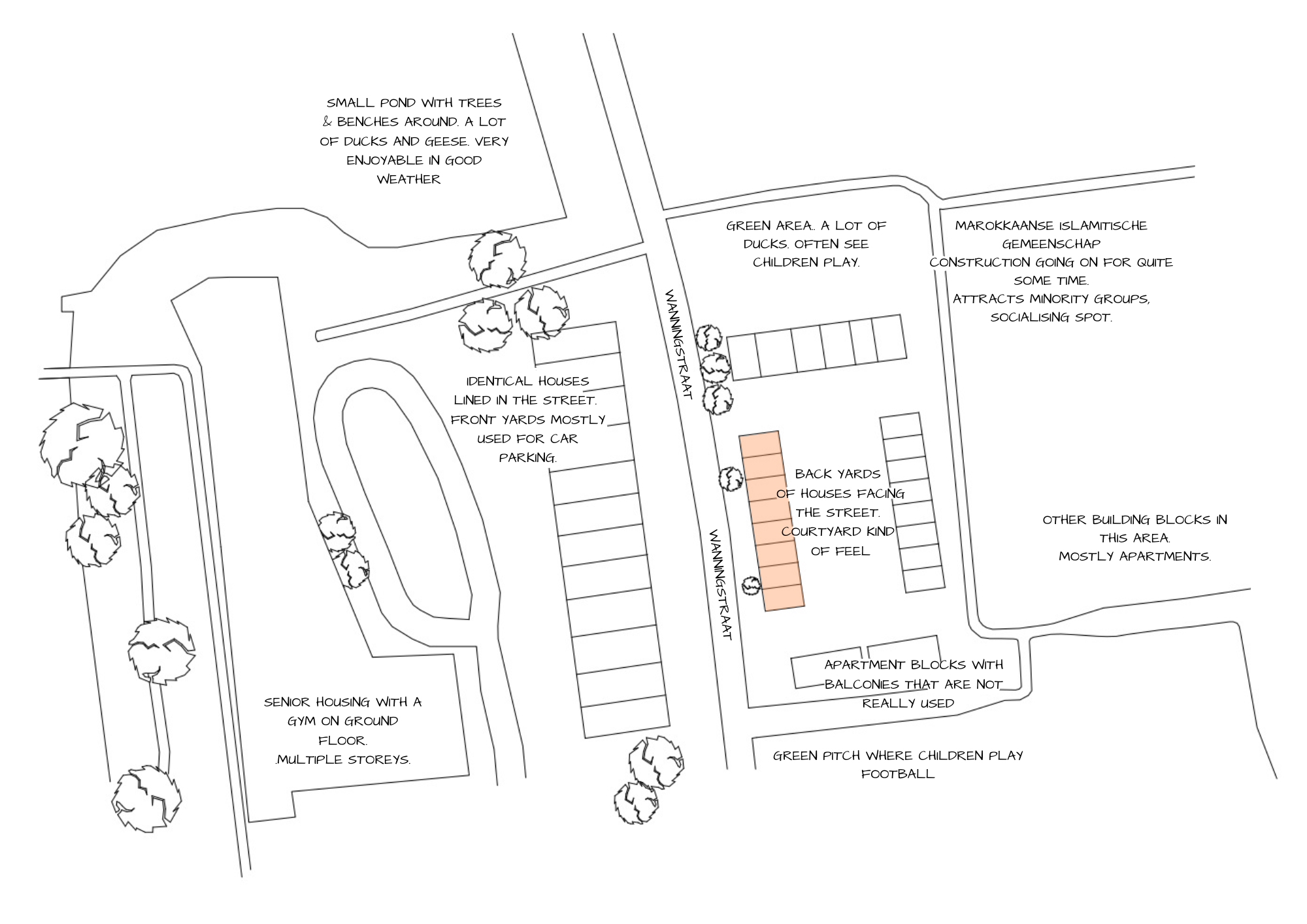
Since I live nearby Waningstraat, it also allowed me to naturally engage with the street over time. The observation process started in late August 2025 and continued until November 2025. Through this ongoing field work, I became familiar with the everyday patterns of the street like who tends to sit outside, how gardens change over the weeks and how visibility and privacy are handled differently by each household. What started as direct observation gradually turned into a more intentional study, eventually leading to interviews with some residents.
I approached three households whose front gardens displayed different characteristics in order to interview. These interviews were held through the same set of open-ended questions that encouraged residents to reflect on their relationship with the space in front of their home. Asking them about how they use it, what it means to them, and how their background may shape that relationship. While the questions were consistent, each conversation took its own direction.
3.1.1. Household 70
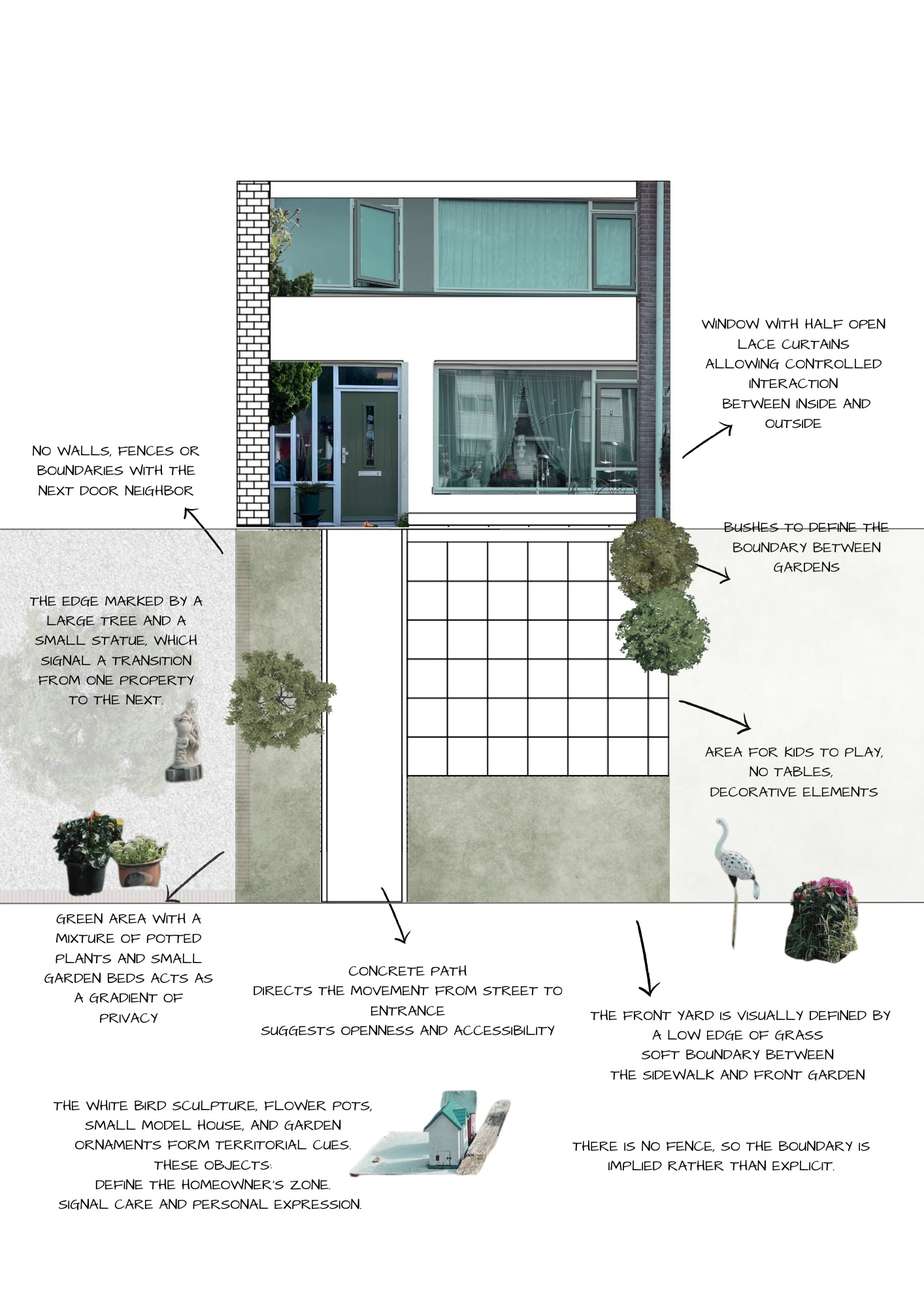
The first household was a Dutch family who had been living on Waningstraat for about eight years. Spatially, the front yard showed a very soft and permeable boundary. There was no fence or enclosure, only subtle material changes like paving, planters, and small decorative elements such as flowers, children’s bicycles, gardening tools, and a small table. This created a relaxed, welcoming appearance to the property through the indicators of daily use.
The resident considered comfort to be an essential element of privacy saying “Privacy is important, of course, but not in the sense of hiding away. It means relaxation and peacefulness to me”. They appreciated the enjoyment of sitting in their front yard watching their children play or simply taking in the activity of the street. Their front yard provided an informal extension of the house, a public space that combined socializing with household chores.
The architectural thresholds reinforced the openness: the large front window functioned as a semi-permeable layer, softened by sheer curtains that filtered but did not fully block visibility. A small change in elevation at the front step marked the entrance without creating a hard separation. The garden itself contained only low, movable boundaries such as potted plants, a bird sculpture, and loose clusters of vegetation that allowed the family to reorganize the space depending on the season or their activities.
However, being sensitive to noise, they were interested in creating a quiet indoor environment. When sitting by the window during the summer months they preferred minimal visibility from the street, saying, “You can’t see that much, which in my case I very much like.”
On occasion, in the warmer months, the family would move their plants around or set up a table and would spend time in the yard either enjoying the sun, or barbecuing, or doing minor maintenance. The residents described themselves as flexible in regards to the amount of visibility and openness of their garden. While they loved the light and the vibrancy of sunlight they also wanted to have private moments while working from home. “When I’m working, I want less distraction,” they said, “but sometimes I go against that and let more sunlight in, it helps me feel more energized.”
This fluid relationship with visibility matched the physical qualities of the space: an adaptable, low-structure environment where small objects, furniture, or plants could temporarily reframe the boundary between inside and outside. The absence of fixed partitions enabled this daily adaptation.
Additionally, their reflections hinted at cultural tendencies. Most Dutch houses are like ‘it is what it is,’” they said. “If it’s neat, it’s neat; if it’s messy, it’s messy. There’s little to no effort to hide or show off.” This comment captured an acceptance of everyday imperfection and reflected the traditional approach of honesty and visible discipline that mentioned in the previous chapter. The resident mentioned plans to redesign the front garden in a more structured way. This desire for “more structure” reflects a wish for clearer internal boundaries not necessarily between house and street, but within the garden itself, perhaps through organizing planting beds, adding defined paths, or establishing zones for play, gardening, and sitting.
When questioned about outdoor activities and neighborly contact, they said that it depends on the weather: they were more likely to spend time outside and start a conversation in the summer, but the street was quieter in the winter.
Overall, the household’s threshold space embodied a lived-in balance between openness and retreat, where daily life naturally spilled into the semi-public zone without losing a sense of comfort or privacy. The soft boundaries and flexible thresholds supported a dynamic interplay between visibility and seclusion, allowing the residents to calibrate their environment according to mood, activity, and season.
3.1.2. Household 66
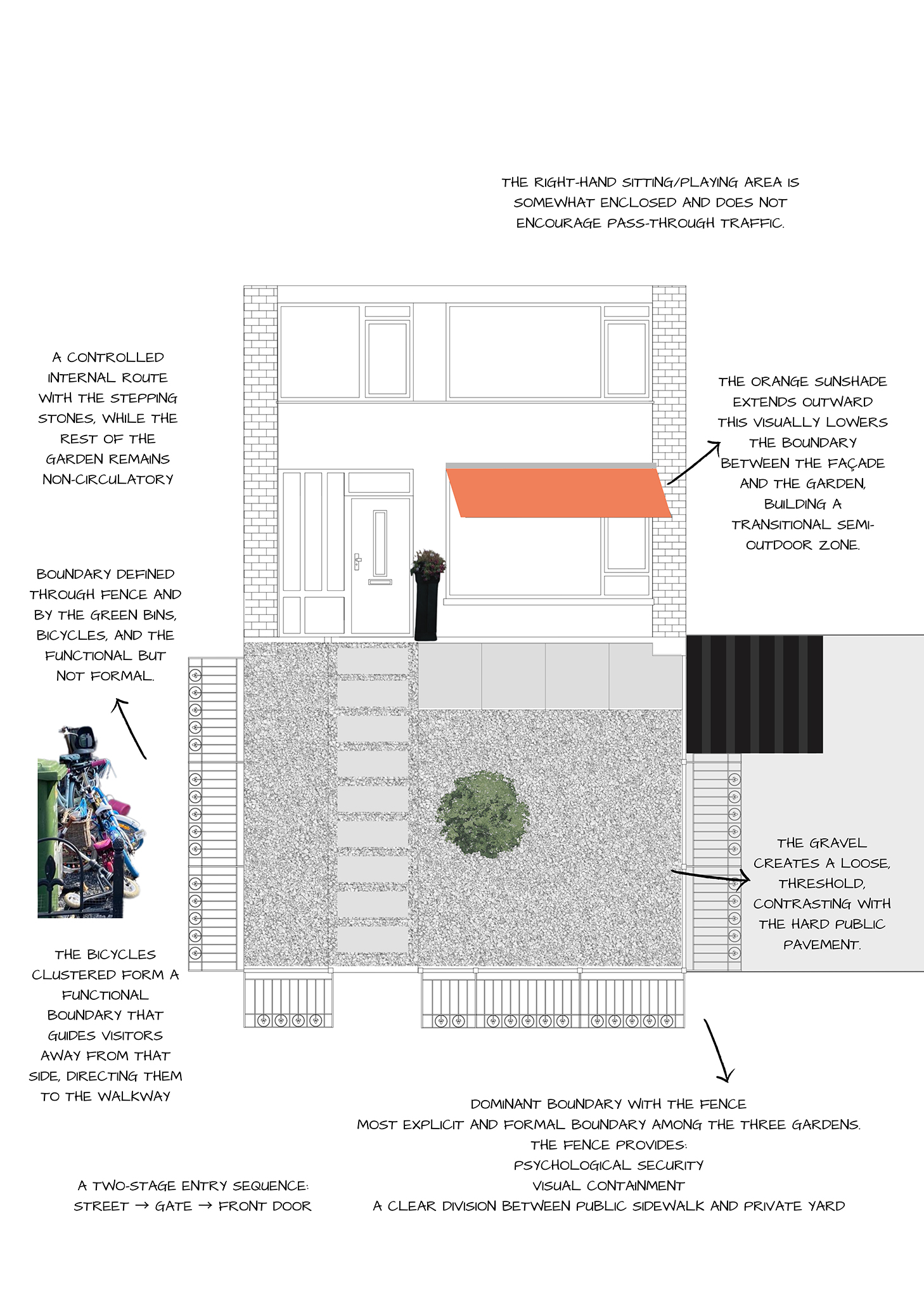
The second household was a Turkish family who had been living on Waningstraat for around five to six years. Compared to the first house, their front garden was more enclosed, with fences and ornamental features that made it obvious that it was separate from the street.
This enclosure was strengthened by the physical design, which created a clear and formal boundary between public and private space with a black metal fence and a small gate marking the property line. The front garden was divided into areas of stepping stones, gravel, and clustered plants inside the fence. By preventing careless lingering and establishing a controlled flow toward the front door, this zoning made the threshold area feel purposeful and defined rather than open.
They explained they hardly ever sat outside in the front garden and they chose to spend time in the back garden instead. The events that typically held in the backyard were mostly family and friends get-togethers which provided more seclusion. A cultural tendency toward the importance of communal and inward-looking domestic life was highlighted with this choice but the resident also appreciated isolation. As the resident put it, “I work during the day with a lot of people, and at home I want to feel safe and relaxed.”
This preference was reflected in the front garden’s spatial design too. The front garden included a structured entrance path, dense foliage close to the window, a shaded facade, and a fence that served as subtle barriers. This arrangement reflected a desire to control visibility and limit exposure, in contrast to open Dutch-style front gardens. Even ornamental features like the orange sunshade served two purposes: they were protective and aesthetically pleasing, drawing the facade inward and reducing the amount of visual openness.
They expressed a desire to maintain a certain level of privacy from the street, having a sunshade on the window and keeping curtains or blinds partly closed, especially in the evenings. But during the day they liked to let the sun in and sometimes sit inside with tea or coffee by the window. Depending on the activity, time of year, and mood, they were more enclosed and introspective in the winter and more open during family get-togethers and summer.
This adaptability showed up in the way the threshold zone was used spatially: mornings involved looking outward from behind the partial screen of curtains while in the afternoons, the front garden’s use might be limited. A more inward domestic rhythm was reinforced by the well-defined circulation path of: gate → stepping stones → door which provided clarity without requiring extended outdoor presence.
The social role of the home was highlighted by the resident when discussing their cultural background “In Turkish culture, the home is very central to family life. We often gather with relatives or friends, so the living room and dining area are important.” This translated into both spatial and aesthetic care; maintaining a welcoming entrance while prioritizing the back garden as a social and familial space.
However, they said they were “ashamed” as they felt the front garden looked “messy” at the time since it was the change of season. They mentioned occasionally adjusting the front garden by adding new plants or rearranging furniture, and expressed interest in change. “I would like to add more plants in a more planned way in the front garden, to feel like I’m more in nature.”
This desire aligns with the existing structure: the fence already serves as a visible territorial marker, and the garden’s layout lends itself to further layering: more plants could deepen the sense of a sheltered threshold without changing the basic organization.
The way they used their threshold space changed throughout the day: coffee in the morning by the window, afternoons or weekends in the garden when the weather was nice, and evenings when they shared tea, a daily ritual that had deep cultural importance. The family temporarily reversed the traditional division between inside and outside by keeping the garden doors open during summer while children play outside or when they have big family gatherings especially during the holidays.
This reversal highlights the adaptability of the thresholds: the gate and fences that typically signal controlled privacy momentarily became symbols of hospitality and permeability.
They attempted to preserve a visually appealing front garden as part of the neighborhood landscape while preserving genuine domestic openness and sociability for the more private, family-oriented areas behind the house. This approach to threshold spaces generally reflected a balance between display and retreat. This equilibrium was maintained by the well-defined borders and the garden’s function as a buffer for storage, which absorbed common clutter while shielding the interior from noise and view.
3.1.3. Household 72
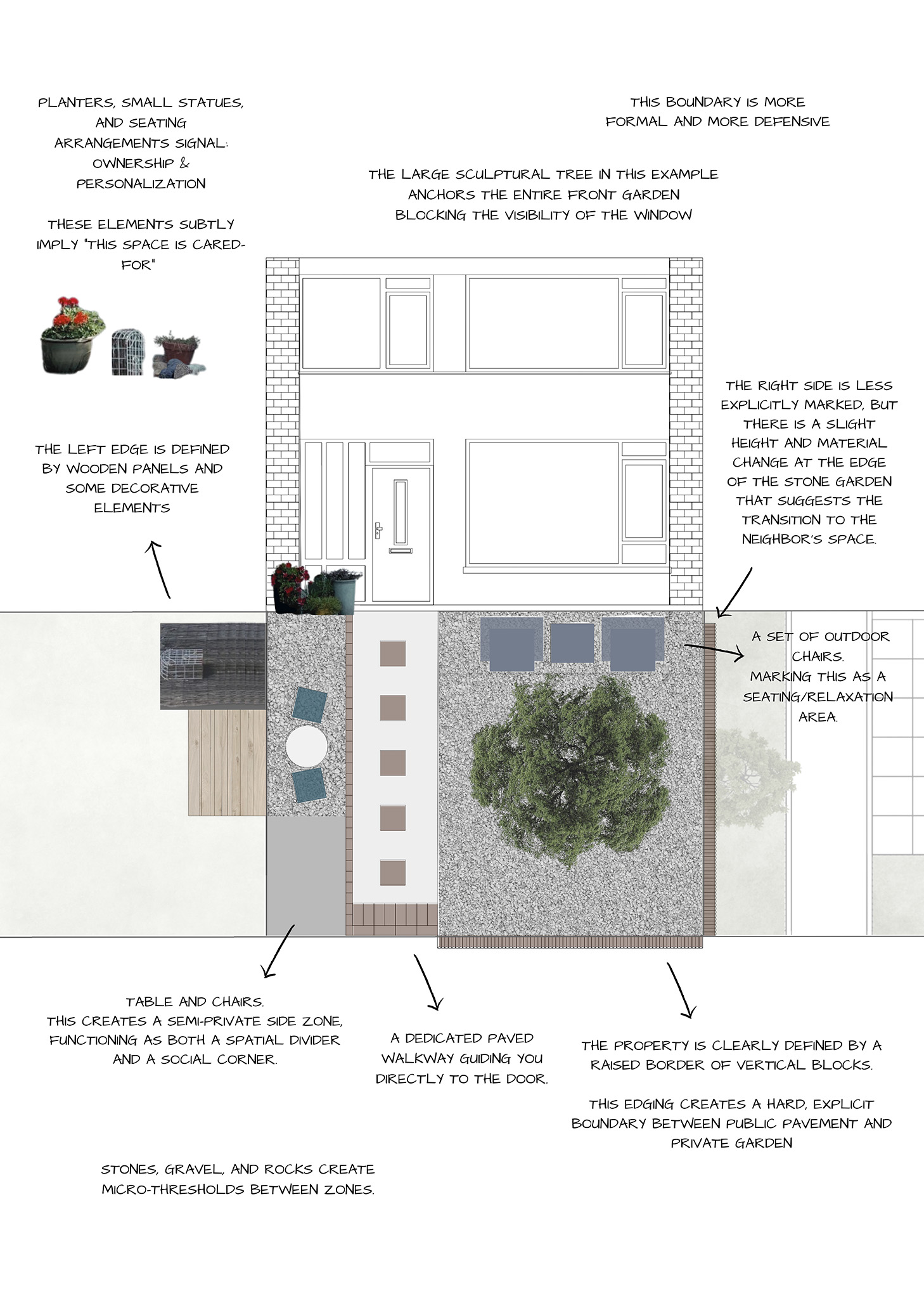
This household has been living in the neighborhood since 2011 and the residents are a Dutch couple originally from the region. Their front garden reflects a sense of local belonging and stability. The conversation that is held in both Dutch and English with them reveals a lifestyle shaped by Dutch cultural values of simplicity, order, and calm domesticity.
The residents describe valuing the ability to “close the curtains and just feel at home,” expressing a clear boundary between the public and private. Their choice of using thin lace curtains shows a negotiation between openness and privacy. This architectural detail enables subtle visual participation in street life without compromising the sense of interior security.
Their front garden’s physical design supports this well-balanced arrangement. A cluster of large stones that separates ornamental and functional areas, a paved path that leads straight to the front door and an edged gravel field are examples of the space’s clear material transitions. The big tree in the middle of the garden is its most noticeable element. Its low canopy and sturdy trunk serve as a soft vertical threshold and a natural focal point, influencing how the area is perceived from the street. The tree anchors the garden and creates a soft sense of enclosure without visually obstructing the facade, as opposed to using tall hedges or fencing.
Although it is not overly ornamental, the front area is kept neat and purposefully. The modest yet suggested occasional use of the garden furniture behind the tree indicates that the front is not intended for large social gatherings. On the left side, the arrangement of the chairs and planters creates a peaceful nook that is practically a micro-room. Commonplace items like bins are neatly kept in a wooden shed also on the left side. This establishes a subtle side border and shows that the front garden has useful functions in day-to-day living.
Therefore, the front garden serves as a buffer between a private residence and a public street. While it’s modest and open enough to allow interaction, it is also maintained with hedges and plants that provide partial screening. The residents say they occasionally sit in front with coffee, especially in warm weather, engaging passively with the neighborhood by greeting passersby. Their threshold space thus accommodates both retreat and light sociality, depending on season and mood.
Privacy practices are strongly temporal. Mornings and afternoons are times of openness, curtains drawn wide, light and air invited in, symbolizing daytime sociability and vitality. Evenings, however, bring enclosure: curtains closed, lights on, and the comforting atmosphere of “gezelligheid.” This daily pattern illustrates a spatial choreography of openness and withdrawal, reflecting broader Dutch sensibilities around domestic order and coziness.
Overall, this household’s spatial behavior exemplifies a characteristically Dutch form of domestic privacy: neither total withdrawal nor full exposure, but a calibrated interplay between visibility and comfort. Their threshold spaces structured by the large tree, the neat edging, the side-storage zone, and the careful choreography of curtains operate as emotional regulators, mediating daily rhythms of openness, security, and belonging within the neighborhood.
CHAPTER 4
4.1. Conclusıon and Discussion
Threshold spaces were not only architectural features but also negotiated areas influenced by cultural background, the season, personal comfort, and household routines in all three of the Waningstraat households. Despite having the same built forms and similar layouts, each family used the front garden differently, transforming the same architectural condition into a unique way to express privacy, openness, and daily routine.
Aspects of daily life were able to blend into the semi-public street for the Dutch households (Households 1 and 3) who tended toward soft, permeable boundaries. Low planting, movable furniture, and an openness that encouraged passive interactions characterized their front gardens, which were simple and adaptable. However, neither family saw this area as a gathering place. Rather, it fulfilled utilitarian and atmospheric purposes: a spot for kids to play, a place to grab a quick cup of coffee, or a place to observe the street’s rhythm. Daily cycles of privacy management: curtains partially closed in the evening and open in the morning, showcased a cultural preference for situational openness over social display.
The Turkish household (Household 2), despite the cultural implication of preferring inward-facing domestic life, adapted easily to the Dutch spatial standard of a front-facing garden. However, their threshold, which was delineated by fencing, remained more enclosed and organized. Although keeping the household cat in mind and keeping mice out were the primary practical reasons for this fencing, the household also acknowledged the value of well-defined boundaries. Similar to their neighbors, they did not view the front garden as a communal area; instead, it served mainly as a buffer, a decorative area, and, in this case, a storage space, all the while regulating visibility. In order to better accommodate their cultural preferences, social activities were purposefully moved to the back garden. This example shows that cultural adaptation can take the form of reinterpretation rather than assimilation.
Time and seasonality created a common logic of use for all three households. Winter placed more emphasis on enclosure and less street contact, while warmer months brought more openness with open windows and curtains, occasionally sitting outside. This common temporal pattern showed that threshold practices react to light, climate, and everyday household routines in addition to culture.
There was also a clear generational divide. The neatest and most orderly garden was kept up by the elderly Dutch couple in Household 3. Considerable planting, orderly storage, and seamless material transitions all signaled to a more conventional or structured method of home presentation. This difference may signal to changing generational norms regarding informality in outdoor settings when contrasted with the younger families’ more adaptable and playful setups.
The front garden appears in all three cases as a semi-private buffer used mainly for personal routines, atmosphere, and children’s activities rather than as a place for social gatherings. Neighbor interactions continued to be incidental rather than deliberate.
The coexistence of these varied yet overlapping uses within the same street forms a quiet spatial dialogue between neighbors. Each household expresses its relationship with public life through subtle gestures: an open garden, a lace curtain, a hedge, a structured path, a tree shading a corner. Together, they compose a nuanced cultural mosaic of how people inhabit and reinterpret shared urban environments. Their thresholds regulate light, visibility, contact, and retreat, accommodating storage, children’s play, seasonal rhythms, and everyday tasks. In doing so, they shape not only the edges of individual homes but also the lived social atmosphere and cultural identity of Waningstraat itself.
What began as an interest in thresholds and a personal attempt to understand Dutch culture through everyday spatial practices gradually expanded into a broader reflection on history, social behavior, and the subtle ways culture shapes the built environment. Initial questions about benches, open curtains, or front-garden habits slowly revealed themselves as part of long-standing architectural and cultural traditions. Through this process it became clear that spatial habits are never accidental; they grow through collective memory, shared values, and historical continuity.
Observing Waningstraat and other streets in Zwolle over several months revealed that front gardens and stoops operate as extensions of domestic life and as mediators between privacy and sociability. Neither completely private nor entirely public, these areas developed as living thresholds where commonplace behaviors like sitting outside, caring for plants, or putting away a bicycle represented more profound views on openness, order, and belonging.
In the case of Wanningstraat, living close by allowed for constant interaction with the street, but it also brought about a level of familiarity that made it difficult to distinguish between resident and researcher. When I watched how Dutch people used the area in front of their houses, I was frequently conscious of my own positionality as a foreigner. Understanding how cultures vary without assuming anything or generalizing too much was crucial. In contrast to my own background, where privacy is more spatially and symbolically protected, this visibility that I have witnessed, which is so typical of Dutch street life, stands out.
The challenge of avoiding over-generalization was reinforced by the small sample size. With only three households, the findings can’t claim representativeness. A larger and more varied group might reveal more nuanced relationships between age, background, occupation, or family structure and the use of threshold spaces. Rather than defining categories, the study therefore becomes about observing diversity and understanding differences.
From a critical standpoint, the findings highlight how threshold spaces are socially produced environments. They mediate relationships between visibility, privacy, and belonging, they are likely to reflect the residents’ cultural background yet they can’t be reduced to rigid cultural markers. Residents shape these spaces according to habit, identity, climate, and daily routine. While the observations and the interviews on Wanningstraat signal some cultural differences, the conclusions also require caution. The way a resident uses their front garden or stoop may have as much to do with personal comfort or lifestyle as with national identity.
This conflict between personal variation and cultural interpretation became a central reflexive issue. It raises questions about representation: To what extent can a few examples depict more general cultural trends? Without imposing categories, how can one characterize difference? Such questions became essential to the project, shifting the understanding of thresholds from static cultural indicators to dynamic, lived conditions.
Ultimately, thresholds serve as negotiation mediums where time, habit, architecture, and identity all influence one another. As the needs and lifestyles of the modern world change, so too do thresholds, along with the ways people use and perceive them. Rather than reducing them to storage spaces, thresholds should be appreciated as valuable architectural elements: adaptable to residents’ cultures, preferences, and everyday practices. A key finding of this study is that Dutch thresholds exemplify remarkable adaptability: their openness makes them easy to adjust according to varying needs and habits, demonstrating how design can accommodate differences while retaining cultural resonance. Equally significant is the adaptation and continuation of the culture of thresholds itself, as evidenced in contemporary projects such as those by Marcel Lok Architects (discussed in Chapter 2), which engage these transitional spaces in ways that honor tradition while responding to modern living. The study shows that thresholds are living spaces where openness, retreat, and adaptation intersect with cultural history, underscoring their lasting architectural and cultural significance.
Sources
The paper is grounded in architectural and social theory that views thresholds as culturally negotiated spaces rather than neutral design elements. Drawing on Escobar, Tuan, Norberg-Schulz, and Rapoport, it frames domestic space as an expression of cultural values, identity, and lived experience, where even small design choices communicate social meaning. Edward T. Hall’s theory of proxemics explains how different cultures construct privacy and boundaries through spatial behavior, while thinkers such as Aldo van Eyck and Juhani Pallasmaa emphasize thresholds as meaningful “in-between” spaces that mediate openness and protection. Together, these sources support the idea that privacy, boundaries, and everyday spatial practices are actively shaped by culture and reflected in the design and use of threshold spaces.
[1] Arturo Escobar, Designs for the Pluriverse: Radical Interdependence, Autonomy, and the Making of Worlds. (Duke University Press Books, 2012), 10.
[2] Yi-Fu Tuan, Space and Place: The Perspective of Experience. (University of Minnesota Press, 2001), 12.
[3] Amos Rapoport, The Meaning of the Built Environment: A Nonverbal Communication Approach. (University of Arizona Press, 1990), 22.
[4] Edward T. Hall, The Hidden Dimension. (Anchor Books, 1990).
[5] Alejandro Campos Uribe, “Aldo and Hannie van Eyck’s House in Loenen and the Vecht: A Vast World Inside,” Aalto University Research Portal, December 2018. https://acris.aalto.fi/ws/portalfiles/portal/30828565/Paper_Alejandro_Campos_copia.pdf.
[6] Shweta Devendra Joshi, “Sense of Individuality: Aldo Van Eyck’s Application of Philosophy”(Lucerne University of Applied Sciences and Arts), 18.
[7] Christian Norberg-Schulz, Genius Loci: Towards a Phenomenology of Architecture (Rizzoli, 1980), 5.
[8] Tuan, Space and place: The Perspective of Experience, 124.
[9] Mohammad Sedighi and Dick Van Gameren, “Unveiling Iranian Courtyard House: The Example Of Kuy-e Chaharsad-Dastgah (1946–1950),” Journal of Architecture and Urbanism 43, no. 1 (2019): 105, https://doi.org/10.3846/jau.2019.6046.
[10] Rapoport, The Meaning of the Built Environment: A Nonverbal Communication Approach, 22.
[11] William H. Whyte, The Social Life of Small Urban Spaces (Project for Public Spaces Inc, 2021)
[12] Christopher Alexander, Sara Ishikawa and Murray Silverstein, A Pattern Language: Towns, Buildings, Construction (Oxford University Press, 1977).
[13] Christopher Alexander, Sanford Hirschen, Sara Ishikawa, Christie Coffin, and Shlomo Angel, Houses Generated by Patterns (Center for Environmental Structure, 1969).
[14] Richard Sennett, Building & Dwelling Ethics for the City (Yale University Press, 2023), 220.
[15] Vaida Asakavičiūtė and Vytis Valatka, “Martin Buber’s Dialogical Communication: Life as an Existential Dialogue,” Filosofija. Sociologija 31, no. 1 (2020): 52, https://doi.org/10.6001/fil-soc.v31i1.4178.
[16] Francis Strauven, “Aldo van Eyck – Shaping the New Reality: From the In-between to the Aesthetics of Number Lecture,” May 24, 2007, Canadian Centre for Architecture, Montréal, 15, https://www.cca.qc.ca/en/events/2702/francis-strauven-aldo-van-eyck-shaping-the-new-reality-from-the-in-between-to-the-aesthetics-of-number.
[17] Juhani Pallasmaa, The Eyes of the Skin: Architecture and the Senses (Wiley, 2024), 11.
[18] Rapoport, The Meaning of the Built Environment, 56.
[19] Marie Stender, Claus Bech-Danielsen and Aina Landsverk Hagen, Architectural Anthropology: Exploring Lived Space (Routledge, 2021), 49.
[20] Rem Koolhaas, Elements of Architecture (Taschen Books, 2018), 803.
[21] Edward T. Hall, Ray L. Birdwhistell, Bernhard Bock, Paul Bohannan, A. Richard Diebold, Marshall Durbin, Munro S. Edmonson, et al. “Proxemics [and Comments and Replies],” Current Anthropology 9, no. 2 (1968): 83, https://doi.org/10.1086/200975.
[22] Hall, The Hidden Dimension, 163
[23] Simon Schama, The Embarrassment of Riches: An Interpretation of Dutch Culture in the Golden Age (Knopf, 1987) 386-390.
[24] New Town Institute, Het Lageland: Rotterdam Garden Suburb Plan, PDF booklet, accessed November 17, 2025, https://newtowninstitute.org/pdf/201221Hetlageland-ENG-screen.pdf.
[25] Pallasmaa, The Eyes of the Skin: Architecture and the Senses, 25
[26] Marcel Lok, Spaarndammerhart, accessed November 17, 2025, https://www.marcellok.nl/nl/projecten/spaarndammerhart.
[27] Amber C. Snider, “The Pleasure of Watching Others,” Medium, May 9, 2017, https://medium.com/the-omnivore/the-pleasure-of-watching-others-2f11a2171e3e.
[28] Doğan Kuban, Ottoman Architecture (Antique Collectors’ Club, 2010), 473.
[29] Stephanie Lebas Huber, Dutch Neorealism, Cinema, and the Politics of Painting, 1927-1945 (Routle dge, 2025), 42.
[30] Stender, Danielsen and Hagen, Architectural Anthropology: Exploring Lived Space, 48.
[31] Sema Nur Özkurt Kaya and Işık Sezen, “Covid-19 Pandemi Sürecinin Bireylerin Konutlarında Balkon Kullanma Alışkanlıklarına Etkisi,” Journal of Adnan Menderes University Agricultural Faculty 21, no.1 (2024): 33, doi: 10.25308/aduziraat.1383037.